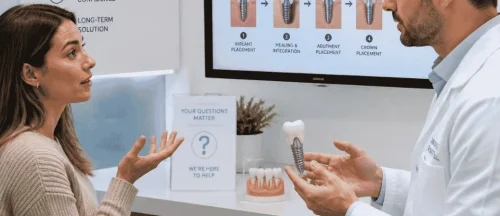
Dental implants have become a standard solution for tooth loss, restoring function and aesthetics. In the U.S. today, roughly about 1 in 10 adults (11%) aged 65 to 74 years have lost all their teeth, underscoring a large potential patient population.
Implant placement has risen sharply: over 2.5 million dental implants are placed each year in the U.S. and the market is growing. This growth is driven by an aging population, greater patient awareness, and new technologies that improve safety and outcomes.
By 2026 we expect further expansion of implant use, fueled by advanced materials, digital workflows, and biologic innovations.
This report reviews key trends: novel implant materials (titanium vs. zirconia), digital design and manufacturing (CAD/CAM, 3D printing, guided surgery), artificial intelligence (AI) in planning and diagnostics, and regenerative techniques to enhance bone healing. We also consider market forecasts, clinical benefits, and the barriers and opportunities ahead.
Implant Materials: Titanium and Zirconia
Titanium has been the “gold standard” implant material for decades due to its high biocompatibility, strength, and predictable osseointegration. Nearly all commercial implants use pure or alloyed titanium, which integrates well with bone and resists corrosion.
Research shows that long-term success rates for titanium implants are very high (90–98% over 10 years) in healthy patients. However, titanium is a metal and appears gray under thin gums, which can be unaesthetic in the front of the mouth. Some patients also report a metallic taste or concerns about metal sensitivity.
In recent years, zirconia (zirconium oxide) implants have emerged as a ceramic alternative. Zirconia is tooth-colored, so it blends naturally with gums and crowns, eliminating the gray hue.
It is biocompatible and highly corrosion-resistant, with low plaque affinity, which may reduce inflammation around the implant. Advances in manufacturing (e.g. yttria-stabilized zirconia) have improved strength: zirconia implants now have high fracture resistance comparable to titanium.
Recent reviews find that the clinical performance of zirconia implants is essentially on par with titanium in appropriate cases.
Titanium still shows slightly better mechanical strength and marginal bone stability in some studies, but differences are modest for standard indications. Zirconia’s main advantage is aesthetics and potentially better soft-tissue response.
Adoption of zirconia implants is increasing: one recent survey noted about a 12% growth in zirconia implant usage. Market forecasts see zirconia as the fastest-growing segment, even though it starts from a small share. In practice, zirconia implants are favored for single front-tooth replacements or when patients request metal-free options.
However, they are currently less common for molars or high-load areas, since pure ceramics can be brittle under extreme bite forces. In summary, titanium remains the workhorse material, prized for reliability, while zirconia offers a promising alternative for esthetic cases.
Ongoing material research (e.g. titanium-zirconium alloys) and surface coatings (e.g. antibacterial layers) aim to combine the best of both types and expand options.
Wondering how new implant materials like titanium and zirconia could benefit your smile? Visit Bonita Del Rey Dental Care to explore your options.
Digital Workflows: CAD/CAM, 3D Printing, and Guided Surgery
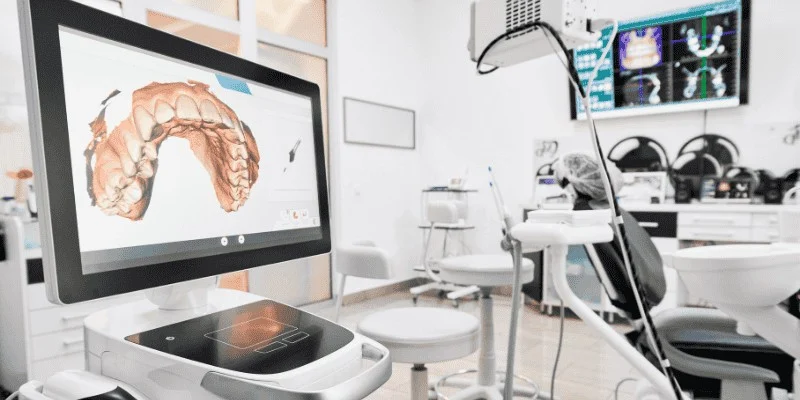
Advances in digital dentistry have transformed how implants are planned and delivered. Intraoral scanners now capture precise 3D models of a patient’s teeth and gums in minutes, replacing messy impressions. These scans feed into CAD/CAM software that designs surgical guides and prosthetic components.
For example, a computer-engineered guide can be 3D-printed that directs the implant drill to the exact planned position. This level of digital planning dramatically improves accuracy and efficiency.
Guided surgery systems (static guides or dynamic navigation) help dentists place implants within sub-millimeter and sub-degree precision, reducing the risk of nerve or sinus injury.
One analysis found that robotic-assisted implant placement can achieve 98.2% accuracy and shorten operative time.
The industry is rapidly adopting these tools. Intraoral scanners, chairside milling machines, and dental 3D printers are becoming commonplace in modern practices. Dentists can now design and mill final crowns on-site in a single visit.
The global digital dentistry market, including equipment for scanning, imaging, CAD/CAM design, and 3D printing, was about $4.0 billion in 2023 and is projected to grow over 2× to $9.2 billion by 2032. This growth is driven by technologies that streamline implant cases.
For instance, cone-beam CT (CBCT) imaging is routinely used to visualize bone anatomy, and software can simulate the surgery in 3D before touching the patient. Once the design is approved, milling or additive manufacturing produces abutments and crowns that fit precisely.
Key benefits of digital workflows include:
- Precision: Guided planning and navigation improve implant placement accuracy and reduce human error.
- Speed: Digital design and in-office milling/printing shorten turnaround times (often to same-day prosthetics).
- Patient comfort: Non-invasive scanners and fewer appointments enhance the experience.
- Customization: Software can tailor implants (e.g. angled abutments) to individual anatomy, improving esthetics and load distribution.
These workflows are supported by strong market growth: North America dominates digital dentistry investment, and key players (Align, Dentsply Sirona, 3Shape, etc.) continually launch new CAD/CAM and imaging systems. As prices for scanners and 3D printers fall, even small practices are adopting them.
Over the next few years we expect digital tools to become routine: surgical guides will be printed for most cases, and even full-arch prostheses will be milled or printed to exact design. This digital integration makes implant therapy more efficient and predictable, representing one of the biggest technological advances in implantology by 2026.
AI-Assisted Diagnostics and Robotic Planning
Artificial intelligence (AI) is poised to revolutionize implant dentistry by enhancing diagnostics, treatment planning, and surgical guidance. Machine learning models trained on radiographic and 3D data can identify anatomical landmarks, assess bone quality, and even select optimal implant sizes.

For example, deep-learning systems have achieved >90% accuracy in recognizing different implant types and positions on radiographs. AI-based diagnostics can flag pathology (e.g. bone loss or implant loosening) earlier than the naked eye, aiding preventive care.
AI also powers navigation systems. Advanced implant navigation uses real-time tracking and data analysis: the computer can adjust the drill trajectory on-the-fly if a patient moves.
In one study, AI-guided systems reduced implant placement errors to <2° angular deviation and <0.5 mm linear error, far better than conventional methods. These systems can cut surgery time by up to 30% while maintaining exact placement, because the operator is following an optimized plan rather than freehand drilling.
Over time, AI may even predict implant success by analyzing patient factors (bone density, health history), helping dentists tailor post-operative care.
Promising research highlights AI’s edge over human performance: in one trial AI classified implant systems from poor-quality X-rays with ~95% accuracy, whereas experienced clinicians averaged only ~37% correct on the same images.
Another review found that AI tools usually reach 90–98% accuracy in identifying implant fixtures. Although much of current AI research focuses on radiographic analysis, the same algorithms are applicable to 3D models and intraoral scans.
In the coming years, we expect AI to be integrated into imaging software and chairside tools, offering real-time suggestions and safety checks during implant planning.
Alongside AI, robotic and smart systems are emerging. Fully robotic implant arms can execute drilling and placement with programmed precision, further reducing human variability.
And “smart implants” equipped with sensors or bioelectric stimulators are under development: these could monitor osseointegration or deliver electrical pulses to promote bone growth and combat infection. While still in early stages, such innovations illustrate the trend toward data-driven, personalized implantology.
In summary, AI and robotics promise to make implant treatment more predictable and patient-specific. They will enhance every step, from reading a CBCT scan and designing a guide, to navigating surgery and monitoring healing.
By 2026, early-adopter clinics will routinely use AI-powered diagnostics and guided systems, pushing the accuracy and outcomes of implant procedures higher than ever.
Take the first step toward a stronger, healthier smile by consulting with our experts in Chula Vista, CA, to discuss which dental implant solutions are right for you.
Regenerative Techniques in Implantology
Successful implants require sufficient bone and healthy soft tissue. Regenerative medicine is providing new methods to rebuild deficient jawbone and gums.
Traditional approaches use bone grafts and barrier membranes (guided bone regeneration, GBR) to encourage bone growth before or during implant placement. Advances in scaffolds and biomaterials are now enhancing these techniques.
For example, 3D-printed, patient-specific titanium or biodegradable scaffolds can fill large defects precisely and release growth factors (like BMP-2) to accelerate bone formation.
Novel membranes can be pre-loaded with drugs or stem cells to further boost regeneration. In lab and animal studies, multiphasic scaffolds with controlled pores and bioactive coatings have shown excellent osteoconductive properties.
These innovations are translating into clinical trials of custom-fit grafts for ridge augmentation and sinus lifts.
Stem cell therapies are another frontier. Mesenchymal stem cells (MSCs) from sources like bone marrow, adipose tissue, or dental pulp can form new bone and blood vessels.
Recent clinical reviews report that combining MSCs with graft materials can regenerate severely atrophied jawbone, enabling implant placement in cases previously deemed hopeless.
For instance, implant rehabilitation was achieved in patients with razor-thin mandibular ridges by using bone marrow MSCs seeded on bioceramic scaffolds. Similarly, simple preparations of stromal vascular fraction (SVF) from a patient’s fat tissue have improved outcomes in sinus augmentation, without needing complex cell culture. These cell-based methods not only build volume but also speed healing and reduce recovery time.
Regenerative approaches also extend to peri-implant tissues. For example, coatings of implants with plasma-rich growth factors or delivery of platelet-rich fibrin around an implant site are under study to boost soft-tissue integration. In periodontal (gum) surgery, stem cells and scaffolds show promise in repairing bone defects around natural teeth, which could similarly benefit peri-implant bone health.
Key points on regenerative technology:
- Advanced biomaterials: 3D-printed scaffolds, membranes, and grafts that deliver cells and factors are improving GBR outcomes.
- Stem cell therapies: Autologous MSCs (from bone marrow or adipose) can regenerate critical bone defects, expanding implant eligibility in atrophic jaws.
- Growth factors: Recombinant proteins (like BMP-2) and blood derivatives enhance bone healing around implants.
These therapies are still emerging and often experimental, but early data are encouraging. Continued research is aiming to standardize these protocols and prove long-term safety.
By 2026 we expect selected practices to offer regenerative-augmented implant surgery, for example, bone grafts seeded with stem cells or growth factors, especially for complex cases. These methods could significantly reduce the need for multiple surgeries, making implants accessible to more patients.
Market Trends and Adoption Forecasts
The dental implant market is expanding steadily. Globally, the implant market was about $6.7 billion in 2024and is expected to roughly triple by the mid-2030s. One analysis projects the total market reaching ~$15 billion by 2035 (≈CAGR 10–11%). North America (especially the U.S.) holds the largest share, roughly 35–40%, of implant sales.
This reflects high treatment rates and strong consumer demand. The fastest growth is forecast in Asia-Pacific, but the U.S. market will grow too, driven by its aging baby-boomer population.
Within the market, titanium implants dominate current sales (~90% of implants are titanium). However, zirconia implants are the fastest-growing segment, albeit from a small base.
The tapered implant design (versus parallel-wall) leads in popularity, due to easier placement and good primary stability. On the technology side, companies are introducing novel products: for example, in 2025 ZimVie launched an “Immediate Molar Implant” system engineered for instant placement after extraction, using wide-diameter implants and anti-bacterial surfaces. Such innovations reflect a trend toward streamlining procedures and reducing healing time.
Adoption forecasts for digital and AI tools are also bullish. The digital dentistry equipment market (including CAD/CAM systems and 3D printers) is projected to grow at ~9% annually, roughly doubling within a decade. In practice, surveys show an increasing percentage of U.S. dentists invest in intraoral scanners and in-office milling.
This will indirectly boost implant usage, as more clinicians can design and place implants in-house. Similarly, more clinics are expected to adopt CBCT imaging for surgical planning: one industry source notes that over 75% of implant cases in tech-forward practices will use CBCT by 2026.
On the demand side, demographics play a major role. The prevalence of tooth loss remains high: WHO data indicate that about 7% of adults globally have no natural teeth, and in the U.S. seniors, up to 23% are edentulous. Even among those not fully edentulous, millions have partial tooth loss requiring multiple implants.
Yet current implant treatment rates are far below need: one estimate is that only 1 million U.S. patients receive implants each year despite 150+ million missing one or more teeth. Thus, market analyses highlight considerable room for growth: if implant adoption per capita even modestly increased, the market could grow much faster.
Forecast Highlights (U.S., 2026)
- Implant volumes: Over 3 million implants annually, up ~5–7% per year (pre-pandemic trend).
- Materials: Titanium will still be >90% share of implants in 2026, but zirconia implants could reach 10–15% of new placements (10%+ CAGR).
- Digital tools: >50% of implant cases will use CAD/CAM planning and 3D-printed guides by 2026; usage of intraoral scanners and CBCT in general dentistry expected above 60%.
- AI/Robotics: Early adopters (top dental centers) will integrate AI planning tools and dynamic navigation; robotic implant systems may become FDA-approved for wider use by late 2020s.
The clinical benefits of these trends are significant: better treatment outcomes, fewer complications, and shorter treatment time.
As a result, insurance providers (at least private ones) may start offering broader coverage or financing options for implant and advanced technology procedures, which would further drive adoption.
Some government healthcare policy experts note that covering implant restoration, especially for seniors, could reduce downstream costs of edentulism (nutrition issues, oral infections).
Barriers and Opportunities
Even as technology advances, several barriers could slow widespread uptake. Cost is a major issue: implants (and associated CBCT scans, guided surgery) are still more expensive than conventional dentures or bridges. Many insurance plans limit coverage for implants, making patients bear the cost.
Likewise, training and workflow integration pose challenges. Senior dentists may be slow to change their practice patterns.
A recent ADA panel emphasized that integrating new tools requires time and incentives: “behavioral change is a tremendous barrier” and dentistry lacks mechanisms to reimburse innovation beyond standard fees. Regulatory and ethical issues also arise with AI: clinicians must trust AI recommendations and understand their limitations.
Another barrier is clinical validation. Many new technologies (AI tools, novel materials, regenerative therapies) are promising but still under clinical investigation. Dentists and patients understandably want robust evidence of long-term success.
For example, while early stem-cell studies are encouraging, we need larger trials to prove safety and cost-effectiveness. Likewise, smart implants and robotic systems will require further approval and practitioner training. These factors can delay adoption by mainstream practitioners.
On the policy side, limited public coverage of dental care hinders access. U.S. Medicare does not cover implants, and many Medicaid programs have restricted dental benefits. Advocacy by dental organizations may push for expanded benefits, especially for elderly edentulous patients.
Policymakers interested in healthy aging and nutrition might see value in supporting modern tooth replacement.
Conversely, there are strong opportunities for growth and innovation:
- Aging population: As the over-65 cohort grows, implant demand will rise. By 2030 seniors will outnumber youth in the U.S., many seeking permanent prosthetics. This demographic shift is a major long-term driver.
- Patient expectations: Modern patients expect high-tech solutions and better quality of life. Social media and public awareness campaigns already make implants desirable.
- Clinical benefits: Improved accuracy and faster workflows mean more practices will consider implants as routine. As ADA experts note, showing that implants are cost-effective over a lifetime (preserving bone, reducing future dental costs) can convince providers and payers of their value.
- Tech convergence: Dentistry is increasingly intersecting with other fields. For example, digital health records and imaging could connect with AI analytics, tele-dentistry consultations, and even systemic health data, creating a more integrated care environment where implants play a central role.
In summary, the next few years will see expanded adoption of implants and their enabling technologies in the U.S. Dental schools and continuing education programs will emphasize digital and AI skills.
Clinics that invest in these technologies can improve patient satisfaction and gain a market edge. Meanwhile, health policymakers and insurers will need to address reimbursement models and training support to fully realize the benefits.
Thinking about restoring your teeth with modern solutions? Vist Bonita Del Rey Dental Care now at Chula Vista, CA.
Conclusion and Outlook
By 2026, dental implantology in the U.S. will be both more advanced and more accessible. Titanium implants will continue their legacy of high success, while zirconia implants will carve out niche for esthetic and allergy-sensitive cases. Digital workflows – 3D scanning, CAD/CAM design, and 3D-printed guides – will be standard practice for most implant cases, improving precision and patient experience.
AI tools and robotic planning will increasingly assist clinicians, making diagnoses and placements safer and more efficient. Regenerative medicine will expand the envelope of who can receive implants, using stem cells and novel scaffolds to rebuild bone and gums.
Market projections support this optimistic view: the implant industry is on track for steady growth, with annual implant placements and related device sales rising.
However, realizing this future requires overcoming key challenges: reducing costs, proving long-term clinical value, and creating incentives (through insurance and education) for new technology adoption. If these can be addressed, the U.S. will lead a transformation in dental care.
Dental professionals and students should prepare by mastering emerging technologies, and policymakers should consider how to integrate these innovations into a more modern oral health system. Ultimately, the synergy of better implants and better tools promises improved oral health and quality of life for millions of Americans.
References:
- Thakkar R. Trends in Dental Implants 2022. American Academy of Implant Dentistry LifeSmiles Blog. Jul 7, 2022. [Online].
- Alqahtani SM, Chaturvedi S, et al. Clinical effectiveness of zirconia versus titanium dental implants in anterior region: an overview of systematic reviews. Eur J Med Res. 2025.
- Aldhuwayhi S. Zirconia in Dental Implantology: A Review of the Literature with Recent Updates. Bioengineering. 2025;12(5):543.
- Pal S, Sharma P. Recent Advances in Digital Dentistry: The Impact of Robotics and Smart Implant Design on Dental Practice. Open Dent J. 2024;18:315-334.
- Lee J-H, Kim Y-T, Lee J-B. Identification of dental implant systems from low-quality and distorted dental radiographs using AI trained on a large multi-center dataset. Sci Rep. 2024;14:12606.
- Ibraheem WI. Accuracy of Artificial Intelligence Models in Dental Implant Fixture Identification and Classification from Radiographs: A Systematic Review. Diagnostics. 2024;14(8):806.
- Menon SS, Jacob SA, Paul AE, et al. Use of Artificial Intelligence in Dental Implant Navigation Systems: A Scoping Review. Cureus. 2026;18(1):e100776.
- Dipalma G, Marinelli G, et al. The Evolving Role of Stem Cells in Oral Health and Regeneration: A Systematic Review. Dent J. 2025;6(3):65.
- Alqahtani SM, Chaturvedi S, et al. [Other metrics from the zirconia–titanium review as needed]. Eur J Med Res. 2025. (Highlighted results on implant survival and aesthetics.)
- World Health Organization. Oral Health. WHO Fact Sheet. Mar 17, 2025. (Reports ~7% global edentulism at age 20+, 23% at age 60+.)
- Fortune Business Insights. Digital Dentistry Market Size, Share & Trends Report, 2024–2032. (Digital dentistry market growth from $4.0B in 2023 to $9.22B by 2032.)
- Precedence Research. Dental Implants Market Size to Surge USD 15.08 Billion by 2035. (Global implant market $5.45B in 2025; 38% NA share; zirconia fastest growth.)
- U.S. ADA News (Versaci MB). Adoption is key challenge when introducing new dental technology, experts say. ADA News. Oct 24, 2025. (Discusses barriers to tech adoption: workflow, reimbursement, cost.)