Missing most or all of your teeth can make eating, speaking, and smiling feel difficult. Traditional dentures help, but they often slip or feel loose.
Implant-supported dentures attach directly to your jawbone using small titanium posts, which gives you a more secure and natural feeling option.
Implant-supported dentures offer better stability and comfort than traditional dentures, but they require surgery and cost more money upfront.
These dentures come in two types: removable ones that snap on and off for cleaning, and fixed ones that stay in your mouth permanently. Both options can help you eat and speak with more confidence.
Understanding the implant-supported dentures risks and benefits helps you make smart choice about your dental health. The right option depends on your jawbone health, your budget, and what feels most comfortable for your daily life.
Key Takeaways
- Implant-supported dentures stay secure in your mouth and won’t slip when you eat or talk
- You need enough jawbone for the implants and must go through a surgical procedure
- Fixed dentures stay in permanently while removable ones snap on and off for easy cleaning
What Are Implant-Supported Dentures?
Implant-supported dentures are dental prosthetics that attach to titanium posts surgically placed in your jawbone rather than resting on your gums. They offer a stable solution for tooth loss by combining the natural appearance of custom dentures with the security of dental implants.
How Implant-Supported Dentures Work
Your dentist places titanium posts into your jawbone through a surgical procedure. These posts act as artificial tooth roots that bond with your bone over a period of 3 to 6 months.
Once the implants fuse with your jawbone, they create a stable foundation for your dentures. The dentures then attach to these posts using special connectors or attachments.
This design eliminates the need for denture adhesives and prevents the slipping that often happens with traditional dentures. The implants also stimulate your jawbone like natural teeth, which helps maintain bone density and prevents the facial sagging that can occur with missing teeth.
Types: Removable vs Fixed Options
You can choose between two main types of implant-supported dentures based on your needs and preferences.
Removable implant-supported dentures snap onto the implants but you can take them out at home for cleaning. You’ll remove them at night and place them in a cleaning solution, similar to traditional dentures.
Fixed implant-supported dentures attach permanently to the implants and only your dentist can remove them. You clean them just like natural teeth using a toothbrush and floss. All-on-4 is a specific type of fixed implant denture that uses four strategically placed implants to support an entire arch of teeth.
Fixed options are sometimes called hybrid dentures because they combine implant technology with denture materials.
Candidacy and Bone Requirements
You need adequate bone density in your jaw for successful implant placement. If you’ve had missing teeth for a long time, your jawbone may have deteriorated and become too thin or weak.
Your dentist will take X-rays or CT scans to evaluate your bone structure. If your bone density is low, you might need a bone grafting procedure before receiving dental implants.
You should also be in good overall health since implant surgery requires healing time. Certain conditions like uncontrolled diabetes or heavy smoking can affect how well the implants integrate with your bone.
Most people who have lost multiple teeth or struggle with traditional dentures are good candidates once any bone issues are addressed.
Explore implant-supported denture solutions at Bonita Del Rey Dental Care, Chula Vista, CA. Learn how our expert dental implant services can restore your smile and improve comfort and function.
Key Benefits of Implant-Supported Dentures
Implant-supported dentures offer several advantages over traditional dentures that can make a real difference in your daily life. These benefits range from better chewing ability to protecting your jawbone and boosting your confidence.
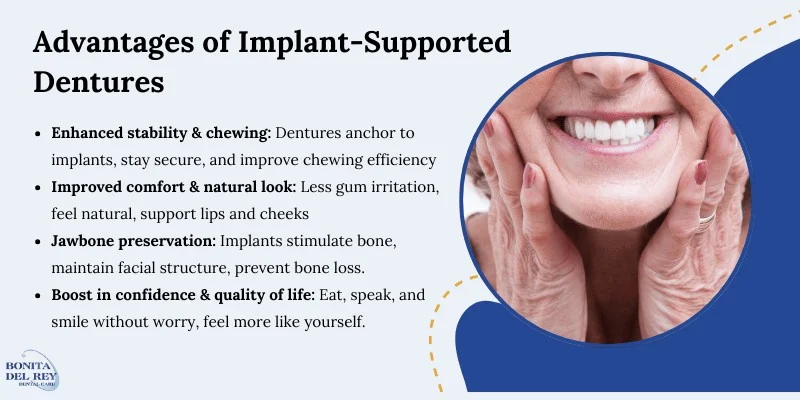
Enhanced Stability and Chewing Efficiency
Implant-supported dentures anchor directly to your jawbone using dental implants instead of just resting on your gums. This gives you much better stability when you eat and talk.
You won’t have to worry about your dentures slipping or moving around in your mouth. The improved stability means you can chew your food more effectively and comfortably.
This enhanced chewing efficiency lets you eat foods that might have been difficult with regular dentures. You can enjoy a wider variety of foods, including fruits, vegetables, and meats, which helps you maintain better nutrition.
Your oral function improves significantly because the dentures work more like natural teeth. You can bite with more force and confidence when eating.
Improved Comfort and Natural Appearance
The enhanced comfort you get from implant-supported dentures comes from their secure fit. They don’t rub against your gums the way traditional dentures sometimes do.
You’ll find that the dentures feel more natural in your mouth over time. The stability also means less irritation and fewer sore spots on your gums.
These dentures look very much like natural teeth and help maintain your facial appearance. They support your lips and cheeks from the inside, which prevents that sunken look that can happen with missing teeth.
The natural appearance helps you smile and speak with more confidence. Most people won’t be able to tell you’re wearing dentures at all.
Jawbone Preservation and Facial Structure
One of the most important benefits is how dental implants help preserve your jawbone and facial structure. When you lose teeth, your jawbone starts to shrink because it’s not being stimulated.
The implants act like tooth roots and stimulate your jawbone when you chew. This stimulation helps keep your bone from deteriorating over time.
Preserving your jawbone maintains your facial structure and prevents premature aging. Without this stimulation, your face can start to look older as the bone shrinks and your features change.
This makes implant-supported dentures a long-term solution for missing teeth that protects your health beyond just replacing teeth. The longevity of this benefit adds significant value over time.
Boost in Self-Esteem and Quality of Life
Your self-esteem can improve dramatically when you’re not worried about your dentures slipping or falling out. You can eat, laugh, and talk in social situations without anxiety.
The combination of better chewing ability and natural appearance helps you feel more like yourself again. You’re not limited in what you can eat at restaurants or family gatherings.
Many people find they smile more often and feel more comfortable in photos. The security and comfort of knowing your dentures are firmly in place gives you peace of mind throughout your day.
Ready to regain your confidence and enjoy life without worrying about slipping dentures? Visit Bonita Del Rey Dental Care to see how implant-supported dentures can transform your smile and daily comfort.
Risks and Potential Drawbacks
While implant-supported dentures offer many advantages, they also come with surgical risks, eligibility requirements, and a recovery period that requires careful consideration. Understanding these challenges helps you make an informed decision about whether this treatment is right for you.
Surgical Risks and Complications
Like any oral surgery, the implant placement procedure carries a risk of complications that you should discuss with your dentist. Infection at the implant site can occur if bacteria enter during or after surgery. This is why maintaining good oral hygiene before and after the procedure is so important.
Nerve damage is another possible complication, though it’s relatively rare. If an implant is placed too close to a nerve, you might experience numbness, tingling, or pain in your lips, gums, or chin.
Implant failure happens when the implant doesn’t properly fuse with your jawbone. This can occur due to:
- Poor bone quality or density
- Smoking or tobacco use
- Uncontrolled diabetes
- Inadequate healing after surgery
Gum disease around the implant, called peri-implantitis, can develop if you don’t keep the area clean. This condition can lead to bone loss around the implant and potentially cause it to fail.
Eligibility and Health Limitations
Not everyone qualifies as a good candidate for implant-supported dentures. Your dentist will evaluate several factors to determine if you’re eligible for this treatment.
You need sufficient jawbone density to support the implants. If you’ve experienced jawbone deterioration from missing teeth or gum disease, you may require a bone graft first. This adds time and cost to your treatment plan.
Certain health conditions can affect your eligibility:
- Uncontrolled diabetes slows healing and increases infection risk
- Cancer treatment (radiation to the head or neck) can interfere with healing
- Osteoporosis medications may affect bone integration
- Heart disease can complicate surgery
Smoking significantly reduces success rates because it impairs blood flow and healing. Many dentists recommend quitting before the procedure.
Discomfort and Healing Process
The surgical procedure requires healing time that typically spans several months. You’ll likely experience some discomfort immediately after surgery, including swelling, bruising, and minor bleeding.
Pain medications help manage discomfort during the first few days. Most patients find the pain manageable and worth the long-term benefits.
The healing process occurs in stages. Your jawbone needs three to six months to fuse with the implants through a process called osseointegration. During this time, you may need to follow dietary restrictions and stick to soft foods.
You’ll need multiple dental appointments throughout the healing process. Your dentist will monitor how well the implants are integrating with your bone and watch for any signs of complications.
Some temporary side effects during healing include difficulty eating certain foods and adjusting to how the dentures feel in your mouth.
Comparing Implant-Supported and Traditional Dentures
The main difference between these two options comes down to how they stay in place and what that means for your daily life. Traditional dentures rest on your gums and rely on suction or adhesive, while implant supported dentures attach to posts surgically placed in your jawbone.
Differences in Comfort and Stability
Traditional dentures sit directly on your gums. They can shift or slip when you eat or talk, which many people find uncomfortable or embarrassing.
Implant-supported dentures offer more stability because they anchor to dental implants in your jaw. This means they won’t move around in your mouth during meals or conversations. You can eat tougher foods without worrying about your dentures coming loose.
The secure fit also means less irritation to your gums. Traditional denture wearers often deal with sore spots where the dentures rub against soft tissue. With implant-supported options, you experience less of this friction since the dentures don’t rest entirely on your gums.
Impact on Oral Health and Jawbone
Your jawbone needs stimulation from tooth roots to stay healthy. When you lose teeth, the bone begins to shrink over time.
Traditional dentures don’t prevent this bone loss. They sit on top of your gums without providing the stimulation your jawbone needs. Over several years, this can change the shape of your face and make your dentures fit poorly.
Implant-supported dentures work differently. The implants act like artificial tooth roots and stimulate your jawbone when you chew. This helps preserve bone density and maintain your facial structure. You’re less likely to need adjustments or replacements as your jaw changes shape.
Lifestyle and Maintenance Considerations
You’ll need to remove traditional dentures every night for cleaning. They require soaking in a special solution and careful brushing. You also need to apply denture adhesive each day to help them stay in place.
Regular dental exams and cleaning are essential for both types of dentures. Implant-supported dentures require daily brushing just like natural teeth. Some types can be removed for cleaning, while others stay permanently attached.
The cost difference is significant. Traditional dentures cost less upfront but may need replacing every 5-7 years. Implant-supported dentures require surgery and cost more initially, but they typically last longer with proper care.
Treatment and Recovery Process
Getting implant-supported dentures involves multiple steps that take place over several months. The process includes planning appointments, surgical placement of the implants, a healing period for bone integration, and fitting your final dentures.
Consultation and Dental Appointments

Your first dental appointment focuses on evaluating whether you’re a good candidate for implant-supported dentures. Your dentist will take X-rays and scans to check your jawbone density and overall oral health.
During the consultation, you’ll discuss your medical history and any medications you take. This helps identify potential issues before treatment begins. Your dentist will also explain the difference between fixed and removable options.
If you don’t have enough bone to support implants, you might need a bone graft first. This adds extra time to your treatment but creates a stronger foundation. Your dentist will create a personalized treatment plan based on your specific needs and goals.
Implant Placement and Osseointegration
During implant placement, your dentist surgically inserts titanium posts into your jawbone. These posts act as artificial tooth roots. The procedure is typically done under local anesthesia or sedation to keep you comfortable.
After placement, osseointegration begins. This is when the titanium implants fuse with your jawbone. The process usually takes three to six months for the lower jaw and four to seven months for the upper jaw.
During osseointegration, you’ll have regular dental check-ups so your dentist can monitor healing. You should avoid putting pressure on the implant sites during this time. Most people can return to work within a few days, though you’ll need to stick to soft foods.
Temporary vs. Final Dentures
You’ll likely wear temporary dentures while your implants heal and integrate with the bone. These temporary dentures protect the implant sites and let you eat and speak more normally during recovery.
Temporary dentures rest on your gums rather than attaching to the implants. They may not feel as secure as your final dentures will. You’ll need to be gentle when eating and avoid sticky or hard foods.
Once osseointegration is complete, your dentist takes impressions to create your final dentures. A dental lab custom-makes these to fit precisely over your implants. Your final dentures will snap onto or screw into the implants for a secure, stable fit.
Timeline for Full Recovery
The healing period varies based on individual factors like bone quality and whether you needed bone grafting. Most patients experience the full treatment spanning four to eight months from start to finish.
You’ll notice swelling and mild discomfort for the first few days after implant placement. This typically resolves within a week. Full healing of the surgical sites takes about two weeks, though bone integration continues for months.
Your dentist will schedule follow-up appointments throughout recovery to check your progress. These visits help catch any complications early and ensure your implants are integrating properly. Once you receive your final dentures, you may need a few adjustment appointments to perfect the fit.
Maintenance and Long-Term Care
Proper care extends the life of your implant-supported dentures and protects your oral health. Regular cleaning at home and professional dental visits help prevent infections and keep your implants working well for years.
Daily Oral Hygiene for Implant-Supported Dentures
You need to clean your implant-supported dentures every day, just like natural teeth. Brush around the implants and denture attachments at least twice daily using a soft-bristled toothbrush.
Water flossers work especially well for cleaning hard-to-reach areas under and around your dentures. You can also use floss threaders or special implant floss to clean between the implants and remove food particles that regular brushing misses.
Pay close attention to where the denture meets your gums. This area collects bacteria that can lead to infection if not cleaned properly. Consider these daily care steps:
- Rinse your mouth after meals
- Use antimicrobial mouthwash as directed by your dentist
- Clean all surfaces of removable implant-supported dentures
- Brush your tongue and any remaining natural teeth
Professional Cleaning and Dental Visits
Research highlights that your dentist needs to check your implant-supported dentures every 3 to 6 months. These dental visits allow early detection of problems before they become serious.
Professional cleanings remove hardened plaque that you cannot clean at home. Your dental team uses special tools designed for implants that won’t scratch or damage the metal surfaces. They may use air polishing with soft powders or ultrasonic devices on low power settings.
During maintenance appointments, your dentist will measure the tissue around your implants and check for signs of inflammation. Research shows that patients without regular maintenance have a 4.25 times higher risk for peri-implantitis, a serious infection around implants.
Preventing Complications with Proper Care
Good oral hygiene and regular professional care prevent the two main diseases that affect implants: peri-mucositis and peri-implantitis. Peri-mucositis causes gum inflammation around implants and can be reversed if caught early.
Without treatment, peri-mucositis can progress to peri-implantitis. This condition damages the bone supporting your implants and may cause implant failure. Watch for these warning signs:
- Bleeding when you brush or floss
- Red or swollen gums around implants
- Bad breath that doesn’t go away
- Loosening of the denture or implants
Implant-supported dentures can last 10 to 20 years with proper maintenance.
Research shows that long-term survival rates for implant-supported prostheses are high, with studies tracking patients for up to 25 years reporting implant survival of 95% and prosthesis survival of 88%.
Most implants remained free of peri-implantitis, and mean peri-implant bone loss and probing depths stayed within healthy ranges, highlighting the effectiveness of supportive implant therapy over decades.
Managing health conditions like diabetes and avoiding smoking also help protect your implants from gum disease and infection.
Imagine eating, laughing, and smiling freely again. Speak with Bonita Del Rey Dental Care to discover a secure, life-changing solution for your smile.
Frequently Asked Questions
People considering this treatment often have questions about costs, insurance coverage, and how these dentures work in daily life. Understanding the differences between various implant options helps you make informed decisions about your dental health.
What is the average cost for getting implant-supported dentures?
The total cost typically ranges from $15,000 to $30,000 per arch. This price includes the surgical placement of implants, any necessary bone grafting, and the custom denture itself.
Several factors affect the final price. The number of implants you need, whether you require bone grafts, and your choice between fixed or removable dentures all play a role. Your location and the experience of your dentist also influence costs.
Are there any visual examples of denture implants available?
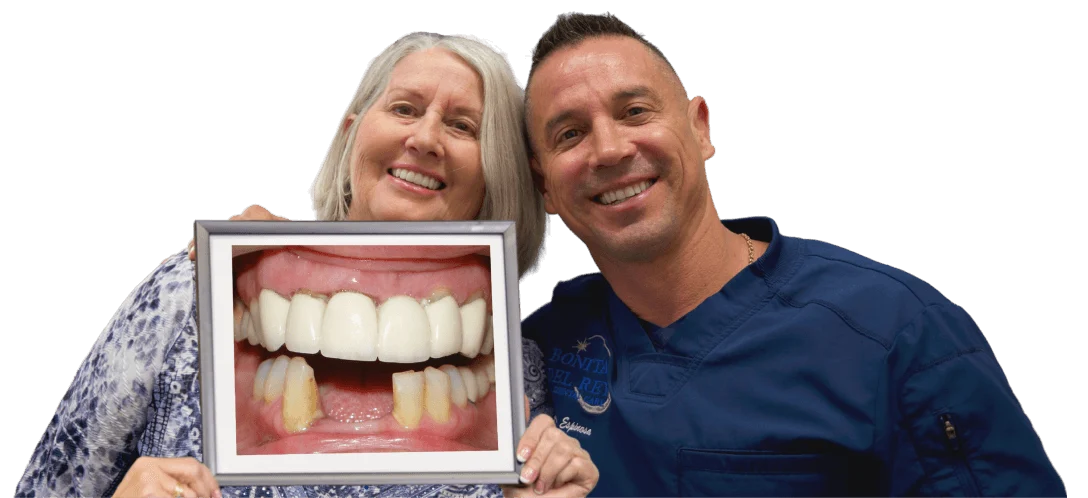
Most dental practices provide before-and-after photos during your consultation. These images show how implant-supported dentures look once they are in place and how they improve your smile.
You can also request to see diagrams that explain how the titanium posts anchor into your jawbone. Many dentists use digital imaging to show you what your results might look like before treatment begins.
How does dental insurance typically affect the cost of implant dentures?
Most dental insurance plans cover only a portion of implant-supported dentures or none at all. Traditional dental insurance often classifies implants as cosmetic rather than medically necessary.
Some plans may cover the denture portion but not the implants themselves. You should contact your insurance provider directly to understand your specific coverage. Many dental offices offer payment plans or financing options to help manage the out-of-pocket costs.
Can implant-supported dentures be taken out like traditional dentures?
The answer depends on which type you choose. Removable implant-supported dentures snap on and off the implants, allowing you to take them out at home for cleaning and comfort.
Fixed implant dentures stay in your mouth permanently. Only your dentist can remove them during professional cleanings or adjustments. Fixed versions feel more like natural teeth, while removable ones offer easier maintenance.
What common problems do wearers of snap-in dentures usually face?
Some people experience difficulty snapping the dentures into place at first. This typically improves with practice as you get used to the attachment mechanism.
The clips or attachments can wear out over time and need replacement. You might also notice minor soreness around the implant sites during the initial adjustment period. Regular dental visits help address these issues early and keep your dentures functioning properly.
How do implant-supported dentures differ from the All-on-4 treatment concept?
All-on-4 is a specific type of fixed implant-supported denture that uses exactly four implants per arch. The implants are placed at precise angles to maximize support without requiring bone grafts in most cases.
Traditional implant-supported dentures may use anywhere from two to eight implants per arch. All-on-4 offers a faster treatment timeline and often lower costs because it requires fewer implants. Your bone density and jaw structure determine which approach works best for your situation.