Implant supported dentures offer a stable solution for missing teeth, but they’re not the right choice for everyone. Understanding who should avoid this treatment can save you time, money, and potential health complications down the road.
People with certain medical conditions may not be ideal implant supported dentures candidates. This includes uncontrolled diabetes, active gum disease, low jawbone density, heavy smokers, cancer treatment patients, and those on specific medications.
Your overall health plays a significant role in whether dental implants will integrate successfully with your jawbone. Implant supported dentures anchor directly to your jawbone using dental implants, which requires good bone health and proper healing ability.
Before you decide on this treatment, you need to know if you’re a good candidate.
This article will walk you through the key considerations for whether to be cautious about dental implants or avoid them altogether, along with alternative options that might work better for your situation.
Key Takeaways
- Certain medical conditions and lifestyle factors can prevent dental implants from healing properly or increase your risk of complications
- Your jawbone must have enough density and volume to support implants, and some health conditions can affect bone quality
- Alternative tooth replacement options exist if you’re not a good candidate for implant supported dentures
Understanding Implant Supported Dentures
Implant supported dentures attach to titanium posts placed in your jawbone instead of resting on your gums. You can choose between removable options that snap on and off or fixed versions that stay in your mouth permanently.
How Implant Supported Dentures Work
Your dentist surgically places titanium posts into your jawbone during the first step of treatment. These posts act as artificial tooth roots that bond with your bone over 3 to 6 months.
The bonding process is called osseointegration. During this time, the titanium fuses with your jawbone to create a stable foundation.
Once the posts are integrated with your bone, your dentist attaches abutments to them. Abutments are small connector pieces that stick up through your gums and hold the dentures in place.
Your custom dentures are then attached to these abutments using special clips or screws. This design provides greater stability when eating and talking compared to traditional options.
The implants stimulate your jawbone like natural teeth when you chew. This stimulation helps prevent bone loss that normally happens after tooth loss.
Types of Implant Supported Dentures
Snap-on dentures click onto the implants but you can remove them at home for cleaning. You take them out at night and soak them in cleaning solution just like regular dentures.
These removable dentures give you flexibility and easier maintenance. Most people use 2 to 4 implants to support snap-on dentures on the lower jaw and 4 to 6 for the upper jaw.
Fixed implant supported dentures attach permanently to the implants and only your dentist can remove them. You brush and floss them like natural teeth.
The All-on-4 system is a popular type of fixed implant denture that uses four strategically placed posts to support a full arch of teeth. Hybrid dentures combine implant technology with denture materials to create these permanent solutions.
Implant retained dentures describe both types since they rely on dental implants for support. Your choice depends on your budget, lifestyle preferences, and how much stability you need.
Differences from Traditional and Removable Dentures
Traditional dentures rest on your gums and rely on suction or adhesive to stay in place. They often slip when you eat or talk, which can feel embarrassing.
Implant supported dentures anchor directly to your jawbone using dental implants. This means they won’t move around during meals or conversations.
Regular removable dentures don’t prevent bone loss in your jaw. Over time, your jawbone shrinks and changes the shape of your face.
Denture solutions with implants stimulate your bone and help maintain your facial structure. The denture attachment to implants also eliminates the need for messy adhesives.
Partial dentures replace some missing teeth while implant supported options typically replace a full arch. You get better chewing power with fixed implant dentures since they don’t put pressure on your gums.
Traditional dentures may need replacing every 5 to 7 years as your jaw changes shape. Implant-based options last longer because the bone stays healthier around the posts.
Curious if you’re a suitable implant supported dentures candidate? Explore our options, understand the risks, and learn how Bonita Del Rey Dental Care can help you make a confident choice today.
Key Eligibility Requirements for Implant Supported Dentures
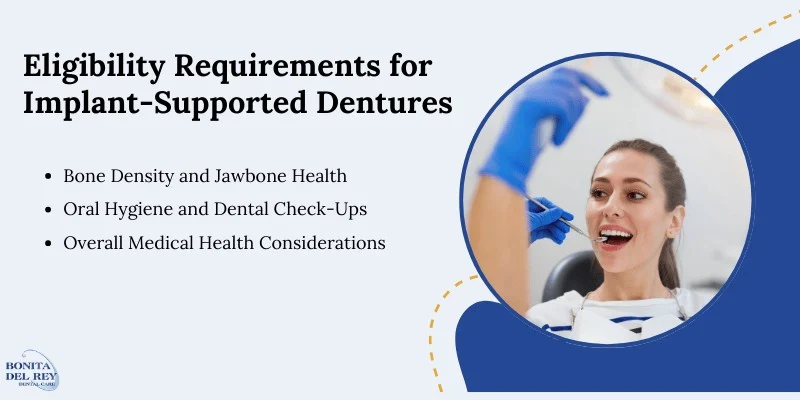
Getting implant supported dentures requires meeting specific health criteria to maximize the likelihood of success. Your jawbone needs sufficient density to support the implants, and your overall oral and medical health plays an important role in the healing process.
Bone Density and Jawbone Health
Your jawbone density is the most critical factor for implant success. The implants need solid bone structure to anchor properly and go through osseointegration, which is when the titanium posts fuse with your jawbone. If you don’t have enough bone, the implants won’t stay secure.
Your dentist will use 3D imaging to check if your jawbone can support dental implant surgery. People who have worn traditional dentures for many years often experience bone loss in their jaw. This happens because without tooth roots, the bone slowly shrinks away.
If you lack sufficient bone, you might need bone grafting before getting implants. A bone graft procedure rebuilds your jaw structure over several months. This extra step can make you eligible for implants even if your initial scan shows inadequate bone density.
Oral Hygiene and Dental Check-Ups
You need healthy gums with no active gum disease to qualify for implants. Infections or severe periodontal disease can cause implants to fail. Your dentist will check for any ongoing oral health problems during your evaluation.
Good oral hygiene habits are essential before and after getting implants. You’ll need to brush twice daily, floss regularly, and keep up with dental check-ups. Regular cleanings help prevent infections around the implant sites.
If you have gum disease now, you’ll need treatment first. Once your gums heal and stay healthy, you can move forward with implant supported dentures. Your commitment to maintaining clean teeth and gums directly affects how long your implants last.
Overall Medical Health Considerations
Your general health impacts how well you heal after dental implant surgery. You need to be stable enough to undergo minor oral surgery and recover properly. Certain medical conditions require extra evaluation, but don’t automatically disqualify you.
Conditions that may need management:
- Diabetes (must be well-controlled)
- High blood pressure
- Heart conditions
- Osteoporosis
Well-managed diabetes typically allows for successful implants, but poor blood sugar control slows healing. Your dentist may coordinate with your doctor to ensure you’re ready for treatment. Some medications that affect bone healing might need adjustment before surgery.
Smoking significantly reduces implant success rates. Quitting tobacco before and after surgery improves your chances of proper healing. Your age isn’t a strict barrier, but your ability to heal and follow post-surgery instructions matters more than the number on your birthday.
Who Should Avoid Implant Supported Dentures?
Certain health conditions and habits can make implant supported dentures a risky choice. People with active gum infections, unmanaged health problems, or poor dental hygiene face higher chances of implant failure and complications.
Severe Gum Disease or Peri-Implantitis
Active gum disease creates an unhealthy environment in your mouth that threatens implant success. The bacteria from gum infections can attack the bone and tissue around implants just like they damage natural teeth.
You need healthy gums before getting implant supported dentures. Your dentist must treat and control any existing gum disease first. This process can take weeks or months, depending on how severe your condition is.
Peri-implantitis is a serious infection that develops around dental implants. This condition causes inflammation and bone loss that can lead to implant failure. If you’ve had peri-implantitis before with previous implants, you face a higher risk of getting it again.
Uncontrolled Systemic Health Conditions
Your overall health directly affects how well implants can heal and fuse with your jawbone. Uncontrolled diabetes slows down healing and increases infection risk after surgery.
Conditions that may prevent you from getting implant dentures:
- Unmanaged diabetes with high blood sugar levels
- Active cancer treatment involving radiation to your head or neck
- Certain osteoporosis medications that affect bone healing
- Severe heart disease requiring special surgical precautions
- Autoimmune disorders that suppress your immune system
Heavy smoking significantly reduces success rates because it restricts blood flow to your gums and bone. Most dentists recommend quitting smoking before the procedure.
Ongoing Poor Oral Hygiene or High Infection Risk
Implant supported dentures require daily cleaning and regular dental care to stay healthy. If you struggle to maintain basic oral hygiene, you face a much higher risk of infections around your implants.
You must commit to brushing daily and attending regular dental checkups. Poor cleaning habits allow bacteria to build up around the implants and cause serious problems.
People with a history of frequent infections or a weakened immune system may not be good candidates. Your body needs to fight off bacteria effectively to keep the implant sites healthy. Without this ability, you’re more likely to develop complications that could cause your implants to fail.
Lifestyle and Behavioral Factors That Increase Risks
Certain daily habits and personal choices can significantly affect how well implant supported dentures work for you. Smoking damages your mouth’s ability to heal, skipping dental care leads to infections, and your age influences both healing and bone quality.
Smoking and Tobacco Use
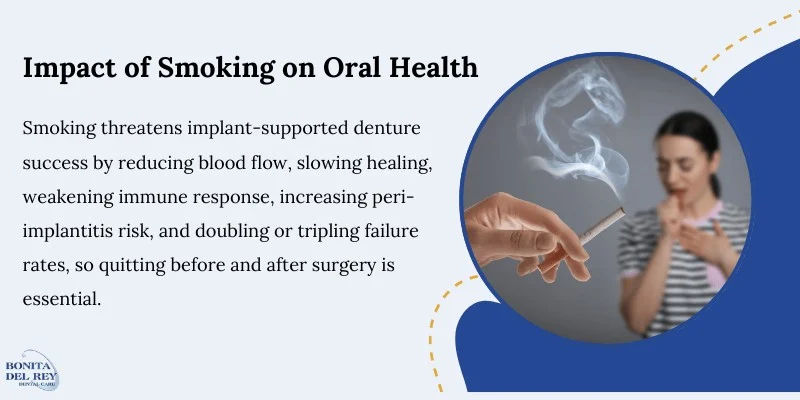
Smoking is one of the biggest threats to implant supported denture success. Tobacco restricts blood flow to your gums and jaw, which slows down healing after surgery. This poor blood circulation makes it harder for the implant posts to fuse properly with your jawbone.
Smoking increases the risk of peri-implantitis, a serious infection around the implant that can cause it to fail. Your body’s immune response weakens when you smoke, making it easier for bacteria to attack the tissue around your implants.
If you currently use any tobacco products, you should quit at least two weeks before surgery. Many dentists won’t perform the procedure unless you stop smoking entirely. Even after successful placement, continuing to smoke doubles or triples your risk of implant failure compared to non-smokers.
Neglected Oral Maintenance
Poor compliance with oral hygiene and regular dental visits dramatically increases your chances of complications. You need to clean around your implants every single day to prevent bacterial buildup.
Proper oral hygiene requires more effort with implant supported dentures than natural teeth. You should use a water flosser to reach areas that regular brushing misses. Floss threaders help you clean underneath the denture bar where food particles accumulate.
Missing your dental check-ups means problems go undetected until they become severe. Your dentist needs to examine your implants every six months to catch early signs of infection or bone loss. If you struggle to keep appointments or maintain daily cleaning routines, implant supported dentures may not be right for you.
Age-Related Considerations

Your age affects both your healing ability and bone density, though it doesn’t automatically disqualify you from treatment. Younger patients with still-developing jaws should wait until their bone growth completes, usually around age 18 to 21.
Older adults often have excellent success with implant supported dentures. However, age-related health conditions like osteoporosis or slower healing processes require extra evaluation. Your body’s ability to recover from surgery typically decreases with age, which may extend your healing time.
Medications common in older patients can also impact success rates. You’ll need a thorough health assessment regardless of your age to determine if you’re a good candidate.
Confused about denture options? Contact Bonita Del Rey Dental Care in Chula Vista, CA to discuss your situation and explore safe, effective alternatives.
Potential Complications and Alternatives
Implant surgery carries specific risks that you need to understand before making your decision. Some people experience better outcomes with traditional options like removable dentures or partial dentures instead of committing to permanent implants.
Risks Associated with Implant Surgery
When you undergo implant surgery, you face several potential complications that can affect your recovery and results. Infection at the implant site can develop if you don’t maintain proper oral hygiene after your procedure.
You might notice swelling, pain, redness, or discharge around the area where your denture implants were placed.
Your body’s ability to heal properly plays a major role in whether complications arise. If you have uncontrolled diabetes or autoimmune disorders, your healing process may be slower and more problematic. Smokers face even higher risks because smoking reduces blood flow to your gums and bone tissue.
Mechanical issues can also occur with your implants over time. Components may loosen, fractures can develop, or prosthetic parts might fail. These problems sometimes require additional procedures to fix or replace the affected implants.
Implant Failure and Nerve Damage
Implant failure happens when your jawbone doesn’t properly fuse with the implant during healing. Poor bone quality or insufficient bone density in your jaw can prevent the implant from becoming stable. If you don’t have enough bone volume, you might need bone grafting before getting implants.
Nerve damage during implant placement can cause numbness or tingling in your mouth, lips, tongue, or chin. While this complication is rare, it occurs when surgical instruments or the implant itself damages nearby nerves. The sensation changes might be temporary or permanent depending on the severity.
Your lifestyle choices directly impact your risk of implant failure. If you smoke or take certain medications that slow healing, your chances of problems increase significantly. Removable implant supported dentures offer a middle ground if you’re concerned about permanent implant risks.
When to Consider Traditional or Partial Dentures
You might benefit more from traditional removable dentures if you have significant bone loss or medical conditions that make surgery risky. These dentures rest on your gums and use denture adhesives to stay in place. They’re easier to clean and don’t require surgical procedures.
A partial denture works well when you still have some healthy natural teeth remaining. It fills the gaps where teeth are missing without requiring implants in your jawbone. You can remove it daily for cleaning and sleeping.
Consider these alternatives if:
- You have inadequate bone density for implants
- Your health conditions increase surgical risks
- You prefer a less invasive treatment option
- Cost is a primary concern for your dental care
All-on-4 systems and zirconia dental implants provide other options that might suit your specific situation better than standard implant supported dentures.
Consultation and Making the Right Choice
The cost of implant supported dentures and your overall health need careful review with a dental professional before you decide on this tooth replacement option.
Evaluating Costs and Insurance Coverage
Implant supported dentures cost more upfront than traditional dentures because they require surgery and dental implants. You’ll typically pay between $3,000 and $30,000 per arch depending on how many implants you need and where you live.
Your budget should account for both the initial procedure and potential future adjustments. While the higher upfront investment might seem challenging, implant supported options often need fewer replacements over time compared to traditional dentures.
Check with your dental insurance provider about coverage. Many insurance plans cover part of the denture cost but may not cover the implants themselves. Some dental offices offer payment plans or financing options to make the treatment more affordable for you.
Consulting with a Dental Professional
Your dentist will examine your jawbone density, gum health, and overall medical condition to determine if you’re a good candidate. This evaluation includes X-rays or CT scans to assess bone quality and quantity.
Talk openly with your dentist about your medical history, including any medications you take. They need to know about conditions like diabetes, osteoporosis, or autoimmune disorders that might affect healing.
Your lifestyle and daily needs matter when choosing between denture solutions to replace missing teeth.
Ask about how each option will affect eating, speaking, and maintenance routines. Your dentist can explain the differences between traditional and implant supported options based on your specific situation.
Unsure if implant supported dentures are right for you? Find out if you qualify, learn the risks, and explore alternatives at Bonita Del Rey Dental Care in Chula Vista, CA.
Frequently Asked Questions
Medical conditions, age factors, and personal habits all play important roles in determining whether implant supported dentures are right for you. Your bone density and ability to maintain proper oral care also matter significantly.
Can you tell me if there are any specific medical conditions that might make implant supported dentures unsuitable?
Yes, several medical conditions can affect your ability to get implant supported dentures successfully. Uncontrolled diabetes can affect your body’s healing ability after implant surgery, which increases the risk of complications.
Autoimmune disorders and bleeding disorders also create challenges. These conditions can interfere with how well your body heals and how the implants integrate with your jawbone.
If you have heart disease or take certain medications like blood thinners, you’ll need to discuss these with your dentist. They can evaluate whether the benefits outweigh the risks in your specific situation.
Are there age restrictions when it comes to getting implant supported dentures?
Age does matter when considering implant supported dentures. Children and young teens whose jaws are still growing are not good candidates because their jawbones haven’t finished developing yet.
The growth and development of young jawbones may not provide the stability needed for implants to integrate properly. Most dentists recommend waiting until the jaw has fully matured, which typically happens in the late teens or early twenties.
Older adults can generally get implant-supported dentures if they’re in good health. However, some older individuals may face challenges with bone density and slower healing times.
Just curious, but is there anything I should know about bone density and implant-supported dentures?
Bone density is critical for implant-supported dentures to work properly. Your jawbone needs sufficient density and volume to hold the implants securely in place.
If you don’t have enough bone density, the implants may not integrate successfully with your jaw. This can lead to implant failure or the need for additional procedures before you can get your dentures.
Bone grafting procedures can help build up your jawbone if you lack adequate bone volume. These grafts add bone material to strengthen your jaw before implant placement, though this extends your treatment timeline.
Do implant supported dentures require any special ongoing care that I might not be able to manage?
Implant supported dentures do require committed oral hygiene to stay healthy and functional. You’ll need to brush and clean around the implants daily to prevent infection and gum disease.
Regular dental checkups are essential for monitoring your implants and dentures. Your dentist needs to examine the implant sites and make sure everything is healing and functioning correctly.
If you have a history of neglecting dental care or avoiding dental visits, implant supported dentures might not be your best option. Poor oral hygiene can compromise the implants and lead to serious complications.
I’m wondering if my current oral health might affect my eligibility for implant supported dentures. Can you enlighten me?
Your current oral health plays a major role in determining your eligibility. Active gum disease or untreated tooth decay can interfere with the success of your implants.
You’ll typically need to address any existing oral health problems before getting implant supported dentures. This might include treating gum disease, removing infected teeth, or resolving other dental issues first.
Good oral health habits are necessary for implants to succeed long-term. The healthier your mouth is before the procedure, the better your chances of successful implant integration.
Is it possible that my lifestyle choices, like smoking, could influence whether I can get implant supported dentures?
Smoking significantly affects your chances of successful implant supported dentures. It impairs blood flow to your gums and bone tissue, slowing healing after surgery.
Smokers face a much higher risk of implant failure compared to non-smokers. Most dentists strongly advise quitting smoking before undergoing implant surgery to improve your chances of success.
If you’re not willing to quit smoking, you should discuss this honestly with your dentist. They can help you understand the increased risks and whether alternatives such as traditional dentures or dental bridges might be better choices for you.