Getting dental implants can change your life, but sometimes your jaw needs extra support first. Following the right steps before, during, and after bone grafting can greatly increase your chances of successful dental implants and a healthy, lasting smile.
Many people need bone grafting before dental implants to rebuild jaw strength and create a solid base for their new teeth.
The good news is that bone grafting has become safer and more effective over the years. Modern materials and techniques make grafting more reliable than ever before. Understanding what to expect and how to care for yourself can help you get the best results.
This guide will walk you through everything you need to know about preparing for bone grafting, what happens during the procedure, and how to support your healing. You’ll learn practical ways to maximize bone grafting success for dental implants and set yourself up for a confident smile.
Key Takeaways
- Bone grafting rebuilds weak jawbone areas to create a strong foundation for dental implants
- Proper healing and following your dentist’s care instructions directly affect your implant success
- Different graft materials and techniques are available depending on your specific bone loss situation
How Bone Grafting Supports Dental Implant Success
Bone grafting creates the foundation your dental implants need to stay secure and functional for years to come. The procedure addresses critical factors like bone density and volume that directly affect how well your implants integrate with your jawbone.
Importance of Stable Jawbone for Implant Placement
Your jawbone needs to be strong and thick enough to hold dental implants in place. When you lose a tooth, the bone that once supported it begins to disappear through a process called bone resorption. This natural bone loss can leave you with a jawbone that’s too thin or weak for successful implant placement.
A stable jawbone provides the secure base your implants require to function like natural teeth. Without adequate bone structure, your implants may shift, loosen, or fail completely. Bone grafting rebuilds this essential foundation by adding material that encourages new bone growth in areas where you’ve experienced bone loss.
The grafting process gives your body time to integrate the new bone material with your existing jawbone. This creates a solid structure that can support the pressure and force of chewing and speaking.
Impact of Bone Density and Volume on Outcomes
Bone density and volume directly determine your implant success rate. Your jawbone must be dense enough for the implant to integrate properly through osseointegration, where the bone actually grows around and bonds with the implant surface.
Key factors affecting dental implant success:
- Bone density: Determines how firmly the implant anchors
- Bone volume: Provides adequate space for proper implant sizing
- Bone quality: Affects healing time and integration strength
Low bone density or insufficient bone volume significantly reduces implant survival rates. Bone grafting strengthens the jaw and creates the bone volume needed for your implants to stabilize completely. Patients with adequate bone density after grafting experience better long-term outcomes and fewer complications.
The improved bone structure from grafting allows your dental professional to place implants at the correct angle and depth. This proper positioning is essential for both function and appearance.
Risks of Skipping Bone Grafting
Skipping bone grafting when it is needed may lead to implant failure. Without sufficient bone support, your implants cannot achieve proper osseointegration, which means they won’t bond securely to your jawbone.
Potential problems from avoiding necessary bone grafting:
- Early implant failure within months of placement
- Implants that feel loose or move when eating
- Damage to nearby teeth or nerves
- Need for implant removal and replacement
- Higher overall treatment costs from complications
Your oral health also suffers when implants fail due to inadequate bone. Failed implants can cause infection, pain, and additional bone loss that makes future implant attempts even more difficult.
The initial bone grafting procedure, while requiring extra time and healing, protects your investment in dental implants and increases your chances of long-term dental implant success.
Protect your dental implant investment. Explore bone grafting options at Bonita Del Rey Dental Care in Chula Vista, CA, and ensure long-lasting implant success.
When Bone Grafting Is Needed Before Dental Implants
Your jawbone must be strong enough to hold a dental implant securely in place. Several conditions can weaken or reduce bone in your jaw, making a bone graft necessary before dental implant placement can happen.
Tooth Loss and Bone Resorption
When you lose a tooth, the jawbone in that area no longer receives pressure from chewing. Without this stimulation, your body starts to break down the bone through a process called bone resorption.
You can lose up to 25% of your bone width within the first year after tooth loss. The longer you wait to replace missing teeth, the more bone loss occurs. This makes it harder for your oral surgeon to place an implant without extra support.
Bone resorption affects both the height and width of your jawbone. If the bone becomes too thin or too short, an implant cannot fit properly. A bone graft rebuilds the lost bone and creates a stable base for your future implant.
The amount of bone grafting you need depends on how long the tooth has been missing and how much bone resorption has occurred.
Gum Disease and Periodontal Factors
Gum disease destroys the bone that holds your teeth in place. Advanced periodontal disease can cause severe bone loss around multiple teeth.
Even after your dentist treats the infection, bone damage from gum disease remains. The bone does not grow back on its own. This leaves gaps and weak spots in your jaw where bone used to be.
If you need an implant in an area affected by periodontal disease, your oral surgeon will likely recommend a bone graft first. The graft fills in the bone defects and restores the jaw’s structure. This gives the implant a healthy foundation to integrate with your bone.
Your dentist will make sure your gum disease is fully treated before performing any bone grafting procedure.
Trauma, Injuries, and Congenital Defects
Jaw injuries from accidents or sports can cause immediate bone loss. Fractures, knocked-out teeth, or other trauma may leave your jawbone damaged or uneven.
Some people are born with bone defects that affect the size or shape of their jaw. These congenital conditions can make certain areas too thin or too weak for implant placement.
A bone graft repairs damage from jaw injuries and corrects bone defects present from birth. Your oral surgeon places bone material where it is missing to rebuild the jaw’s natural shape. This allows them to position your implant correctly for the best function and appearance.
The type and size of bone graft you need depends on the extent of the damage or defect in your jaw.
Need a strong foundation for your dental implants? Schedule a consultation with Bonita Del Rey Dental Care today to explore bone grafting options.
Types of Bone Grafts and Grafting Materials
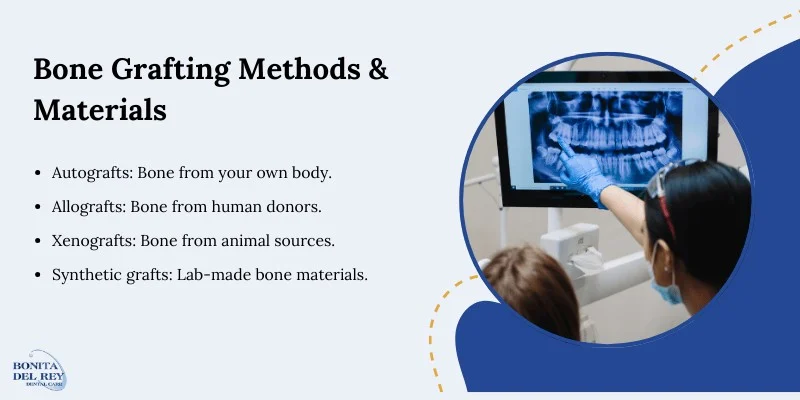
Your dentist can choose from several types of bone grafting materials, each with different sources and properties. The main options include bone taken from your own body, bone from human or animal donors, and lab-made synthetic materials.
Autografts and Donor Bone Sources
Autografts use bone harvested from your own body, making them the gold standard for bone grafting. Your surgeon might take donor bone from your chin, jaw, hip, or shin depending on how much material is needed.
These autogenous grafts work best because your body recognizes the bone as its own. This means no rejection risk and excellent healing results. The bone contains living cells that help new bone grow faster.
The main downside is that you need two surgical sites instead of one. Taking bone from another area of your body adds extra recovery time and discomfort. For smaller grafts, your dentist can often harvest bone from inside your mouth during the same procedure.
Allografts and Xenografts
Allografts come from human donors through a bone bank. The bone goes through careful processing to remove cells and reduce any chance of disease transmission while keeping the bone structure intact.
Allografts and xenografts eliminate the need for a second surgical site on your body. Xenografts use animal bone, usually from cows or pigs, that has been specially treated and sterilized.
Both options provide a scaffold for your natural bone to grow into. Your body gradually replaces the graft material with your own bone over several months. These materials are readily available and work well for most patients.
Synthetic and Bioactive Materials
Synthetic grafts include alloplasts made from materials like calcium phosphate, hydroxyapatite, or bioactive glass. These lab-created materials avoid any concerns about using human or animal tissue.
Synthetic options come in particles, putty, or block forms depending on your needs. Bioactive glass releases calcium and phosphate ions that stimulate bone formation. Some synthetic materials dissolve as your natural bone replaces them, while others remain in place permanently.
These materials offer consistent quality and unlimited supply. They work well when combined with other graft types to stretch your treatment options.
The Bone Grafting Procedure: Step-by-Step
Your dentist will use advanced imaging to plan your bone grafting surgery and place the graft material where your jaw needs more support. Different techniques like socket preservation or sinus lift procedures may be used depending on where you need the implant.
Initial Consultation and Advanced Imaging
Your oral surgery journey starts with a detailed consultation where your dentist examines your mouth and reviews your medical history. They will take 3D CBCT scans to see the exact shape and density of your jawbone. These 3D scans show areas where bone loss has occurred and help plan exactly where the graft needs to go.
The imaging lets your dentist measure how much bone you have and determine if you need a simple graft or a more complex procedure. CBCT scans create a complete picture of your jaw, teeth roots, and sinus cavity. Your dentist uses this information to plan guided implant surgery for better results.
You’ll discuss what type of graft material will work best for your situation. Your dentist will explain whether they’ll use your own bone, donor bone, animal bone, or synthetic materials. They’ll also tell you how long healing will take before you can get your implants.
Surgical Process and Placement of Graft
The bone grafting procedure begins with numbing the area using local anesthesia. Your dentist makes a small cut in your gum to access the jawbone underneath. They clean the area and prepare the bone surface to receive the graft material.
The graft material is then carefully placed where your jaw needs more volume or density. Your dentist packs the powdered or granular bone into the treatment area. Sometimes they use special dental screws or a membrane to hold the graft in place while it heals.
The surgical procedure typically takes between 30 minutes to two hours depending on how much work is needed. Your dentist closes the incision with stitches after placing the graft. You’ll receive instructions for caring for the surgical site during recovery.
Socket Preservation and Sinus Lift Techniques
Socket preservation is done right after a tooth extraction to prevent bone loss. Your dentist fills the empty tooth socket with graft material before your gums heal over it. This technique keeps the jawbone from shrinking and makes future implant placement easier.
A sinus lift becomes necessary when you need implants in your upper back jaw but don’t have enough bone height. The procedure involves lifting the membrane of your sinus cavity and placing bone graft material underneath it. This creates more space between your jaw and sinuses for the implant.
Sinus Lift Benefits:
- Adds vertical bone height in upper jaw
- Protects sinus cavity during implant placement
- Allows implants where they weren’t possible before
- Heals in 4-6 months before implant surgery
Both techniques require careful planning using 3D imaging to avoid complications. Your dentist may combine these methods with guided surgery for precise graft placement.
Healing and Recovery After Bone Grafting
The healing timeline after bone grafting typically spans 4-6 months, during which your body builds new bone tissue and prepares the site for implant placement. Proper aftercare and understanding each phase of recovery will help ensure strong bone regeneration and long-term implant stability.
Phases of the Healing Process
Your recovery begins immediately after surgery with the initial healing phase, which lasts about one week. During this time, you’ll experience swelling, bruising, and mild discomfort as blood clots form to protect the surgical site. These clots are essential for healing, so avoid disturbing them.
The early bone integration phase occurs from week one to week three. New blood vessels start forming around the graft material, delivering oxygen and nutrients needed for bone regeneration. The graft acts as a framework for your natural bone to grow around.
Between months one and four, active bone regeneration takes place. Your body replaces the graft material with natural bone tissue through a process called osteogenesis. The bone grows denser and stronger during this critical phase.
Complete bone maturation happens from month four to six or beyond. Osseointegration reaches full strength during this final stage, creating a stable foundation ready to support your dental implant procedure.
Promoting Bone Regeneration
Your diet plays a major role in healing success. Focus on eating foods rich in calcium, vitamin D, and protein to support new bone growth. Dairy products, leafy greens, fish, and lean meats provide essential nutrients your body needs.
Avoid smoking and alcohol completely during recovery. Both substances slow down the healing process and significantly increase the risk of graft failure. Smoking restricts blood flow to the surgical site, which prevents proper bone formation.
Get adequate rest and avoid strenuous physical activities for at least two weeks. Heavy lifting and intense exercise can disrupt the graft site and delay healing. Light walking is fine, but listen to your body and don’t push yourself too hard.
Stay consistent with any prescribed medications or supplements. Your dentist may recommend bone-strengthening supplements or antibiotics to prevent infection and support healthy tissue development.
Oral Hygiene and Aftercare
Keep the surgical area clean without directly brushing it for the first week. Rinse gently with warm salt water after meals to remove food particles and bacteria. Use a soft-bristled toothbrush on the rest of your teeth.
Stick to soft foods for the first few weeks to avoid putting pressure on the graft site. Yogurt, smoothies, mashed potatoes, and scrambled eggs are good options. Gradually introduce harder foods as your healing progresses.
Attend all scheduled follow-up appointments with your dentist. These visits allow your dental team to monitor healing progress through X-rays and physical examinations. Early detection of any issues helps prevent complications that could affect your facial aesthetics or implant stability.
Apply ice packs to your face during the first 48 hours to reduce swelling. Sleep with your head elevated on pillows to minimize inflammation and promote better blood circulation to the healing area.
Factors Affecting Bone Grafting and Implant Success
Your overall health, potential complications, and the track record of these procedures all play important roles in whether your bone graft and dental implant will succeed. These factors work together to determine how well your jaw can support a new tooth.
Patient Health and Medical Considerations
Your general health has a big impact on bone grafting success. If you have diabetes, your body may heal more slowly after the procedure. This can affect how well the bone graft integrates with your existing jaw bone.
Smoking is one of the biggest threats to dental implant success. It reduces blood flow to your gums and bones, making it harder for your body to heal properly.
Your oral health matters too. If you have gum disease, your dentist will need to treat it before moving forward with bone grafting for dental implants. Active infections can cause the graft to fail.
Key health factors include:
- Uncontrolled diabetes or blood sugar issues
- Smoking or tobacco use
- Autoimmune diseases
- Medications that affect bone healing
- Poor oral hygiene habits
Your bone density and volume also matter. If you’ve been missing teeth for a long time, your jaw bone may have shrunk. This is why some people need bone grafts before they can get implants instead of dentures.
Potential Risks and Complications
Like any surgical procedure, bone grafting comes with some risks. Infection is the most common complication you might face. Your dentist will give you antibiotics to lower this risk.
The graft material might not integrate properly with your existing bone. This happens in a small percentage of cases and may require a second grafting procedure.
You might experience swelling, bruising, or discomfort after surgery. These symptoms usually go away within a week or two. Serious complications are rare when you follow your dentist’s instructions.
Possible complications include:
- Infection at the graft site
- Graft material rejection
- Nerve damage (very rare)
- Sinus problems (for upper jaw grafts)
- Excessive bleeding
Risk factors for early implant failure often relate to poor graft integration. If the bone graft doesn’t heal properly, your dental implant treatment may need to be delayed.
Long-Term Outcomes and Success Rates
Dental implant success rates are quite high when bone grafting is done correctly. Most studies show that guided bone regeneration procedures have success rates above 90%.
Your implants can last 20 years or more with proper care. This makes them a better long-term option than dentures for many people.
The bone around your implant should stay stable over time. Some bone loss is normal in the first year, but it should be minimal. Your dentist will take X-rays regularly to check the bone levels around your implant.
Success depends on:
- Quality of the initial bone graft
- Your commitment to oral hygiene
- Regular dental checkups
- Avoiding smoking
- Managing health conditions
The survival rate of implants placed in grafted bone is similar to those placed in natural bone. This shows that bone grafting is a reliable way to prepare your jaw for dental implant success.
Worried about implant success? Reach out to Bonita Del Rey Dental Care in Chula Vista, CA, to explore bone grafting options and get expert guidance.
Frequently Asked Questions
Proper preparation, careful aftercare, and healthy lifestyle choices all play a role in bone graft outcomes. Knowing what to expect at each stage helps you make informed decisions about your treatment.
What are the best practices to follow before undergoing bone grafting for dental implants?
Schedule a complete dental exam before your procedure. Your dentist needs to check for gum disease or infections that could affect healing.
Stop smoking at least two weeks before surgery. Tobacco reduces blood flow to your gums and can prevent the bone graft from properly bonding.
Talk to your dentist about any medications you take. Some drugs like blood thinners may need to be adjusted before the procedure.
Arrange for someone to drive you home after surgery. You’ll likely have local anesthesia or sedation that makes it unsafe to drive yourself.
Can you provide tips for ensuring a successful recovery from bone graft surgery?
Follow your pain medication schedule as prescribed. Taking medicine on time prevents pain from getting worse and helps you rest better.
Apply ice packs to your face for 20 minutes at a time during the first 48 hours. This reduces swelling and discomfort around the surgical site.
Sleep with your head elevated on two or three pillows. Keeping your head above your heart level minimizes swelling.
Avoid touching the surgical area with your tongue or fingers. This can disturb the graft material and introduce bacteria that cause infection.
Don’t use a straw for at least one week after surgery. The sucking motion can dislodge the blood clot that protects your healing bone.
What lifestyle changes might improve bone graft integration before getting implants?
Quit smoking completely if you haven’t already. Smokers face much higher rates of bone graft failure compared to non-smokers.
Limit alcohol consumption during the healing period. Alcohol slows down bone regeneration and weakens your immune system.
Get regular exercise like walking or light yoga. Physical activity improves blood circulation, which brings nutrients to your healing jaw.
Manage stress through relaxation techniques or meditation. High stress levels can slow down your body’s natural healing processes.
Get at least seven to eight hours of sleep each night. Your body does most of its healing and tissue repair while you sleep.
Is there a recommended diet that supports bone healing before dental implant procedures?
Eat foods rich in calcium like milk, yogurt, and cheese. Calcium is the main building block your body uses to create new bone tissue.
Include protein sources such as eggs, fish, chicken, and beans in every meal. Protein helps repair damaged tissue and build new bone cells.
Add vitamin D to your diet through fatty fish, egg yolks, or fortified foods. Your body needs vitamin D to absorb calcium properly.
Eat plenty of fruits and vegetables high in vitamin C. This vitamin helps produce collagen, which forms the framework for new bone growth.
Stick to soft foods for the first few days after surgery. Mashed potatoes, smoothies, soup, and scrambled eggs won’t irritate the surgical site.
How long should I wait after bone grafting before proceeding with dental implants?
Most people need to wait three to six months after bone grafting. This gives the graft material enough time to fuse with your natural jaw bone.
Minor grafts might only require three to four months of healing. Larger grafts or those in patients with certain health conditions may need six months or more.
Your dentist will take X-rays during follow-up appointments. These images show whether the bone has developed enough density and volume for an implant.
Some advanced techniques allow immediate implant placement with the bone graft. Your dentist will determine if you’re a candidate for this approach based on your specific situation.
What signs should I look out for that could indicate a successful bone graft and readiness for implants?
Reduced swelling and discomfort are early positive signs. Most swelling should go away within two weeks after surgery.
The surgical site should look pink and healthy without redness or discharge. These signs mean your gums are healing properly over the graft.
You shouldn’t feel any movement or shifting in the graft area. A stable graft indicates that the material is bonding well with your existing bone.
Your dentist will confirm success through X-rays or CT scans. These images show whether new bone has formed and integrated properly with the graft material.
Normal eating function without pain means your jaw has healed well. You should be able to chew comfortably on soft to medium-firm foods before getting implants.