Dental implants are one of the most successful tooth replacement options available today. But like any surgical procedure, complications can happen.
Yes, dental implants can get infected, and recognizing the early warning signs is critical to saving your implant and protecting your oral health.
Infections around dental implants develop when bacteria build up near the implant site and cause inflammation in the surrounding gum tissue.
If you catch the problem early, treatment is often straightforward and successful. But if you ignore the dental implant infection symptoms, it can spread to the bone and potentially lead to implant failure.
The good news is that most implant infections are preventable with proper care and regular checkups. Understanding what to watch for helps you take action quickly if something goes wrong.
This guide covers the warning signs you should never ignore, what causes these infections, and how your dentist can treat them before serious damage occurs.
Key Takeaways
- Dental implants can become infected when bacteria accumulate around the implant and inflame the surrounding gum tissue
- Early warning signs include red or swollen gums, bleeding when brushing, bad breath, and discomfort that does not go away
- Catching an infection early greatly increases your chances of saving the implant through professional treatment and improved oral care
Understanding Dental Implant Infections
Dental implant infections happen when bacteria collect around the implant and cause inflammation in the surrounding tissue and bone.
These infections range from mild gum irritation to serious bone damage that threatens implant stability.
What Is a Dental Implant Infection?
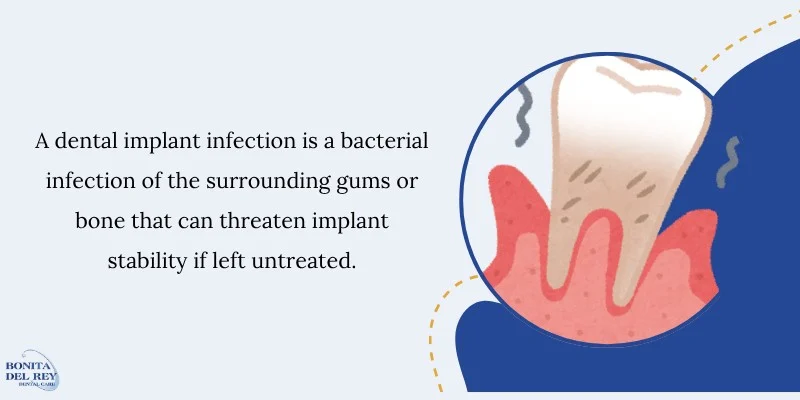
A dental implant infection occurs when harmful bacteria build up around your implant site and trigger inflammation in the gum tissue or bone.
The titanium implant itself cannot decay or get infected. However, the soft tissue and bone that support it can become inflamed and damaged.
After implant surgery, you should expect some mild swelling and tenderness for a few days. This is normal healing. A true infection is different because symptoms continue or get worse instead of improving.
Dental implant infections develop when bacteria multiply around the implant and your body cannot fight them off effectively. The infection may stay in the gums or spread deeper into the bone.
Without treatment, the infection can damage the bone that holds your implant in place.
Types of Implant-Related Infections
There are two main types of implant infections that affect the tissues around your implant.
Peri-implant mucositis affects only the soft gum tissue around your implant. You might notice redness, swelling, and bleeding when you brush or floss.
The good news is that this condition does not cause bone loss. If you catch it early and get treatment, you can usually reverse the damage completely.
Peri-implantitis is more serious because it damages the bone that supports your implant. This condition starts as peri-implant mucositis but progresses deeper.
You may experience gum recession, pus drainage, pain, and even a loose implant. Peri-implantitis increases the risk of implant failure if you do not get prompt treatment.
The main difference between these two conditions is bone loss. Peri-implant mucositis is reversible, while peri-implantitis causes permanent bone damage.
How and When Implant Infections Develop
Implant infections can develop at different times after your implant placement. Some infections appear within days or weeks after surgery. Others show up months or even years later.
Early infections usually happen because bacteria enter the surgical site during or shortly after your procedure. Late infections typically develop because of poor oral hygiene habits or other risk factors that allow plaque to build up over time.
Several factors increase your risk of getting an infected dental implant:
- Smoking reduces blood flow and slows healing
- Diabetes weakens your immune response
- History of gum disease means you already have harmful bacteria present
- Poor oral hygiene allows plaque buildup around the implant
- Weakened immune system makes it harder to fight infection
Even if your implant surgery went perfectly, you still need to maintain excellent oral care to prevent infection.
Recognizing Early and Advanced Warning Signs
Detecting infection early can save your dental implant, while missing the signs can lead to serious complications. Knowing what symptoms need attention and when to act makes all the difference in protecting your investment.
Common Early Infection Symptoms
The early warning signs of dental implant infection often appear mild, which is why they get overlooked. You might notice red, swollen, or tender gums around your implant site.
Bleeding gums when you brush or floss near the implant is another common sign.
Bad breath that won’t go away or a persistent unpleasant taste in your mouth can signal bacterial buildup around the implant. You may also experience ongoing discomfort or soreness that doesn’t improve with time.
These early symptoms don’t always cause severe pain, so it’s easy to dismiss them. However, catching implant infection symptoms at this stage gives you the best chance of successful treatment without losing your implant.
Advanced Signs That Require Immediate Attention
When infection progresses, more serious symptoms develop that threaten implant stability. Pus or discharge around your implant site indicates active infection that needs prompt care.
Gum recession that exposes parts of your implant shows the supporting tissue is breaking down.
Pain when chewing or applying pressure suggests the infection has affected the bone. A loose or unstable feeling in your implant is a critical warning sign of dental implant failure.
These advanced signs mean the infection has progressed beyond the soft tissue. Bone loss at this stage makes treatment more complex and may require surgical intervention to save your implant.
How to Distinguish Normal Healing From Infection
After implant placement, some discomfort and mild swelling are normal. The key difference is that normal healing improves steadily over time, while infection symptoms either persist or get worse.
Normal healing typically involves:
- Swelling that peaks within 48-72 hours and gradually decreases
- Mild discomfort that responds to over-the-counter pain medication
- Light bleeding that stops within the first day or two
- Symptoms that improve each day
Signs of dental implant infection include symptoms that start after the initial healing period or worsen instead of improving. Increasing pain, new swelling weeks after surgery, or bleeding that returns all indicate a problem beyond normal recovery.
Potential Consequences of Ignoring Symptoms
Untreated infections lead to progressive damage that can cost you your implant. As bacteria continue destroying the supporting bone, your implant loses the foundation it needs to stay secure.
The consequences of delayed treatment include:
- Progressive bone loss around the implant
- Complete dental implant failure requiring removal
- Infection spreading to nearby teeth and tissues
- Need for bone grafting before future implant placement
Dental x-rays can reveal bone loss that may not be visible to the naked eye. Once significant bone damage occurs, saving your implant becomes much harder or impossible.
In severe cases, the infection can compromise your ability to get another implant in the same location without extensive bone reconstruction.
Key Causes and Risk Factors of Implant Infections
Several factors can increase your risk of developing an infection after getting dental implants. Understanding these causes helps you take steps to protect your investment and keep your mouth healthy.
Influence of Poor Oral Hygiene
Poor oral hygiene is one of the biggest reasons dental implants get infected. When you don’t brush and floss properly, bacteria build up around your implant just like they do around natural teeth.
This bacterial buildup creates plaque that can lead to inflammation of the gums around your implant. If you let this continue, the infection can spread deeper and affect the bone that holds your implant in place.
You need to brush at least twice daily and floss around your implants every day. Your dental hygienist can show you special techniques for cleaning around implants.
Regular dental cleanings are also important because professional tools can remove hardened plaque that your toothbrush misses.
Surgical and Healing Risk Factors
Problems during or after surgery can create opportunities for infection. If bacteria enter the surgical site during implant placement, they can cause immediate or delayed infections.
Bone grafting procedures add another layer of complexity. When you need extra bone material to support your implant, the healing time increases and so does your infection risk.
Your implant specialist or periodontist follows strict sterile techniques to minimize these risks. However, how well you follow post-surgery instructions matters just as much.
Smoking, touching the area with dirty hands, or eating hard foods too soon can all introduce bacteria or damage the healing tissue.
Medical and Lifestyle Contributors
Certain health conditions make it harder for your body to fight off infections. Diabetes slows down healing and weakens your immune response, giving bacteria more time to take hold around your implant.
If you smoke or use tobacco products, your risk goes much higher. Smoking reduces blood flow to your gums, which means less oxygen and fewer infection-fighting cells reach the implant site.
Other factors include taking medications that suppress your immune system, having autoimmune diseases, or undergoing radiation therapy for cancer.
You should tell your dental team about all your medical conditions and medications before getting implants so they can plan the safest approach for you.
Diagnosis and Treatment Options
Dentists use clinical exams and imaging to identify infections, then choose treatments based on severity. Treatment may range from simple cleaning to surgical procedures or implant removal in advanced cases.
How Implant Infections Are Diagnosed
Your dentist will examine the area around your implant to check for signs of infection. They will look for swelling, redness, bleeding, and pus around the implant site.
A gentle probe measures pocket depth between your gum and implant to detect inflammation.
Dental X-rays play a key role in diagnosis. These images show whether bone loss has occurred around your implant. Early detection of dental implant infection signs makes treatment simpler and more effective.
Your dentist may also check implant stability by testing whether the implant moves. A stable implant should not wiggle or shift. If your implant feels loose, this suggests the bone around it may be breaking down.
Non-Surgical and Surgical Treatment Approaches
Early implant infection often responds well to non-surgical periodontal care. Your dentist will perform a deep cleaning around the implant to remove plaque and bacteria.
They may prescribe antibiotics to control the infection and reduce inflammation.
Antimicrobial mouthwash helps lower bacteria levels and supports healing. You will need to improve your daily brushing and flossing routine to prevent the infection from returning.
Severe cases of peri-implantitis require surgical treatment. Your dentist will access the infected area to clean contaminated implant surfaces thoroughly. They may remove inflamed tissue and disinfect the site.
Bone grafting may be necessary if you have lost bone around your implant. This procedure rebuilds support and can improve implant stability over time.
When Implant Removal Is Needed
Sometimes the infection damages too much bone for the implant to remain stable. Implant removal becomes necessary when bone support is severely compromised. Your dentist will remove the infected implant to prevent further damage to your jaw.
After implant removal, the area needs time to heal completely. Your dentist may place a bone graft to rebuild lost bone structure. Once healing is complete, you can discuss options for replacing the missing tooth.
Acting early protects your oral health and gives you the best chance to save your implant. Delaying treatment increases the risk of needing surgical intervention or removal.
Strategies for Preventing Dental Implant Infections
Good daily cleaning habits, the right tools, and regular visits to your dentist work together to prevent dental implant infection and protect your investment for years to come.
Essential At-Home Oral Hygiene Habits
Brushing twice daily with a soft-bristle toothbrush helps remove plaque before it builds up around your implant. Pay special attention to the gumline where bacteria tend to collect.
You should floss at least once a day to clean between your teeth and around the implant post. Regular flossing removes food particles and plaque that your toothbrush can’t reach.
Using an alcohol-free antibacterial mouth rinse can also help reduce bacteria levels in your mouth.
Following aftercare instructions from your dentist is critical during the healing period. These instructions typically include avoiding hard foods, not smoking, and keeping the surgical area clean.
Taking prescribed medications as directed also supports proper healing.
Professional Maintenance and Follow-Up

Regular dental checkups every six months allow your dentist to monitor your implant health and catch problems early. During these visits, your dentist will examine your gums, measure tissue depth, and check X-rays to look for bone loss.
Professional cleanings remove hardened plaque that you can’t eliminate at home. Your dental team uses special tools designed for implants that won’t scratch or damage the surface.
They can also identify early signs of inflammation before you notice symptoms.
If you have risk factors like diabetes or a history of gum disease, your dentist may recommend more frequent visits. Staying consistent with these appointments is essential for long-term implant success.
Special Cleaning Tools and Practices
An interdental brush helps clean tight spaces around your implant where regular toothbrushes struggle to reach. These small brushes come in different sizes to fit various gaps between your teeth.
A water flosser uses a stream of water to flush out debris and bacteria from around implants. Many patients find water flossers easier to use than traditional floss, especially around implant posts. This tool is particularly helpful if you have limited dexterity.
Implant-specific floss with a stiff end makes threading easier around the implant crown. Some types have a spongy middle section that gently cleans without causing irritation.
Your dentist can recommend which cleaning tools work best for your specific implant type and placement.
Have concerns about implant healing? Contact our Chula Vista, CA office for guidance and support.
Frequently Asked Questions
Many people have similar questions about dental implant infections. Understanding the warning signs and knowing when to seek help can protect your investment and your oral health.
What are the earliest signs that something might be wrong with a dental implant?
The earliest warning signs of a dental implant infection include red or swollen gums around the implant site. You might also notice tenderness when you touch the area or bleeding when you brush or floss near the implant.
Bad breath that won’t go away or a bad taste in your mouth can signal a problem. These symptoms often appear mild at first, which is why many people ignore them.
Any ongoing discomfort or soreness that doesn’t improve over time deserves attention. Catching these signs early gives you the best chance of saving your implant.
How can I tell the difference between normal healing and a possible infection after implant surgery?
Normal healing after implant surgery includes some swelling and mild discomfort for the first few days. This should gradually improve over the first week or two.
If your symptoms get worse instead of better, that’s a red flag. Normal healing doesn’t include pus, increasing pain, or foul odors coming from the surgical site.
Your gums should look pink and healthy as they heal, not bright red or purple. If you develop a fever or notice the area becoming more swollen after the first few days, you should contact your dentist.
What symptoms should make me call my dentist right away after getting an implant?
Signs of infection like pain, swelling, pus, or a loose implant require immediate attention from your dentist. Pus or discharge coming from around the implant is never normal and always needs prompt treatment.
Severe pain that doesn’t respond to over-the-counter pain medication is another reason to call right away. If your implant starts to feel loose or unstable, this could mean the infection has affected the bone around it.
A fever combined with swelling or pain at the implant site suggests the infection may be spreading. Don’t wait to see if these symptoms go away on their own.
What can cause an implant site to become infected even months or years later?
Poor oral hygiene is one of the main causes of late-stage dental implant infections. When bacteria build up around the implant, they can cause inflammation and infection in the surrounding gum tissue.
Smoking increases your risk of infection at any point after getting your implant. Untreated gum disease can also spread to the tissues around your implant over time.
Conditions like diabetes can make you more prone to infections. Even bite problems that put too much pressure on the implant can create openings for bacteria to enter.
Can an infected dental implant be treated without removing the implant?
Many infected implants can be saved if you catch the problem early enough. Early-stage infections may respond well to professional deep cleaning around the implant and antibacterial treatments.
Your dentist might prescribe antibiotics and give you special instructions for cleaning at home. More advanced infections may require surgical cleaning of the implant surface and removal of infected tissue.
The success of treatment depends on how much bone loss has occurred. If the infection has caused significant bone damage, you might need bone grafting to rebuild support for the implant.
How can I lower my risk of infection before and after dental implant placement?
Excellent oral hygiene is your best defense against implant infections. Brush twice daily and floss around your implant just like you would with natural teeth.
Attending regular periodontal maintenance visits allows problems to be caught before they become serious. Your dentist can clean areas you might miss and check for early signs of trouble.
Stop smoking before you get implants and stay smoke-free afterward. If you have diabetes or other chronic health conditions, work with your doctor to keep them well-controlled.
Address any gum inflammation right away instead of waiting for your next appointment. Following your dentist’s aftercare instructions carefully in the weeks after surgery sets you up for long-term success.