You may worry that your body will reject a dental implant the way it rejects an organ transplant. That fear sounds serious, but it is often based on confusion. When problems happen, they usually involve healing or stability, not true rejection.
Dental implant failure happens when the implant does not bond with your jawbone, while true implant rejection from an immune response is extremely rare.
Most dental implants use titanium implants that support a process called osseointegration, where your bone grows around the implant and locks it in place. If that bond does not form or breaks down later, you face implant failure, not rejection.
When you understand the real difference between dental implant failure vs rejection, you can focus on what actually matters: your bone health, your habits, and your aftercare.
Knowing the signs and causes helps you protect your investment and your smile.
Key Takeaways
- Implant failure involves poor bonding or loss of stability, not immune rejection.
- Titanium implants rely on osseointegration to stay secure in your jawbone.
- Early signs and good care lower your risk of dental implant problems.
Table of Content
- Understanding Implant Failure and Rejection
- Causes and Risk Factors for Complications
- Signs and Symptoms to Watch For
- Management and Solutions for Failed Implants
- Prevention and Long-Term Care
- Frequently Asked Questions
Understanding Implant Failure and Rejection
When you hear that a dental implant “failed” or was “rejected,” it can sound alarming. In reality, these terms describe different problems, and knowing the difference helps you act quickly and protect your oral health.
What Is Implant Failure?
Implant failure happens when your dental implant does not stay secure in your jaw. It can occur soon after surgery or years later.
Dentists often divide it into two types:
- Early implant failure – happens in the first few months, before healing finishes
- Late implant failure – occurs after the implant seemed stable and working well
Early implant failure often links to poor healing, infection, or weak bone support. If your implant never forms strong contact with the bone, it cannot handle normal chewing forces.
Late failure usually relates to bone loss, gum infection, or heavy bite pressure over time. You may notice:
- Implant mobility (any movement is not normal)
- Ongoing pain or swelling
- Bleeding gums around the implant
- A bad taste from infection
Healthy implants should feel firm and stable. If you can feel movement with your tongue, that signals a serious problem.
How Rejection Differs from Failure
Many people use the word implant rejection, but true rejection is very rare. Your body does not treat titanium implants the same way it treats a transplanted organ.
Titanium implants are biocompatible, which means your body usually accepts them without a strong immune reaction.
In rare cases, you could have a metal sensitivity to titanium or metal alloys. This may cause unusual inflammation or discomfort. However, this is uncommon.
What most patients describe as rejection is failed healing. The real issue is usually failed osseointegration, not an immune attack.
Osseointegration and Implant Integration
Osseointegration is the process where your bone grows directly onto the surface of the dental implant. This locks the implant into place.
Right after placement, your implant depends on primary stability. This means the implant fits tightly in the bone at the time of surgery. Over the next few months, your body replaces that mechanical grip with true implant integration.
Strong implant integration leads to long-term implant stability. Weak or incomplete integration leads to implant mobility.
If osseointegration fails, the implant may feel loose or painful. Infection, smoking, poor bone quality, or uncontrolled diabetes can interfere with this healing process.
When osseointegration works as planned, your dental implants function like natural tooth roots and remain firmly anchored in your jaw.
Causes and Risk Factors for Complications
Dental implant complications usually come from problems with bone support, healing ability, or how your body reacts to materials.
Issues like bone loss, smoking, and uncontrolled diabetes can raise your risk of implant failure, while true implant rejection is rare and linked to material sensitivity.
Anatomical and Surgical Considerations
Your jawbone must hold the implant firmly from the start. Dentists call this primary stability. If you have insufficient bone density or severe bone loss, the implant may not bond well with the bone.
Early implant failure often happens within the first few months. It can result from poor bone quality, infection, or too much heat during surgery.
If you lost bone after tooth loss or gum disease, you may need bone grafting before implant placement. Without enough healthy bone, the implant can loosen.
Bite pressure also matters. Implant overload from teeth grinding or a poorly designed crown can strain the implant. Over time, this stress may lead to implant complications and late implant failure.
Systemic and Lifestyle Influences
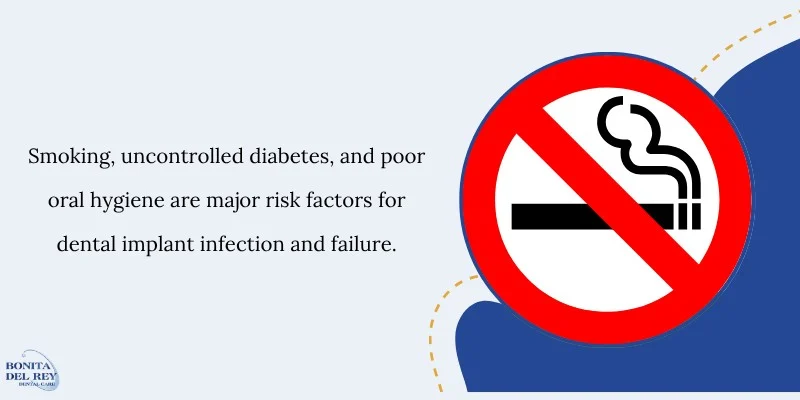
Your general health plays a major role in healing. Smoking reduces blood flow to the gums and bone, which slows healing and raises the risk of implant failure. Studies show smoking is linked to higher implant loss rates.
Uncontrolled diabetes also increases risk. High blood sugar can delay healing and make infections more likely. If you manage your diabetes well, your outcomes improve.
Poor oral hygiene can cause inflammation around the implant. This condition, called peri-implantitis, leads to bone loss and can cause the implant to fail.
Regular dental visits and daily cleaning help protect the bone that supports your implant.
Material Sensitivities and Allergic Responses
Most dental implants use titanium implants because titanium bonds well with bone and rarely causes problems. True implant rejection is uncommon.
In rare cases, your immune system may react to metal particles or other materials. Some reports discuss causes, risk factors and complications of dental implant failure, including mechanical issues like screw fractures, which are not the same as rejection.
A true allergic response may include ongoing inflammation, swelling, or pain without infection. Your dentist may suggest allergy testing if symptoms do not improve.
For most people, implant failure relates to bone support or health factors, not rejection of the material itself.
Signs and Symptoms to Watch For
Your body gives clear signals when something is wrong with a dental implant. You need to know what normal healing looks like and what points to rejection, failure, or infection.
Symptoms of Implant Rejection
True implant rejection is rare, but you should still watch for unusual reactions. Your immune system may react to the implant material instead of accepting it.
Common symptoms of implant rejection include:
- Ongoing swelling that does not improve
- A burning or tingling feeling in the gums
- Loss of taste
- Fever or chills
- Persistent pain beyond the normal healing period
You may also notice redness around the implant that spreads instead of shrinking.
Some people confuse rejection with other problems. What many call rejection is often a failure of the bone to fuse with the implant.
If your pain gets worse instead of better, or you feel ill, contact your dentist right away. These signs are not part of normal recovery.
Warning Signs of Implant Failure
A failed dental implant often shows mechanical or structural problems. The most serious red flag is a loose dental implant.
You should never feel movement. Implant mobility means the implant did not bond well with your jaw bone or the surrounding bone has broken down.
Other clear signs of dental implant failure include:
- Pain when chewing
- Swelling that returns months later
- Gum recession around the implant
- Pus or drainage near the site
- A cracked crown or post
You may also feel pressure or discomfort that lasts beyond the usual three to six month healing period.
Medical factors, smoking, and bone loss can raise your risk. Healthline explains that early and late problems can happen for different reasons, including infection or poor bone support in early and late dental implant problems.
If you notice movement or ongoing pain, schedule an exam quickly. Waiting can lead to more bone loss.
Identifying Peri-Implant Diseases
Peri-implant diseases affect the gum and bone around your implant. They often start small but can progress fast.
The first stage is mucositis, a mild gum infection. You may see:
- Red or swollen gums
- Bleeding when you brush
- Tenderness around the implant
Mucositis does not involve bone loss. Your dentist can often reverse it with deep cleaning and better home care.
If untreated, it can turn into peri-implantitis. This condition causes bone loss around the implant and may lead to a loose dental implant.
Watch for gum recession, pus, bad breath, and deeper pockets around the implant. These signs point to damage below the gum line.
Good brushing, flossing, and regular checkups lower your risk. Early treatment can stop infection before it becomes a failed dental implant.
Management and Solutions for Failed Implants
When a dental implant fails, you need clear steps and practical options. Careful diagnosis, proper implant removal, and a solid plan for implant replacement help restore function and comfort.
Clinical Assessment and Diagnosis
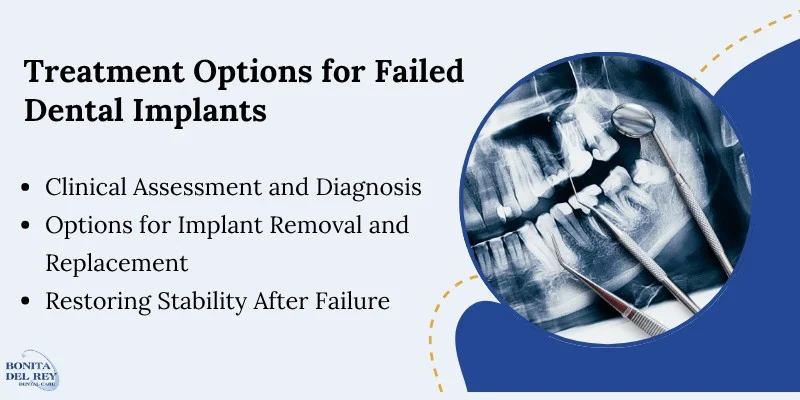
Your dentist or periodontist starts with a full exam. They check for pain, swelling, gum recession, bleeding, and implant movement.
They also take dental X-rays or a 3D scan. These images show bone loss, infection, or poor integration with the jawbone. Early dental implant failure often links to poor healing. Late failure often relates to infection or bite pressure.
Common signs of a failed dental implant include:
- Persistent discomfort
- Loosening of the implant
- Pus or bad taste
- Difficulty chewing
A detailed review of your medical history matters too. Conditions like diabetes or smoking can affect healing. Identifying the exact cause guides the next step and improves the outcome of future treatment.
Options for Implant Removal and Replacement
If the implant cannot stay in place, your provider will plan for implant removal. In most cases, removal is a minor surgical procedure done with local anesthesia.
The dentist carefully loosens and removes the implant to protect as much healthy bone as possible. After removal, the site usually heals for several weeks.
You may then consider implant replacement. Options include:
- Immediate replacement in select cases
- Delayed placement after healing
- Bone grafting before placing a new implant
Many experts note that failed implants can often be removed and replaced with good success rates. Your dentist will decide based on bone condition and infection control.
Restoring Stability After Failure
After implant complications, your main goal is stable bone and healthy gums. If bone loss occurred, your dentist may recommend a bone graft. This rebuilds the jaw and supports future implant replacement.
You must also control infection. Treatment may include deep cleaning around the site or antibiotics if needed. Good home care becomes critical at this stage.
To protect your new implant, focus on:
- Brushing twice daily
- Cleaning around the implant carefully
- Attending regular checkups
- Avoiding smoking
Research on managing implant problems and failure shows that long-term stability depends on proper healing and controlled bite forces. Your dentist may adjust your bite to reduce stress and prevent repeat dental implant failure.
Prevention and Long-Term Care
You can lower your risk of dental implant failure or rejection with steady care and regular checkups. Daily cleaning, smart health choices, and close follow-up with your periodontist protect your dental implants for years.
Maintaining Oral Hygiene
You must treat your dental implants like natural teeth. Brush at least twice a day with a soft-bristled toothbrush and fluoride toothpaste.
Clean around the implant crown and along the gumline. Plaque can build up and lead to peri-implant disease, which is a major cause of implant failure.
Floss once a day using implant-safe floss or a floss threader. Many dentists also suggest small interdental brushes to clean tight spaces.
Add an alcohol-free mouth rinse if your dentist recommends it. This can lower bacteria without drying your mouth.
Poor oral hygiene often leads to swelling, bleeding gums, and bone loss around the implant.
Reducing Risk Factors
Your daily habits affect how long your dental implants last. Smoking slows healing and raises the risk of infection.
If you smoke, quitting can greatly reduce your chance of implant problems. Diabetes also raises your risk, especially if your blood sugar is not well controlled.
You should also avoid grinding your teeth. Ask your dentist about a night guard if you clench or grind during sleep.
Strong bone support matters. In some cases, your dentist may suggest bone grafting before implant placement to create a stable base.
Healthy gums and steady bone levels help prevent dental implant failure. Take small steps early so you avoid larger problems later.
Follow-Up With Your Specialist
Regular visits with your dentist or periodontist are not optional. These visits allow early detection of swelling, bone loss, or loose parts.
Your provider will check the gum tissue around the implant and take X-rays when needed. Early signs of trouble may not cause pain, so exams matter.
Professional cleanings remove hardened plaque that brushing cannot reach. This lowers your risk of peri-implant disease.
Post-surgery care also plays a key role. Learn why consistent checkups matter in this article on dental implant failure and rejection care.
When you follow your specialist’s advice and keep regular appointments, you give your dental implants the best chance to last.
Frequently Asked Questions
Dental implants rarely fail because of true rejection. Most problems relate to healing, infection, bone support, or daily habits like smoking and oral hygiene.
What are the early warning signs that a dental implant is failing?
You may notice ongoing pain that does not improve after the first few days of healing. Swelling, redness, or bleeding around the implant can also signal a problem.
A loose implant or crown is a clear warning sign. You should also watch for trouble chewing or a feeling that the implant shifts when you bite.
How can I tell if my body is rejecting a dental implant versus it simply failing to heal?
Your body almost never “rejects” a dental implant the way it rejects an organ. Implants use titanium, which your body usually accepts.
When problems happen, they often involve poor bonding between the bone and implant.
This process, called osseointegration, can fail due to infection, weak bone, or pressure on the implant. Your dentist confirms the cause with exams and X-rays.
Who is typically responsible when a dental implant fails—patient, dentist, or manufacturer?
Responsibility depends on the reason for failure. If infection develops because of poor oral hygiene or smoking, your daily habits may play a role.
If the implant was placed in weak bone without proper planning, the dentist may share responsibility. In rare cases, a defective implant part could involve the manufacturer. Many failures result from a mix of factors, not one single cause.
Can a dental implant fail years later, even after working well for a long time?
Yes, a dental implant can fail years after placement. Late failure often links to gum disease or poor maintenance rather than immune rejection.
Bone loss around the implant can weaken support over time. Regular cleanings and checkups help catch these issues early.
This patient guide on what if my body rejects dental implants explains that late problems usually stem from infection or neglect, not sudden rejection.
How does smoking affect the chances of dental implant failure?
Smoking reduces blood flow to your gums and bone. That slows healing and makes it harder for the implant to bond with your jaw.
Smokers face a higher risk of infection and delayed osseointegration. Quitting before and after surgery improves your chances of success.
Dentists often stress smoking as a key risk factor in discussions about implant rejection myths and causes of failure.
If my dental implant fails, am I eligible for a refund or replacement?
Refunds and replacements depend on your treatment agreement. Many dental offices offer limited warranties on the implant or crown.
You may need to meet certain conditions, such as attending follow-up visits and keeping good oral hygiene. If you skipped appointments or continued smoking against advice, coverage may not apply.
Review your written contract and speak directly with your dentist. Clear communication helps you understand your options for repair, replacement, or partial refund.