Missing teeth can quietly weaken the jaw over time, but you can stop that process and protect your bone by choosing the right replacement. Using dental implants improves jaw restoration, keeping your bone strong and functional.
Dental implants bond with your jawbone to restore natural stimulation, prevent bone loss, and support long-term jaw strength.
You will learn how implants act like tooth roots, why that matters for your facial shape and bite, and how they compare with dentures or bridges.
This article will also outline basic steps providers use to preserve bone and what you must do to keep implants healthy for years.
Key Takeaways
- Implants restore jaw stimulation to help prevent bone loss.
- Choosing implants can protect facial shape and nearby teeth.
- Long-term success depends on proper care and timely treatment.
How Dental Implants Protect Jaw Health
Dental implants act like artificial tooth roots that keep your jawbone active, stable, and shaped. They help stop bone loss, support nearby teeth, and give you a strong base for chewing and speaking.
Understanding Jawbone Stimulation
When you lose a tooth, the jawbone under that gap no longer gets the pressure from chewing. This lack of mechanical stimulation leads to bone resorption, where the body reduces bone in that area. An implant restores that stimulus by transferring chewing forces into the bone, which tells bone cells to stay active.
You should expect implants to allow normal bite forces that match natural teeth more closely than removable dentures. That stimulation helps maintain the tiny forces bones need to preserve density and structure. Keeping these forces in place also supports surrounding teeth and the soft tissues of your face.
The Role of Osseointegration
Osseointegration is the process where titanium from the implant bonds directly with your jawbone. This bond forms a strong, stable link between the implant and bone so the implant functions like a real root. Successful osseointegration is crucial for implant longevity and long-term oral health.
Dentists assess bone quality and may use imaging or bone grafts if needed to ensure good osseointegration. Proper healing time and avoiding heavy load too soon help the bone grow tightly around the implant. When osseointegration works well, the implant resists movement and delivers chewing forces safely into the jaw.
Preserving Jawbone Density and Volume
By acting as a root substitute, implants help preserve both the height and width of your jawbone. This maintains facial structure and reduces the risk of a sunken appearance that can come from bone loss. Preserved bone also makes future dental work easier and more predictable.
Implants prevent the progressive bone loss that often follows extractions, so nearby teeth stay supported. Over the long term, this means fewer adjustments, better implant longevity, and enhanced oral health compared with options that sit on top of gums.
For more on how implants support jawbone strength, read about implant benefits and jaw health.
Protect your jaw and prevent bone loss by exploring dental implants at Bonita Del Rey Dental Care in Chula Vista, CA. Schedule a consultation today and take the first step toward a healthier smile.
Bone Loss After Tooth Loss: Risks and Consequences
Losing a tooth starts a chain of changes that affect the bone and how your face and mouth work. You can lose jawbone height and width, notice changes in your facial shape, and find chewing and speaking become harder.
Why Missing Teeth Lead to Bone Resorption
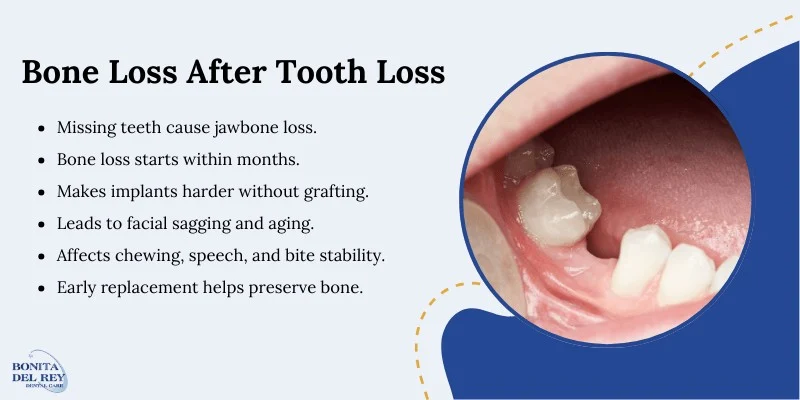
When a tooth is gone, the jawbone no longer receives the normal chewing pressure that kept it active. That pressure, transmitted through the tooth root, tells bone cells to stay and rebuild. Without it, your body begins to break down and absorb bone in that spot, a process called bone resorption.
Bone resorption can start within months. You may lose both height and width of the jawbone near the missing tooth. This shrinkage makes future implant placement harder because there may not be enough bone to hold an implant firmly. Dentists often recommend bone grafting when significant jaw bone loss has occurred.
Risk factors that speed resorption include smoking, long-term tooth loss, and untreated gum disease. If you wait years to replace a tooth, nearby teeth can shift into the gap and make bite problems worse. Acting early helps preserve your jawbone for future restorations.
Facial Structure Changes and Premature Aging
Jawbone loss changes the shape of your lower face. As bone height drops, the distance between your nose and chin shortens. That change can make your cheeks sink and your lips look thinner.
You might notice deeper folds around the mouth and a more wrinkled or “sunken” look. This facial sagging is sometimes called facial collapse when severe. Losing multiple back teeth speeds the process because large areas of jawbone stop getting stimulation.
These changes can also alter how dentures fit. Poorly fitting dentures can press on the already thin bone and speed further deterioration. Replacing missing teeth with options that support the bone helps protect your facial shape longer.
How Bone Loss Affects Oral Function
Bone loss affects how well you chew and speak. As the jawbone shrinks, your remaining teeth can tilt or shift, changing how upper and lower teeth meet. That misalignment can cause uneven wear and make biting feel unstable.
You may avoid certain foods because chewing becomes painful or inefficient. Over time, reduced chewing can affect nutrition and digestion. Bone loss around a planned implant site may require extra surgery like grafting, adding cost and time to treatment.
Peri-implantitis, infection around an implant, can also lead to local bone loss if you don’t keep implant areas clean. Regular dental care, timely tooth replacement, and good oral hygiene help maintain jawbone strength and preserve how your mouth functions.
Benefits of Dental Implants Versus Other Tooth Replacement Options
Dental implants restore both the tooth root and crown, keep your jawbone strong, and often last many years with normal care. They let you eat, speak, and clean your teeth much like natural teeth while avoiding some limits of dentures and bridges.
Implants vs. Dentures
Dentures sit on top of your gums and can move, slip, or need adhesive to stay in place. That movement can rub your gums, cause sore spots, and speed up jawbone loss because dentures don’t replace the tooth root.
An implant uses a titanium post placed in your jaw that acts like a natural tooth root. This stimulates bone and helps prevent the bone shrinkage that leads to a sunken facial look. Implants also let you bite harder foods, like apples or corn, without fear of slippage.
Daily care for implants is simple: brush and floss around a custom-made crown and abutment like you would a natural tooth. Dentures require soaking and special cleaners, and they usually need relines or replacements every 5–8 years.
Implants vs. Dental Bridges
A dental bridge replaces missing teeth by anchoring to adjacent teeth, often requiring those teeth to be filed down. That can weaken healthy teeth over time and increase the chance they need future work.
An implant supports a crown on its own abutment, so you don’t alter neighboring teeth. This preserves more of your natural tooth structure and reduces stress on other teeth. Implants also tend to last longer than bridges; bridges commonly need replacement after 10–15 years, while implants can last decades with good care.
If you have bone loss where the tooth is missing, implants may need a bone graft first. Still, implants give a more independent, long-term solution that keeps surrounding teeth healthier.
Unique Advantages of Dental Implants
Implants replace the natural tooth root, which preserves jawbone density and facial structure. This reduces the chance of future gaps and helps keep your remaining teeth aligned.
You get a custom-made crown that matches shape and color to your teeth, attached to an abutment on the implant post. That gives a natural look and stable function for eating and speaking.
Implant longevity and success rates are high when you follow care instructions and maintain regular dental visits. They cut down on special cleaning tools and avoid the chew and speech limits of other options, offering a long-term investment in your oral health.
For more on long-term benefits and comparisons, see the discussion of implant advantages over other options at St. Augustine Oral & Facial Surgical Center (dental implants vs tooth replacement).
Keep your jaw strong and your smile natural by considering dental implants at Bonita Del Rey Dental Care in Chula Vista. Contact our experts today to learn how you can enjoy long term oral health and function.
Preserving Facial Appearance and Preventing Shifting Teeth
Dental implants help keep your jaw strong, support your cheek and lip shape, and stop nearby teeth from moving out of place. They act like tooth roots to hold bone in place and keep your bite steady.
Maintaining a Youthful Facial Shape
When you lose teeth, the jawbone can shrink because it no longer gets chewing signals. Implants replace the root and stimulate the bone, which helps preserve jawbone volume. That support keeps your cheeks fuller and reduces the sunken look that can deepen lines around your mouth.

You’ll notice better lip support and less sagging over time when bone height remains stable. If you act early, you also lower the chance of needing a bone graft later to restore lost structure.
Preventing Teeth from Shifting
Empty spaces let adjacent teeth tilt or drift toward the gap. That movement can make your bite uneven and create new gaps or crowding. Implants fill the socket and anchor the position of neighboring teeth, blocking that drift.
Keeping teeth aligned reduces wear on enamel and lowers the chance you’ll need orthodontics later. Implants also protect the health of nearby teeth because they don’t rely on grinding down healthy tooth structure like some bridges do.
Learn more about implants stopping movement in this piece on how implants prevent shifting teeth.
Supporting Jaw Function and Bite Alignment
A stable implant restores normal chewing forces to the jawbone. That helps maintain jawbone health and stops further bone loss that weakens your bite. With a secure implant, you can chew a wider range of foods, which supports nutrition and overall oral function.
Properly placed implants also help keep your upper and lower teeth aligned during biting. That balance reduces strain on your jaw joints and nearby teeth. Over the long term, this lowers the risk of problems like uneven wear, broken teeth, or jaw pain.
The Dental Implant Process and Bone Preservation Techniques
You will learn how clinicians check your jaw, rebuild bone when needed, and place implants so your jaw stays strong. Steps include imaging to measure bone, grafting options if bone is low, and the implant surgery with healing stages.
Initial Assessment and X-Rays
Your dentist starts with a clinical exam and diagnostic imaging. Panoramic X-rays show overall jaw shape; a cone-beam CT (CBCT) gives precise 3D images of bone height, width, and vital structures. These images tell the team if you have sufficient bone density for implant placement and where to avoid nerves or sinuses.
Expect measurements recorded in millimeters for bone volume and angulation plans for implant placement. Your health history, smoking status, and medications also affect planning. The dentist may use digital planning software to map implant size, position, and depth before surgery.
Bone Grafting and Preparing for Implants
If CBCT shows low bone volume, bone grafting adds support for implants. Options include autograft (your own bone), allograft (donor bone), and synthetic graft materials. Your clinician chooses based on defect size, location, and whether you need immediate or delayed implant placement.
Common techniques:
- Socket preservation after extraction to limit ridge loss.
- Ridge augmentation to widen or raise bone before implants.
- Sinus lift for upper back teeth when the sinus floor is close.
Grafts often need 3–6 months to integrate. Your dentist will monitor healing with follow-up X-rays and only proceed to implant placement when the grafted bone shows stable density.
Implant Placement and Recovery
During implant surgery, the surgeon places a titanium or zirconia implant into the prepared bone site. They follow the preplanned angle and depth from your CBCT and use sterile technique. Many implants are placed under local anesthesia; sedation options are available.
Primary stability at placement matters for bone preservation. The implant must sit firmly in bone to encourage osseointegration, the bone growing tightly to the implant surface. After surgery, expect a few days of swelling and mild discomfort. Follow these care steps:
- Take prescribed antibiotics or pain meds as directed.
- Keep the surgical area clean; avoid brushing the first 24 hours near the site.
- Eat soft foods and avoid smoking.
Healing time to osseointegration typically ranges from 3–6 months. Your dentist will confirm sufficient bone integration with X-rays before attaching the final crown.
Maintaining Jaw and Implant Health Long-Term
Keep a regular schedule with your dentist, clean around implants each day, and watch for changes in bone, gum, or bite. Small habits and timely care help implants fuse to bone, protect jaw shape, and prevent problems before they start.
Routine Dental Check-Ups
Visit your dentist or oral surgeon every 3–6 months if you have implants, or at least twice a year otherwise. During visits, your clinician will check implant stability, measure pocket depths around the implant, and take X-rays to monitor bone remodeling.
Bring a list of medications and any symptoms like soreness, mobility, or shifting teeth. If your dentist sees bone loss or inflammation, they may recommend a deep cleaning, antibiotics, or referral to a specialist for grafting or further testing.
Keep records of implant brand, placement date, and any prior surgeries. That information helps your dentist interpret X-rays and spot gradual bone changes early.
Oral Hygiene for Implant Longevity
Brush twice daily with a soft-bristled brush and low-abrasive toothpaste. Clean around the implant crown and the gumline at a 45° angle to remove plaque without damaging tissues.
Use floss or a water flosser to clear food and bacteria between implants and natural teeth. Choose implant-safe interdental brushes (nylon, not metal) for larger gaps. Rinse with an antimicrobial mouthwash if your dentist recommends it.
Avoid smoking and control conditions like diabetes, because they slow bone healing and increase risk of implant failure. Maintain regular professional cleanings to remove buildup that you can’t reach at home.
Recognizing Signs of Bone Loss
Watch for loose implants, a change in bite, or new gaps between teeth. Tenderness, persistent swelling, or bleeding around an implant can also signal bone loss or peri-implantitis.
Ask for periodic X-rays to track bone height next to the implant. A drop in bone level on X-ray over time indicates resorption and needs prompt care. Your dentist may suggest non-surgical cleaning, laser treatment, or bone grafting depending on severity.
Report any pain when chewing or a feeling that a crown moves. Early treatment protects long-term oral health and helps preserve jawbone and facial structure.
Take the first step toward stronger jaw health and a confident smile by consulting Bonita Del Rey Dental Care. Call us today to find out the best options for you.
Frequently Asked Questions
Dental implants anchor into your jawbone with titanium posts and replace tooth roots. They stop bone loss where teeth are missing, restore chewing force, and keep nearby teeth from shifting.
Can dental implants help prevent jawbone loss?
Yes. Implants stimulate the bone like natural tooth roots do. This stimulation slows or stops the bone shrinkage that follows tooth loss.
Dental implants fuse with the jawbone through osseointegration. That bond preserves bone volume and helps keep your facial structure stable.
Are dental implants a permanent solution for missing teeth?
Implants are designed to be long-lasting. The titanium posts can last many decades if you keep good oral hygiene and have regular dental checkups.
The crown or bridge attached to an implant may need replacement after 10–20 years due to wear. Still, the implant fixture itself often remains stable long-term.
What benefits do dental implants offer over dentures or bridges?
Implants do not rely on nearby teeth for support, so they avoid altering healthy teeth. They also restore chewing force closer to natural teeth, which helps you eat a wider variety of foods.
Unlike removable dentures, implants do not slip and they reduce bone loss under the replaced tooth.
How do dental implants contribute to overall oral health?
Implants stop the bone loss that can lead to shifting teeth and bite problems. Keeping your bite aligned lowers the chance of uneven wear and jaw pain.
They also make oral hygiene easier because you clean them like natural teeth. That reduces risks of gum disease and decay that affect nearby teeth.
Is there an age limit to getting dental implants for jaw health?
There is no strict upper age limit for implants. You must have enough healthy jawbone and be medically fit for minor surgery.
Younger patients should have finished jaw growth before getting implants. Your dentist or oral surgeon will assess bone level, medical history, and smoking status to decide if implants are appropriate.
Is there any special care required to maintain dental implants?
Care is simple but important. Brush twice daily, floss or use interdental brushes, and visit your dentist for checkups and cleanings.
Avoid heavy smoking and follow your clinician’s advice after surgery to aid healing. Regular exams help catch issues early and protect the implant long-term.