Missing a tooth might feel minor now, but it can cause real problems fast. You risk bone loss, nearby teeth shifting, and higher chances of gum infection, all of which can make future implant work harder, longer, and more expensive.
Acting sooner helps keep your jaw strong, your bite stable, and treatment simpler.
If you want to chew comfortably and keep your smile looking natural, understanding the delaying dental implants risks is essential.
Small changes today can lead to bigger surgeries later, so understanding the risks helps you develop a clear plan for your oral health.
Key Takeaways
- Delaying implants can cause jawbone loss and tooth movement.
- Waiting often leads to more complex and costly treatments.
- Early action improves long-term function and lowers risk.
Immediate Oral Health Risks of Delaying Dental Implants
Delaying implant treatment after losing a tooth can quickly lead to problems that affect chewing, your smile, and the health of nearby teeth. You may face bone loss, shifting teeth, and higher infection risk if you wait.
Jawbone Deterioration and Bone Loss
When a tooth is missing, the jawbone no longer gets the chewing forces it needs. Without that stimulation, the body starts bone resorption, your jawbone loses width and density. In the first year after tooth loss, you can lose a meaningful portion of bone height and width, which makes placing a dental implant harder later.
Less bone means you may need a bone graft before an implant. Grafting adds extra surgery, cost, and healing time. If bone loss becomes severe, some implant options may no longer be possible without major reconstruction. Acting sooner helps preserve the jawbone that supports your future dental implants and nearby teeth.
Shifting Teeth and Bite Misalignment
A gap from a missing tooth leaves space for neighboring teeth to drift or tip toward the empty area. Opposing teeth may also over-erupt into the gap. These movements change how your teeth meet when you bite, causing malocclusion and uneven wear.
Bite misalignment can make chewing painful and less efficient. It also raises the risk of jaw joint (TMJ) strain and tooth fractures. Fixing a shifted bite often needs orthodontics or other complex treatments before you can place implants. Replacing a missing tooth early helps keep adjacent teeth in place and prevents these added procedures.
Development of Gum Disease and Infections
Open gaps and shifting teeth make cleaning harder around the empty site and neighboring teeth. Food and plaque trap more easily, increasing your chance of gum infection and periodontal disease. Inflammation from gum disease accelerates bone loss around the area, which worsens the problem.
Untreated gum infections can spread and damage tissues that support other teeth. That makes future implant success less predictable. Getting a dental implant sooner reduces pockets where bacteria collect and helps protect your gum health and the long-term stability of nearby teeth.
Have questions about dental implant timing? Contact Bonita Del Rey Dental Care today and learn how to avoid the risks of delaying treatment.
Functional and Aesthetic Consequences of Waiting
Missing teeth left unfilled can change how you eat, speak, and look. You may lose chewing power, notice changes in your face shape, and feel less confident about your smile.
Difficulty Chewing and Reduced Oral Function
When you lose a tooth, the nearby teeth take extra force. Over months, this lowers your chewing efficiency. You might find tough foods harder to bite and need to cut food into smaller pieces.
Reduced oral function also strains other teeth. They can wear faster, chip, or even shift out of place, making it harder to chew evenly. If bone under the missing tooth shrinks, a future implant may need a bone graft, which raises cost and treatment time.
If you wear a partial denture while waiting, expect lower chewing power than with an implant. Dentures can move, rub, and trap food, which hurts function and comfort. An implant restores most chewing ability; delaying it prolongs the impairment.
Speech Difficulties and Changes in Facial Structure
A missing front or back tooth can change how you form sounds like “s,” “f,” or “th.” You may notice slurring or a lisp that gets worse over time as surrounding teeth shift. This affects clarity at work or in social settings.
Loss of the tooth root also allows jawbone to shrink. As bone recedes, facial contours flatten. You may see deeper lines around the mouth or a sunken look in the cheek near the gap. These shifts can alter jaw alignment and increase wear on remaining teeth.
Replacing teeth with implants preserves more natural bone and helps keep your speech normal. Waiting increases the chance you’ll need extra procedures to rebuild bone before a reliable replacement will fit correctly.
Decline in Aesthetic Outcomes and Confidence
As bone and gum tissue change after tooth loss, getting a natural-looking replacement becomes harder. The gap edges may be lower or the gum shape may recede, so crowns or bridges can look mismatched next to your other teeth.
Shifting teeth change spacing and bite alignment. This can force a wider restoration or orthodontic work before you get replacement teeth. Those added steps extend treatment and raise cost, and they can delay restoring a seamless smile.
Feeling self-conscious is common. You might avoid smiling, speaking, or eating in public. Timely implants tend to give the best match for color, shape, and gum contour, so delaying them can prolong the cosmetic and emotional impacts on your confidence.
Long-Term Complications and Increasing Treatment Complexity
Delaying implant treatment can make future care more involved, time-consuming, and costly. You may need extra surgery, face higher chances of implant failure, and spend more time and money before you get a finished tooth.
Need for Additional Procedures Like Bone Grafting or Sinus Lifts
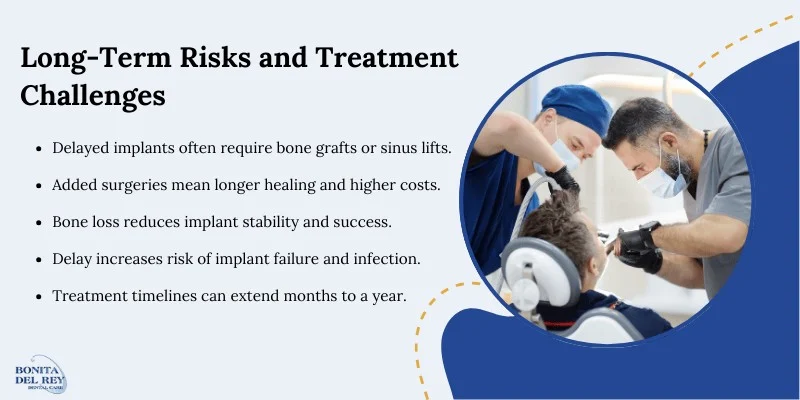
When you delay implant placement, your jawbone often loses height and width. This bone loss can leave too little support for an implant.
Your dentist may recommend a bone graft to rebuild lost bone. Bone grafting uses your own bone or a donor material to add volume. Healing can take 3–9 months before the implant can be placed.
If you are missing upper back teeth, sinus expansion can move downward into the space where implants belong. In that case, your clinician might perform a sinus lift to raise the sinus floor and add bone under it.
A sinus lift adds another surgery, more healing time, and higher treatment costs. Both bone grafts and sinus lifts raise the chance of complications such as infection or graft failure compared with straightforward implant placement.
Implant Failure and Challenges to Implant Success
Delaying can increase the risk of implant failure because implants need stable, healthy bone to bond well. Poor bone quality or reduced bone volume makes implant placement less predictable. If the implant cannot achieve good initial stability, it may loosen or fail to integrate with the bone.
Other risks rise with delay: infection risk increases after more oral disease, and nearby teeth can shift or tilt into the empty space. Those changes can force angulation compromises during implant placement, which hurts long-term implant success. If an implant fails, you may need removal, another bone graft, and a second implant, each step adds risk and recovery time.
Prolonged Treatment Timeline and Rising Costs
Adding bone grafts, sinus lifts, or repeat attempts lengthens your care plan by months or even a year. Each extra procedure requires surgical fees, graft materials, imaging, and follow-up visits. These factors push up overall treatment costs compared with placing an implant soon after tooth loss.
Insurance may cover only part of the work, and out-of-pocket expenses can grow substantially with multiple surgeries. Longer timelines also mean more time without a stable tooth, which can affect chewing and speech. You may face temporary prostheses, added dental visits, and more time off work, all of which increase the practical cost of delaying dental implant treatment.
Don’t wait until bone loss worsens; schedule your consultation with Bonita Del Rey Dental Care at Chula Vista, CA, and secure your smile’s long-term function.
Risk Factors and Conditions Worsened by Implant Delay
Delaying an implant can speed up bone loss, make gums weaker, and change how your teeth meet. These changes can force more complex treatments later and raise your risk of infection and joint pain.
Impact on Jawbone Health and Facial Appearance
When you lose a tooth, the jawbone no longer gets the normal chewing forces that keep it healthy. Over months to years, this leads to bone resorption, less height and width where the implant would go. Reduced bone can mean you need bone grafting or a longer healing time before an implant can be placed.
Bone loss also affects your facial shape. A sunken look around the mouth can develop as the jaw shrinks. If you delay too long, options like simpler implants or fixed bridges may no longer fit without extra surgery.
Oral Hygiene Challenges and Gum Weakening
Open gaps collect more food and plaque. Over time, this raises the risk of gum inflammation and periodontitis in nearby teeth. Your gums can recede and the keratinized mucosa that helps seal implants may shrink, making future implants harder to protect.
If you later place an implant in an area with poor soft tissue, you face higher chance of peri-implantitis, an infection around the implant that can lead to implant failure. Keeping the gap clean with flossing, interdental brushes, and regular dental visits lowers these risks while you wait.
Development of Complex Bite and Joint Disorders
When a tooth space remains empty, adjacent teeth often tilt or drift into the gap. This creates uneven contacts and a changed bite. You may notice chewing becomes less efficient and tooth wear increases in other areas.
A shifted bite can strain the muscles and the temporomandibular joint (TMJ). You might develop jaw pain, clicking, or muscle fatigue. Fixing these problems can require orthodontic treatment to realign teeth before you can place an implant. That adds time, cost, and sometimes extra procedures like splints or joint therapy.
How to Minimize Risks and Ensure Successful Implant Outcomes
Act early, know your options, and follow the care plan your provider gives you. Good planning, the right imaging and surgery, and regular follow-up cut risks and help implants last.
Importance of Early Consultation and Personalized Treatment

Schedule a consultation with an oral surgeon or implant dentist as soon as you decide to replace missing teeth. During this visit you should get a full medical and dental history, a clinical exam, and a CBCT scan when needed.
These steps identify bone volume, sinus position, and nerve location so your provider can design a personalized treatment plan.
If bone is low, your dentist may recommend bone grafting or a sinus lift before implant surgery. Ask about immediate implant placement if the situation allows; it can reduce bone loss but needs precise planning. Confirm who will perform each step and their experience with implants to lower dental implant risks.
Bring a list of medications and health conditions. This helps the team reduce infection risk and avoid interactions that affect healing or raise implant rejection chances.
Role of Regular Dental Check-Ups and Follow-Up Care
After implant placement, attend scheduled dental check-ups and follow-up care exactly as recommended. Your provider will monitor osseointegration, check for signs of peri-implantitis, and measure bone levels around the implant. Early detection of problems makes fixes simpler.
Follow your post-operative care instructions: soft foods, gentle brushing, prescribed rinses, and avoiding smoking. Keep a diary of symptoms like persistent pain, swelling, or numbness and report them promptly. If you wear dentures while planning implants, keep their fit checked to avoid uneven pressure on other teeth.
Your dentist may set routine cleaning intervals and use specialized tools or interdental brushes to clean around the implant crown. Consistent follow-up reduces the chance of late failure and helps you protect your investment.
Technology and Surgical Advances in Implant Placement
Ask whether your team uses digital planning and guided surgery. CBCT images and 3D planning software let surgeons place implants with millimeter accuracy, avoiding nerves and sinuses. Guided surgical guides translate the plan to the mouth, lowering the risk of poor positioning.
Minimally invasive techniques and high-quality implant systems reduce bone trauma and speed healing. In some cases, immediate implant placement and provisional crowns can be done the same day, but only when bone and infection status are suitable.
Confirm sterilization protocols and the implant brand used. Experienced surgeons who use advanced imaging and guided techniques tend to have fewer complications and clearer plans for post-op care.
Choose Bonita Del Rey Dental Care for expert implant care, personalized guidance, and strategies to avoid the risks of delaying dental implants.
Frequently Asked Questions
Delaying a dental implant can change your jaw shape, move nearby teeth, raise the chance of gum disease, and often means extra procedures later. These questions cover what can happen, how soon you should act, and the likely costs or treatment steps if you wait.
What might occur if I wait too long to get a dental implant?
You may lose bone height and width where the tooth is missing. That makes placing an implant harder and may require a bone graft first.
Surrounding teeth can tilt or drift into the empty space. That can create bite issues, more wear, and trouble chewing.
Can postponing a dental implant lead to a decline in jawbone health?
Yes. Without a tooth root to stimulate the bone, the jawbone begins to shrink. Bone loss can start within months and grows worse over time.
Severe bone loss may change your facial profile and make future implants less stable. You might need grafting to rebuild the bone before implant placement.
Is there an optimal timeframe for replacing a missing tooth with an implant?
Acting within a few months after extraction often gives the best results. Early placement usually preserves more bone and avoids extra surgeries.
That said, many people still qualify for implants years later, but treatment may become more complex and take longer.
What potential complications should I be aware of if I don’t get an implant soon?
You risk increased bone loss, shifting teeth, and bite misalignment. Those changes can lead to gum disease, trapped food, and more cavities.
You may also face speech changes or reduced chewing ability. Over time, chewing softer foods can affect nutrition and digestion.
Will delaying dental implant surgery affect my remaining teeth?
Yes. Teeth next to the gap can move into the space and change your bite. That movement can cause uneven wear, jaw pain, and make oral hygiene harder.
Shifting teeth may need orthodontic correction before you can place an implant or crown.
Are there any extra costs or challenges if I decide to get a dental implant later rather than sooner?
Expect higher costs if you need bone grafts, sinus lifts, or orthodontic work first. Additional procedures add appointments, healing time, and fees.
Delays can also increase the chance of needing gum treatment for periodontal issues, which raises total treatment time and cost.