Getting same-day dental implants sounds perfect, but not everyone can get them right away. Your jawbone density, overall health, and habits like smoking all play a role in whether you qualify.
If you don’t qualify for same-day dental implants, you have several options including bone grafting to strengthen your jaw, treating underlying health conditions, or choosing alternative tooth replacement methods until you’re ready for traditional implants.
The good news is that failing to qualify for same-day dental implants doesn’t mean you can’t get implants at all. It just means you need to take a different path to restore your smile. Many patients who don’t qualify initially can become candidates after addressing specific issues.
Understanding why you don’t meet same day implant qualification helps you make better choices about your dental care. Whether it’s poor bone density, health conditions, or lifestyle factors, knowing what stands in your way lets you work toward a solution that fits your situation.
Key Takeaways
- Not qualifying for same-day implants doesn’t mean you can’t get dental implants through traditional methods
- Bone grafting and managing health conditions can help you become eligible for implants in the future
- Alternative tooth replacement options like bridges and dentures are available while you prepare for implants
Why Some Patients Don’t Qualify for Same-Day Dental Implants
Getting same-day dental implants requires meeting specific health standards. Your bone quality, gum condition, and overall medical status all play key roles in determining whether you can receive immediate implants or need to wait for the traditional process.
Common Health Conditions Affecting Eligibility
Your overall health directly impacts your body’s ability to heal after surgery. If you have uncontrolled diabetes, high blood sugar levels can slow down healing and increase infection risk. This makes it harder for the implant to fuse with your jawbone through osseointegration.
Immune disorders also affect your candidacy for same-day dental implants. When your immune system doesn’t function properly, your body struggles to fight off infections at the surgical site. Autoimmune diseases can delay the healing process significantly.
Osteoporosis presents another challenge because it weakens bone structure throughout your body, including your jawbone. Patients with compromised immune systems face higher risks of complications. If you have any of these conditions but they’re well-managed through treatment, you might still qualify after a thorough evaluation by your oral surgeon.
Role of Oral Health and Gum Disease
Poor oral health is one of the main reasons patients don’t qualify for immediate implants. Active gum disease creates inflammation that compromises the surgical site and prevents proper healing.
Healthy gums provide the foundation for successful dental implants. If you have periodontal disease, bacteria can spread to the implant area and cause failure. Your dentist needs to treat any gum infections before moving forward with same-day procedures.
Good oral hygiene habits put you on track for approval. Bruxism, or teeth grinding, also affects eligibility because the constant stress can damage newly placed implants. If you wear a nightguard to manage grinding, you may still qualify.
Impact of Bone Density and Jawbone Structure
Your jawbone needs sufficient density to support an implant. The titanium post must have a strong, stable foundation to fuse properly with the bone. Without adequate bone quality, the implant won’t integrate successfully.
Bone loss from missing teeth, trauma, or periodontal disease disqualifies many patients from same-day procedures. When teeth are missing for extended periods, the jawbone starts to deteriorate in those areas. This creates a challenging situation where you need implants but lack the bone structure to support them.
Severe bone loss typically requires bone grafting before you can receive dental implants. The grafting procedure rebuilds your jawbone structure over several months. Bone density plays a major role in whether your oral surgeon can complete the implant process in one visit or needs to follow a traditional timeline.
Not sure if you qualify for same-day dental implants? Visit Bonita Del Rey Dental Care to explore your options and get a personalized evaluation today.
Potential Risks If You Proceed Without Meeting Requirements
Moving forward with same-day implants when you don’t meet the necessary requirements can lead to serious problems. Your implant procedure may fail, your jawbone could suffer damage, and your recovery time might extend far beyond what’s normal.
Higher Chance of Implant Failure
If your jawbone density isn’t adequate for same-day implants, the implant can fail within months or even weeks. The dental implant procedure requires sufficient bone to hold the implant in place. Without this foundation, your implant won’t integrate properly with the bone.
Implant stability depends on your bone quality and quantity. When you skip the qualification process, you risk placing an implant in bone that can’t support it. This leads to the implant loosening or falling out completely.
Poor oral hygiene or untreated gum health issues before your implant surgery create another risk. Bacteria can infect the surgical site and prevent proper healing. Your body might reject the implant entirely if infection sets in during those critical first days.
Possible Bone Loss or Jaw Complications
Proceeding without proper jawbone density can trigger bone resorption around the implant. Your jaw needs healthy, dense bone to handle the pressure from chewing and daily use. Placing an implant in weak bone puts excessive stress on surrounding bone tissue.
This stress causes the bone to break down faster than normal. You might experience progressive bone loss that spreads beyond the implant site. The damage can make future implant attempts much harder or even impossible.
Your jaw structure could also shift or change shape if the implant fails. This affects how your teeth fit together and can cause pain when you bite down.
Delayed Healing and Recovery Concerns
When you don’t meet the requirements for same-day implants, your healing process becomes unpredictable. Normal recovery takes a few months, but complications from proceeding too early can extend this to a year or more.
You might face repeated infections that require antibiotics or additional procedures. Each setback adds more healing time and increases your discomfort. Your implant site may never fully heal if the underlying problems aren’t addressed first.
Implant failure during healing means starting over with bone grafting or other preparatory treatments. This creates the delay you tried to avoid by rushing into same-day implants.
Alternative Tooth Replacement Solutions
When same-day implants aren’t possible, you have several proven methods to restore your smile and chewing function. Each option works differently and offers specific benefits based on your oral health needs and budget.
Traditional Dental Implants
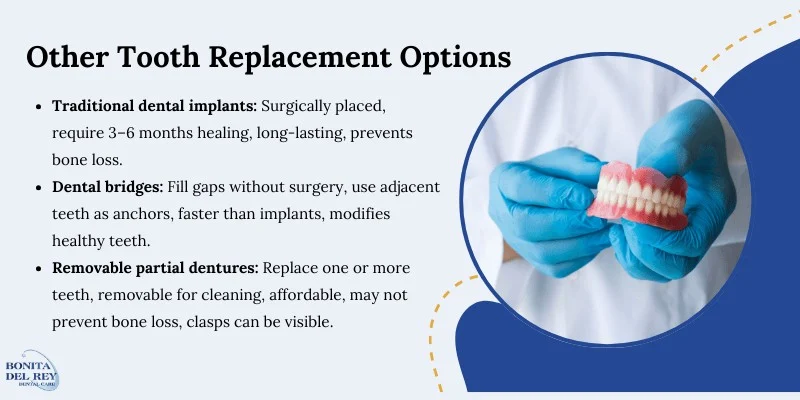
Traditional dental implants follow a slower timeline than same-day options but work well if you need time for healing or bone preparation. Your dentist surgically places an implant post into your jawbone during the first appointment. This titanium post acts as an artificial tooth root.
You’ll wait three to six months while your bone fuses with the implant post. This process creates a stable foundation for your new tooth. After healing completes, your dentist attaches an abutment and custom crown to finish your dental restoration.
This dental procedure typically offers the most durable tooth replacement solution. The implant stimulates your jawbone like a natural tooth root, which prevents bone loss over time. While traditional dental implants take longer than same-day versions, they provide excellent long-term results for most patients dealing with tooth loss.
Dental Bridges as an Alternative
A dental bridge fills the gap left by missing teeth without requiring implant surgery. Your dentist prepares the teeth on both sides of the gap by removing some enamel. These teeth serve as anchors for the bridge.
The bridge consists of one or more artificial teeth (pontics) connected to crowns that fit over your anchor teeth. Your dentist cements the entire unit in place permanently. You can eat and speak normally once you adjust to the bridge.
Bridges offer a faster tooth replacement option than traditional implants. However, they require modifying healthy teeth, which some patients want to avoid. Dental bridges work best when you’re missing one or two teeth next to each other.
Removable Partial Dentures
Partial dentures are removable appliances that replace one or more missing teeth. They attach to your remaining natural teeth using metal clasps or precision attachments. You can take them out for cleaning and sleeping.
Modern partials look natural and restore your ability to chew most foods. They cost less than implants or bridges, making them accessible for many patients. Your dentist creates a personalized treatment plan that includes custom-fitted partials designed for your mouth.
You’ll need to remove and clean your partial daily. Some people find the clasps visible when smiling. Partials also don’t prevent bone loss in the areas where you’re missing teeth, unlike implant-based tooth replacement solutions.
Curious about your dental implant options? Explore treatments at Bonita Del Rey Dental Care, Chula Vista, CA, and find the best solution for your smile.
Next Steps When You Don’t Qualify for One-Day Implants
If you’re not ready for immediate-load implants right away, several preparatory treatments can improve your candidacy. Your qualified dentist will use digital x-rays and CBCT scans to identify specific issues and create a path forward for successful implant placement.
Bone Grafting to Improve Candidacy
A bone graft can rebuild the jawbone structure needed to support dental implants. When you’ve lost teeth or suffered from gum disease, your jawbone naturally shrinks over time. This makes it difficult or impossible to place implants safely.
During bone grafting, your dentist adds bone material to areas where your jaw is too thin or weak. The material can come from your own body, a donor source, or synthetic options. You’ll need to wait several months for the graft to integrate with your natural bone before moving forward with implants.
A sinus lift is a specific type of bone graft for your upper jaw. This procedure adds bone below your sinus cavity when there isn’t enough height to place implants. It’s particularly common for patients who have been missing upper back teeth for a long time.
CBCT scans help your dentist plan exactly where bone grafting is needed and how much material to use.
Treating Periodontal or Gum Conditions
Healthy gums are essential before you can receive any type of dental implant. Active gum disease creates infection and inflammation that can cause implant failure.
Your dentist will need to treat periodontal disease first through deep cleanings, scaling, and root planing. In more advanced cases, you might need gum surgery to remove infected tissue and reshape your gum line. This process can take several weeks to months depending on the severity of your condition.
Once your gums are healthy and stable, your dentist can reassess your candidacy for implants. You’ll need to maintain excellent oral hygiene and attend regular dental care appointments to keep your gums in good condition.
Customizing Your Treatment Plan with Your Dentist
Your treatment plan should address your specific needs and goals. After reviewing your CBCT scans and overall oral health, your qualified dentist can recommend the best timeline and approach.
Some patients benefit from All-on-4 implants after their preparatory treatments are complete. Others might need a staged approach where implants are placed in multiple visits. Your dentist will consider factors like your bone density, gum health, budget, and how quickly you need tooth replacement.
You should discuss all available options during your consultation. Ask about estimated timelines, costs, and what you can expect during recovery. Your dentist can adjust the plan as your treatment progresses to ensure the best possible outcome.
Maintaining Oral Health for Future Dental Implant Success
Taking care of your mouth now improves your chances of qualifying for dental implants later. Building strong oral hygiene habits, making smart lifestyle choices, and visiting your dental office regularly all work together to prepare your gums and jawbone for successful implant placement.
Importance of Good Oral Hygiene
Your daily oral hygiene routine directly affects whether you’ll be a good candidate for dental implants in the future. Brushing twice daily with a soft-bristled brush removes plaque and bacteria that can damage your gum tissue and jawbone. You should brush for at least two minutes each time, paying special attention to the gum line where bacteria tends to build up.
Flossing once per day reaches areas your toothbrush can’t clean. Food particles and plaque between your teeth can lead to gum disease, which is a main reason people don’t qualify for implants.
Daily flossing is a critical component of dental implant maintenance because it prevents infection and inflammation around teeth and gums.
Use an antimicrobial mouthwash to reduce bacteria in your mouth. This extra step helps protect your gum tissue and keeps your mouth healthier overall. Good oral health creates the strong foundation you need for future dental work, including implants.
Lifestyle Changes: Diet, Smoking, and Habits
Your lifestyle choices have a big impact on your oral health and future implant success. Smoking is one of the worst things you can do for your mouth because it reduces blood flow to your gums and slows healing. If you smoke, quitting now will significantly improve your chances of qualifying for implants later.
Your diet plays a major role in maintaining healthy gums and bones. Eating foods rich in calcium and vitamin D strengthens your jawbone.
Limiting sugary foods and drinks reduces your risk of tooth decay and gum disease. While you don’t need strict dietary restrictions now, being mindful of what you eat protects your overall health and oral health.
Drinking too much alcohol can contribute to dry mouth and increase bacteria growth. Grinding your teeth at night can damage both natural teeth and gum tissue. Talk to your dentist about getting a nightguard if you grind your teeth while sleeping.
Keeping Up with Dental Checkups
Regular visits to your dental office are essential for maintaining good oral health and preparing for future implants. You should schedule checkups at least twice per year for professional cleanings and examinations. These visits allow your dentist to catch problems early before they become serious.
Professional cleanings remove tartar buildup that you can’t eliminate with brushing alone. Your dentist can also check for signs of gum disease, bone loss, or other issues that might prevent you from getting implants. Regular dental check-ups allow for early detection and prevention of potential implant complications.
During these appointments, ask your dentist about your progress toward becoming an implant candidate. They can recommend specific treatments or changes to your dental care routine. If you need bone grafting or gum disease treatment, starting these procedures now means you’ll be ready for implants sooner.
Cost, Insurance, and Planning Ahead
Traditional dental implants require careful financial planning and understanding of your insurance benefits. Treatment costs vary based on your specific needs, and working with your dental team helps you create a realistic timeline and budget.
Financial Considerations and Dental Implants Cost
Dental implants cost varies widely depending on several factors. A single tooth implant typically ranges from $3,000 to $6,000, including the implant post, abutment, and crown.
Multiple teeth or full-arch restorations cost significantly more. You might pay $20,000 to $45,000 for a complete upper or lower arch replacement. These prices depend on how many implants you need and the type of restoration used.
Your location affects pricing too. Urban dental practices often charge more than rural offices. The experience level of your dentist and the materials used also impact the total cost.
Many dental offices offer payment plans to spread costs over time. Some practices work with financing companies that provide loans specifically for dental procedures. Ask about interest-free periods or monthly payment options that fit your budget.
How Dental Insurance May Help
Most dental insurance plans treat implants as a major procedure with limited coverage. Your plan might cover 50% of the cost up to your annual maximum, which typically ranges from $1,000 to $2,000.
Insurance often covers specific parts of the implant process differently. The crown portion may receive better coverage than the surgical implant placement. Some plans classify implants as cosmetic and offer no coverage at all.
Review your policy details carefully before starting treatment. Call your insurance company to verify what they consider medically necessary versus cosmetic. Your qualified dentist can provide documentation to support the medical need for implants.
If you can’t afford health insurance but don’t qualify for Medicaid, explore dental discount plans as an alternative. These aren’t insurance but offer reduced rates at participating providers.
Planning Long-Term with Your Dental Team
Your qualified dentist creates a personalized treatment plan based on your oral health needs and financial situation. This plan outlines each step of the process with estimated costs and timeframes.
Traditional implants take several months from start to finish. You’ll need time for healing between the implant placement and final restoration. This extended timeline lets you budget for each phase separately.
Discuss your financial concerns openly with your dental team. They can suggest alternatives like placing fewer implants or choosing different restoration materials. Some practices offer prioritized treatment plans that address urgent needs first.
Schedule regular check-ups during your waiting period. Your dentist monitors your oral health and adjusts the treatment plan if conditions change. Maintaining good oral hygiene protects your investment and improves long-term success rates.
Wondering if same-day or traditional implants are right for you? Speak with Bonita Del Rey Dental Care to find out.
Frequently Asked Questions
Many people wonder about their options when same-day implants aren’t possible and what differences exist between faster and traditional approaches. Cost, timing, and eligibility factors all play a role in choosing the right tooth replacement method.
What are the alternatives to getting same-day dental implants?
If you don’t qualify for same-day implants, traditional dental implants remain a reliable option. With this approach, your dentist places the implant and allows several months for healing before attaching the permanent crown.
Dental bridges offer another solution. They use your existing teeth as anchors to support a false tooth in the gap.
Removable partial dentures can replace one or more missing teeth. You can take them out for cleaning, and they cost less than implants.
Full dentures work if you’re missing all your teeth in one or both jaws. Modern dentures look natural and fit better than older versions.
What should you consider when comparing same-day implants to traditional implants?
Traditional implants require multiple visits spread over several months. You’ll wait for complete healing between the implant placement and final crown attachment.
Same-day implants let you leave with a temporary tooth right away. This means no gaps in your smile while healing happens.
The success rate matters too. Traditional implants have proven track records because the bone fully heals before any pressure is placed on it.
Same-day implants rely on precise placement and good bone support for similar success rates. Your dentist needs advanced skills and equipment to do this safely.
Can everyone be eligible for same-day dental implants, and if not, why?
Not everyone qualifies for same-day implants. Your jawbone needs enough density and volume to hold the implant securely from day one.
Active gum disease prevents you from getting immediate implants. The infection needs treatment first, or the implant could fail.
Smoking interferes with healing and reduces blood flow to your gums. This makes same-day implants riskier for smokers.
Uncontrolled diabetes affects how your body heals wounds. Your blood sugar needs to be stable before attempting any implant procedure.
People who grind their teeth might damage a fresh implant before it bonds with the bone. You may need to wear a night guard or choose traditional implants instead.
What risks should be considered when opting for one-day dental implants?
The implant could fail if it doesn’t get enough initial stability in your jawbone. This happens more often with same-day procedures than traditional approaches when conditions aren’t ideal.
Infection at the implant site can occur if bacteria enter during or after surgery. Proper aftercare reduces this risk significantly.
Putting too much pressure on the temporary crown while eating can shift the implant before it heals. You’ll need to follow strict dietary guidelines during recovery.
Some people experience more swelling or discomfort with immediate implants. Your dentist will prescribe medication to manage pain during healing.
Nerve damage is rare but possible with any implant surgery. An experienced dentist uses imaging technology to avoid nerves in your jaw.
How much more do one-day dental implants typically cost compared to traditional ones?
Same-day implants often cost more upfront because they require advanced technology and equipment. The price includes digital imaging, surgical guides, and the temporary crown.
Traditional implants may seem cheaper initially. However, when you add up multiple visits and procedures over several months, the total cost can be similar.
Most dental insurance plans treat both types similarly. Coverage usually applies to the implant itself but not always to the crown or other components.
The actual price difference varies by location and dental practice. Some offices charge a few hundred dollars more for same-day service, while others price them the same.
If I cannot get same-day implants, what is the impact of waiting for traditional implants?
You’ll need to wait three to six months between implant placement and getting your permanent crown. During this time, your dentist may give you a temporary denture or bridge to fill the gap.
The healing process allows the implant to fuse with your bone properly. This creates a stronger foundation for your new tooth.
Some people feel self-conscious about having a gap in their smile during healing. The wait can feel frustrating if you wanted quick results.
Your eating habits might change temporarily. You’ll need to avoid hard or chewy foods near the implant site while it heals.
The extended timeline means more dental appointments. You’ll visit your dentist for check-ups to monitor healing progress before getting the final crown.