Seeing blood in the sink after brushing or flossing can feel unsettling, especially when you thought a recent dental cleaning would take care of it.
A little pink tinge for a day or two after your appointment is common. Bleeding that keeps showing up week after week is a different story.
Persistent gum bleeding can point to inflammation, and understanding the common bleeding gums causes can help you recognize when a routine dental cleaning alone may not be enough.
Healthy gums are firm, pale pink, and hold tight against your teeth. When they bleed easily, swell, or feel tender long after your last visit, something below the surface may need a closer look.
This isn’t about panicking over a little blood on your toothbrush. It’s about knowing the difference between normal healing and a signal that your gums need more attention than a standard cleaning provides.
Key Takeaways
- Brief bleeding right after a cleaning is normal, but bleeding that lingers past a week or two often points to gum disease or another underlying cause.
- Dentists use pocket measurements, not just visible bleeding, to decide whether you need a deep cleaning like scaling and root planing.
- Gentle daily brushing and flossing, paired with early professional care, gives your gums the best chance to heal and stay attached to your teeth.
What Gum Bleeding After a Cleaning Can Mean
Gum bleeding after a professional dental cleaning usually means your gums were inflamed before you sat in the chair, and the cleaning is disturbing that irritated tissue.
It doesn’t automatically mean something went wrong during your visit or that you’re doing something wrong at home.
What Is Normal in the First Few Days?
A little bleeding or tenderness for one to three days after a cleaning is a normal healing response.
Your hygienist removed plaque and tartar buildup that had been sitting along and under the gumline, and that tissue needs a short window to settle down.
Mild soreness, especially if you had heavy tartar removed, fits this pattern too.
Why Healthy Gums Should Not Bleed Easily
Healthy gums do not bleed just from brushing, flossing, or eating something crunchy.
Gum inflammation, whether it shows up as tender gums, swollen gums, or a dusky red color instead of pale pink, is usually what causes bleeding in the first place.
If your gums bleed easily even when you’re gentle, that’s a gum disease symptom worth paying attention to, not a sign you’re brushing wrong.
When Ongoing Bleeding Needs a Dental Check-Up
Bleeding that lasts more than one to two weeks after your cleaning deserves a dental check-up, according to guidance that mild bleeding when starting a new flossing routine is common but prolonged bleeding should not be ignored.
If your gums keep bleeding at every visit, or bleeding shows up between cleanings without an obvious trigger, a dental examination can find out why.
So can looking for patterns: does it happen only when you floss one particular spot, or does it happen everywhere, every day?
From Plaque Buildup to Periodontal Disease
Bleeding gums usually trace back to plaque, the soft, sticky film of bacteria that forms on your teeth daily.
Left in place, plaque hardens into tartar buildup that only a dental professional can remove, and the bacteria living in both plaque and tartar irritate the gumline until it bleeds.
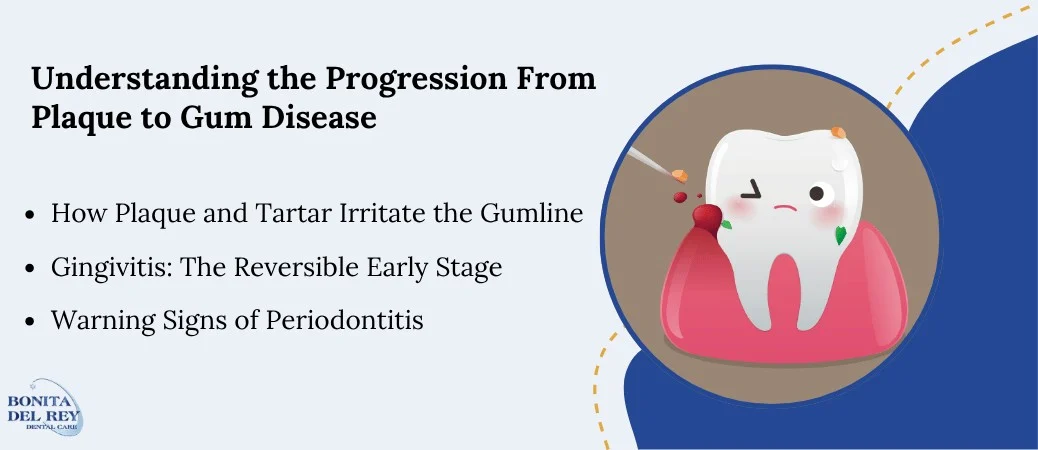
How Plaque and Tartar Irritate the Gumline
Plaque bacteria release toxins that inflame the gum tissue, causing redness, swelling, and bleeding during brushing or flossing.
Once plaque hardens into tartar along the gum line, it creates a rough surface where even more bacteria collect. Regular brushing can’t remove tartar once it has hardened; only a dental cleaning can do that.
Gingivitis: The Reversible Early Stage
Gingivitis is the earliest stage of gum disease, and the good news is that it’s reversible with consistent care.
It develops when plaque along the gumline goes unaddressed long enough to cause inflammation, but the supporting bone and tissue underneath are not yet damaged.
Caught early, gingivitis often clears up within a couple of weeks of consistent, gentle daily cleaning paired with a professional cleaning. This is the stage where good oral hygiene habits make the biggest difference.
Warning Signs of Periodontitis
Periodontitis is what happens when gingivitis goes untreated and the infection starts damaging the bone and tissue holding your teeth in place. Watch for these signs alongside bleeding:
- Persistent bad breath or halitosis that doesn’t go away after brushing
- Gum recession, where teeth start to look longer than before
- Gum pockets or periodontal pockets that feel deeper when your dentist checks
- Loose teeth or teeth that seem to be shifting position
- A bite that feels different than it used to
Periodontitis doesn’t improve with regular cleanings alone. It calls for the kind of specialized care described in the next section, and left unaddressed long enough, it can lead to bone loss and eventually tooth loss.
How Dentists Determine Whether You Need a Deep Cleaning
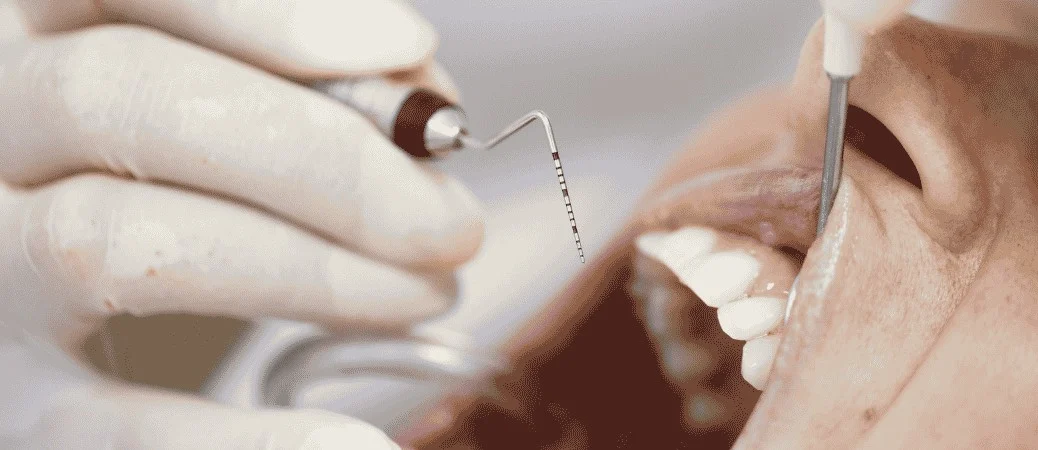
Dentists decide whether you need a deep cleaning by measuring your gum pockets during a periodontal evaluation, not by simply noting that your gums bled.
Bleeding is one clue among several, and the actual measurements tell the fuller story.
What a Periodontal Evaluation Measures
Gum pocket measurements of about 1 to 3 millimeters are generally associated with healthy periodontal tissues, while deeper pockets may require closer evaluation.
Pockets deeper than that, along with bleeding on probing or visible tartar below the gumline, suggest a routine cleaning may not reach the bacteria causing the problem. X-rays may also be reviewed to check for bone loss around the roots.
How Scaling and Root Planing Works
Scaling and root planing, often called a deep cleaning, targets bacteria and tartar hiding below the gumline where a toothbrush or standard cleaning tool can’t reach.
Scaling removes plaque and tartar from both above and below the gumline using ultrasonic tools and hand instruments.
Root planing follows, smoothing the tooth root so bacteria have a harder time collecting there and your gum tissue can reattach more snugly.
Local anesthesia is commonly used so you stay comfortable through the process.
At Bonita Del Rey Dental Care, this kind of evaluation is paired with a clear explanation of what your specific measurements mean, so you understand exactly why a certain treatment is being recommended.
When Periodontal Maintenance or Surgery May Be Considered
After a deep cleaning, periodontal maintenance visits every three to four months help keep bacteria under control and catch any recurring pockets early.
In more advanced cases where bone loss is significant or pockets don’t respond to scaling and root planing, a periodontist may discuss periodontal surgery as an option.
Other Reasons Gums May Bleed Despite Good Oral Hygiene
Gums can bleed even when you brush and floss carefully every day, and gum disease isn’t always the reason.
Brushing technique, hormonal shifts, certain medications, and nutritional gaps can all show up as bleeding gums on their own.
Can Brushing or Flossing Technique Cause Bleeding?
Yes, aggressive brushing or improper flossing technique can irritate healthy gum tissue and cause bleeding without any disease involved.
A hard-bristled toothbrush or too much pressure can scrape at the gumline, and snapping floss down hard between teeth does the same.
Switching to a soft-bristled toothbrush or an electric toothbrush with a light touch often calms this down within days. If your flossing technique needs adjusting, ask your hygienist to show you at your next visit.
How Hormones, Pregnancy, and Menopause Affect Gum Health
Hormonal changes during puberty, pregnancy, and menopause can make gums more sensitive and prone to bleeding, even with the same home care routine that worked fine before.
Pregnancy gingivitis is common enough that many dentists expect to see some gum sensitivity during pregnancy, and untreated gum inflammation during pregnancy has been linked to adverse pregnancy outcomes.
If you’re pregnant and noticing more bleeding than usual, mention it at your next dental check-up. It’s a normal question to bring up, not an overreaction.
Medical Conditions, Medications, and Nutritional Deficiencies
Diabetes, blood sugar control, and cardiovascular disease all have documented links to gum health, and the relationship runs both directions: gum inflammation can make blood sugar harder to manage, and poor blood sugar control can make gums more vulnerable.
Blood thinners and anticoagulants can also make gums bleed more easily, along with blood disorders that cause unexplained bruising elsewhere on the body.
Vitamin deficiencies, particularly low vitamin C or vitamin K deficiency, are a less common but real cause of bleeding gums.
Smoking and dry mouth also weaken your gums’ ability to heal, even when plaque levels look fine.
If you take a blood thinner or manage diabetes, telling your dental team helps them interpret what they see during your exam.
Daily Care That Supports Healthier Gums
Gentle, consistent brushing and flossing is the single best thing you can do for gum health between dental visits, even when your gums bleed a little.
Stopping flossing because it makes your gums bleed usually makes bleeding worse, not better, since it lets more plaque build up right at the gumline.

How to Brush Gently Along the Gum Line
Angle a soft-bristled toothbrush at about 45 degrees toward the gumline and use short, gentle strokes rather than scrubbing back and forth.
Fluoride toothpaste helps protect the tooth surface while you clean.
An electric toothbrush with a pressure sensor can help you learn what gentle actually feels like, since many people brush harder than they realize.
For more on choosing a toothbrush and toothpaste that fit your needs, see this guide on picking the right toothbrush and toothpaste.
Why Daily Interdental Cleaning Matters
Daily flossing or another form of interdental cleaning reaches the plaque sitting between teeth that a toothbrush can’t touch.
If regular floss feels awkward, interdental brushes or a water flosser are effective alternatives worth trying.
Keep going even if you see a little blood at first; this usually settles down within one to two weeks of consistent use. A water flosser can be a gentle option if traditional floss feels irritating.
When Mouthwash Can Support Your Routine
An antimicrobial mouthwash can reduce the bacteria that irritate your gums, especially while you’re working on improving your brushing and flossing habits.
It works best as an addition to brushing and flossing, not a substitute for either one.
Ask your dentist whether a specific rinse fits your situation, since some formulas suit sensitive or healing gum tissue better than others.
Early Periodontal Care Can Help Protect Your Teeth
Catching gum disease at the gingivitis stage, before it becomes periodontitis, gives you the best chance of reversing it completely.
Persistent gum bleeding is worth mentioning at your next appointment rather than waiting to see if it goes away on its own.
A periodontist or general dentist can measure your gum pockets, check for bone loss, and recommend a treatment plan that matches what’s actually happening in your mouth, rather than assuming every case needs the same approach.
Some people need nothing more than better home technique and a professional cleaning. Others benefit from scaling and root planing or ongoing periodontal maintenance.
Gum health connects to systemic health in ways that are easy to overlook, from blood sugar control to cardiovascular disease risk.
Bonita Del Rey Dental Care takes this connection seriously, which is why persistent bleeding gets a real evaluation rather than a quick brush-off.
If you’ve been putting off mentioning your bleeding gums, your next visit is a good time to bring it up.
Frequently Asked Questions
Should gums bleed during a dental cleaning?
Some mild bleeding during a dental cleaning is common, especially if your gums were already inflamed going in.
Your hygienist is removing plaque and tartar that has been irritating the tissue, and that irritated tissue can bleed when it’s touched.
Heavy or prolonged bleeding during the cleaning itself is worth asking your dentist about directly.
How long should gum bleeding last after a routine cleaning?
Bleeding after a routine cleaning typically settles within one to three days as your gums heal.
If bleeding continues past one to two weeks, or shows up again between cleanings without an obvious cause, it’s worth scheduling a dental check-up.
Ongoing bleeding at this point usually means the underlying inflammation hasn’t fully resolved.
Why do my gums bleed even though I brush and floss every day?
Brushing and flossing daily helps, but technique, pressure, and reaching every surface all matter as much as frequency.
Gums can also bleed due to hormonal changes, certain medications, vitamin deficiencies, or gum disease that has already progressed below the gumline where a toothbrush can’t reach.
A dental exam can pinpoint which of these applies to you.
What will a dentist do for persistent bleeding gums?
A dentist will typically perform a periodontal evaluation, measuring gum pocket depth around each tooth and checking for tartar buildup below the gumline.
Depending on what they find, they may recommend scaling and root planing, adjustments to your home care routine, or a referral to a periodontist.
The plan depends on your specific measurements, not on the fact that bleeding occurred.
Can I stop bleeding gums at home without a dentist?
Mild bleeding caused by brushing technique or a new flossing habit often improves within one to two weeks of gentle, consistent home care.
Bleeding tied to plaque buildup below the gumline, gum disease, or a medical condition generally needs professional treatment to fully resolve. If home care hasn’t helped after two weeks, a dental visit is the next right step.
What vitamin deficiency can cause bleeding gums?
Low vitamin C is one of the most recognized nutritional causes of bleeding gums, since vitamin C supports healthy gum tissue and collagen repair.
Vitamin K deficiency can also contribute, since vitamin K plays a role in blood clotting.
These deficiencies are less common than plaque-related gum disease, so a dentist will usually rule out gum disease first before considering nutrition as the cause.