If you take Ozempic before IV sedation for dental implant surgery, your dental team needs to know about your medication before your appointment.
You should tell your dentist about any GLP-1 medication you take, since it can affect how your stomach empties and change how your sedation is planned.
This small step helps keep you safe during your implant surgery.
These medications slow down digestion, which means food can stay in your stomach longer than usual.
This matters a lot when you’re having IV sedation, because sedation relaxes your body and can make it easier to accidentally breathe in stomach contents.
Your anesthesia team needs this information early so they can plan your care the right way.
The good news is that most people on these medications can still have safe oral surgery. Your team will look at your specific situation, including your dose and how long you’ve been taking it, to decide the best plan for you.
Keep reading to learn exactly what to share with your team and what steps they may take to keep you safe.
Key Takeaways
- Telling your dental team about your GLP-1 medication helps them plan safer sedation for your procedure.
- Your care team may adjust your treatment plan based on your medication, dose, and health history.
- Following simple safety steps before and during sedation can lower your risk of complications.
Table of Content
- Why Your Medication Matters for Sedation Safety
- What to Tell Your Dental and Anesthesia Team
- How Your Team Decides Whether to Continue or Pause Treatment
- Preparing for Implant Surgery With IV Sedation
- Safety Steps the Anesthesia Team May Use
- Frequently Asked Questions
Why Your Medication Matters for Sedation Safety
If you take Ozempic, Wegovy, or Mounjaro, your body handles food a little differently than it used to. This matters a lot when you are getting IV sedation for implant surgery, so let’s break down why.

How GLP-1 Medicines Affect Stomach Emptying
Ozempic, Wegovy, and Mounjaro belong to a group of drugs called GLP-1 receptor agonists. This includes medicines like semaglutide and tirzepatide.
These drugs work by slowing down how fast your stomach empties. This is actually part of why they help with weight loss and blood sugar control.
But it also means food can sit in your stomach much longer than normal, even after you have followed your fasting instructions.
Doctors call this delayed gastric emptying. It can happen even if you feel fine and are not hungry. Your body’s timing for digestion has simply changed while you are on this medication.
Why Aspiration Is a Concern During Deep Sedation
When you are under deep sedation, your body relaxes in ways it normally would not. This includes muscles that help protect your airway.
Your protective airway reflexes, like coughing and swallowing, become weaker during sedation.
If your stomach still has food or liquid in it, there is a higher chance of regurgitation or vomiting while you are sedated.
This creates a risk called pulmonary aspiration. This means stomach contents can accidentally enter your airway instead of staying in your digestive system.
It is rare, but it is a real concern your dental team takes seriously.
How Retained Stomach Contents Can Affect the Lungs
If stomach contents do get into your airway during sedation, they can travel down into your lungs.
This can lead to aspiration pneumonitis, which is inflammation in the lungs caused by stomach acid or food particles.
In some cases, this can turn into aspiration pneumonia, which is a lung infection. Both conditions can make recovery harder and may require extra medical treatment.
This is why your team needs to know about any GLP-1 medication before your procedure.
Knowing about residual gastric contents ahead of time helps your team plan the safest approach for your sedation and airway protection.
What to Tell Your Dental and Anesthesia Team
Your surgical team needs a clear picture of your GLP-1 medication use before your implant surgery. This helps your surgeon, anesthesiologist, and prescriber plan sedation safely and reduce your risk of complications.
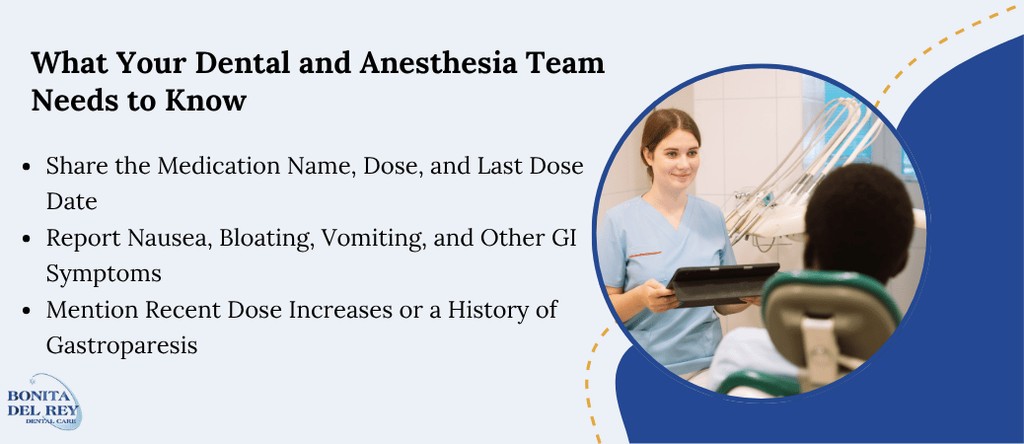
Share the Medication Name, Dose, and Last Dose Date
Tell your dental team exactly which medication you take. Ozempic, Wegovy, and Mounjaro all work differently in your body, so the name matters.
Let them know your dose and whether you’re on weekly dosing or daily dosing. This affects how long the drug stays active in your system.
Also share the date of your last dose. Your anesthesiologist uses this information to decide how to plan your sedation safely.
If you’re not sure about your exact dose or schedule, check with your prescriber before your appointment.
Bringing a list of your medications, including the brand name and dosing schedule, makes this conversation quick and easy.
Report Nausea, Bloating, Vomiting, and Other GI Symptoms
GI symptoms matter a lot when it comes to sedation safety. Tell your team if you’ve had nausea, bloating, or vomiting recently, even if it seems minor.
These symptoms can signal that food is staying in your stomach longer than normal. That raises your risk of aspiration during sedation.
Be honest about how often these symptoms happen and how severe they are. Your anesthesiologist may ask follow-up questions to understand your gastrointestinal symptoms better.
If you’ve noticed any recent nausea or vomiting, mention it even if it happened days before your appointment.
This small detail helps your team make the safest choice for your procedure.
Mention Recent Dose Increases or a History of Gastroparesis
If you’re in the dose-escalation phase of your treatment, say so. Your body may still be adjusting, which can affect digestion and increase GI symptoms.
A history of gastroparesis is also important to share. This condition slows stomach emptying and can raise your risk during sedation.
Tell your surgical team if a gastroenterologist or endocrinologist has ever diagnosed you with this condition. This helps them understand your full health picture.
Your team may also want to loop in your prescriber to confirm your current treatment plan.
Sharing this history supports safer planning for GLP-1 medications and surgery.
How Your Team Decides Whether to Continue or Pause Treatment
Your dental team and anesthesia provider will look at a few key details before your implant procedure. These include the type of GLP-1 you take, why you take it, and how your body handles sedation.
Current Multi-Society Guidance for Most Patients
Guidance has changed a lot since 2023. Early advice suggested a full week off weekly GLP-1 drugs before any sedation.
But newer multi-society guidance says most patients don’t need to stop their medication at all before elective procedures like implant surgery.
This shift happened because doctors and researchers gathered more real-world data. Groups like the American Gastroenterological Association now say holding the drug for a week may not even lower your risk.
For many patients, your team may simply ask about your last dose and adjust your fasting time instead of pausing treatment.
When Elective Implant Treatment May Need to Be Delayed
Some situations still call for extra caution. If you take a daily dose, your team may ask you to skip it the morning of surgery.
If you’re on a weekly injection, a short pause may be suggested depending on your dosing schedule and symptoms. Your risk depends on a few specific factors:
- Nausea or vomiting in the days before your appointment
- Slow digestion symptoms, like feeling full quickly or bloating
- Dose increases in the past few weeks
- Type of sedation planned (light sedation vs. general anesthesia)
Higher sedation levels, like general anesthesia, carry more risk if your stomach empties slowly. Your team will weigh this against your goals for weight management or blood sugar control before making a final call.
Why You Should Not Stop Diabetes Medication on Your Own
If you take a GLP-1 for type 2 diabetes, stopping suddenly can cause your blood sugar to rise. This can affect healing and increase infection risk after implant placement.
Never adjust your dose without talking to your prescriber first. Your implant team, your anesthesia provider, and your prescribing doctor should all be part of this decision together.
This is often called shared decision-making, and it helps make sure your diabetes stays controlled while keeping your surgery day safe.
If you’re taking these drugs for weight loss or obesity rather than diabetes, the same rule still applies. Always check with the doctor who prescribed it before making any changes.
Preparing for Implant Surgery With IV Sedation
Getting ready for IV sedation involves a few key steps, from following diet rules to sharing your full medication list with your dental team.
Knowing what to expect can help your procedure go smoothly and lower your risk of problems.

Follow Your Personalized Fasting and Liquid-Diet Instructions
Before your implant surgery, your dental team will give you specific fasting instructions. These rules help make sure your stomach is empty before sedation.
You may be asked to switch to a clear-liquid diet for part of the day before your appointment.
In some cases, your team may recommend a full 24-hour liquid diet, especially if you take a GLP-1 medication like Ozempic, Wegovy, or Mounjaro.
This step matters because these drugs slow down digestion. A full stomach during sedation raises the risk of food coming back up during your procedure, which can be dangerous.
Always follow your written instructions closely, even if they seem stricter than what you’ve read online.
Understand the Difference Between Moderate and Deep Sedation
Not all sedation is the same. Moderate sedation keeps you relaxed but awake enough to respond to simple questions.
Deep sedation puts you in a much deeper sleep-like state, and general anesthesia goes even further, making you fully unconscious.
Your oral surgeon will choose the right option based on your procedure and health history. Longer or more complex implant work often calls for deep sedation rather than light sedation.
This choice affects your anesthesia plan, including how long you’ll need to fast and how your medications should be managed.
Ask your provider which type of sedation is planned for you, so you know what to expect and how to prepare.
Bring an Accurate Medication List to Your Preoperative Visit
Your surgical team needs to know every medication you take, including GLP-1 drugs. This list helps them plan your anesthesia safely and avoid surgical risks tied to slowed digestion.
Be specific about your GLP-1 medication. Include the exact drug name, dose, and how often you take it, whether it’s weekly like Ozempic or Wegovy, or a different schedule like Mounjaro.
Your team may also ask when you took your last dose. This detail helps them decide if you need to adjust your medication timing before surgery.
Don’t leave anything out, even supplements or over-the-counter drugs, since they can also affect your sedation plan.
Safety Steps the Anesthesia Team May Use
Your anesthesia team has several tools to lower the risk of problems if food or liquid is still in your stomach during sedation.
These steps range from checking your stomach with ultrasound to changing how your airway is managed during the procedure.
Using Gastric Ultrasound When Stomach Contents Are Uncertain
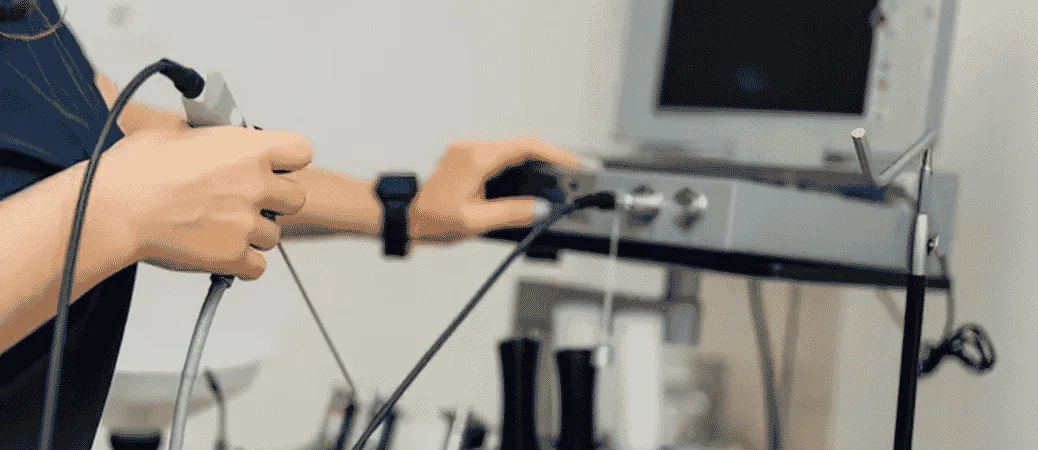
If your care team is not sure whether your stomach is empty, they may use point-of-care gastric ultrasound before your procedure.
This is a quick, painless scan that looks at your stomach to check for leftover food or liquid.
GLP-1 drugs like Ozempic, Wegovy, and Mounjaro can slow down digestion. This means residual gastric contents may still be in your stomach even after a normal fasting period.
If the scan shows solid or thick liquid content, your anesthesiologist may delay your procedure or change the sedation plan.
This scan helps guide safe, personalized choices instead of using a one-size-fits-all rule.
Adjusting Airway Protection and the Sedation Plan
If there is a chance your stomach is not empty, your anesthesia plan may shift to protect you from aspiration risk. This can include placing a breathing tube instead of using lighter sedation.
Your team may also choose rapid sequence induction, often called rapid sequence intubation. This method puts the breathing tube in quickly to lower the chance of regurgitation and pulmonary aspiration during the process.
These choices depend on your specific risk level. Someone with GI symptoms or a recent dose increase may need extra airway precautions before anesthesia, while someone on a steady, low dose with no symptoms may not.
What Happens If You Have Taken a Dose or Need Urgent Care
If you have taken your GLP-1 dose recently or need emergency surgery, your anesthesiologist will treat you as if you have a full stomach. This is a standard safety approach, no matter how long it has been since you last ate.
In this case, your surgical team may use intubation right away instead of waiting to check with imaging. This lowers the chance of stomach contents entering your lungs during sedation.
Always tell your anesthesia team the truth about your last dose. This information helps them choose the safest anesthesia approach for your visit, even if your surgery cannot be delayed.
Frequently Asked Questions
Here are quick answers to the most common questions patients ask about taking GLP-1 medications before dental implant surgery with IV sedation.
These cover when to speak up, whether to pause your dose, and what to watch for before your appointment.
Do I need to tell my implant surgeon that I take Ozempic, Wegovy, or Mounjaro?
Yes, always let your surgeon know. This is true even if you only take a low dose or started the medication recently.
GLP-1 drugs slow down how fast your stomach empties. This matters a lot when you are having IV sedation, so your surgical team needs this information to plan your care safely.
Should I stop my GLP-1 medication before IV sedation for dental implant surgery?
This depends on your specific situation, and your surgeon or prescribing doctor will make the final call.
Some guidelines say most patients do not need to stop taking GLP-1 medications before elective procedures.
Other cases still call for a pause, especially if you have symptoms like nausea or slow digestion.
Your dental team may also look at research on GLP-1 use before dental sedation to help guide this decision.
How long before my procedure should I take my last dose of Ozempic, Wegovy, or Mounjaro?
Timing depends on whether you take a weekly or daily version of the medication. Weekly doses, like Ozempic or Wegovy, often need more advance planning than daily options.
Your care team may follow updated timelines that break down how long to stop GLP-1 medications before surgery based on your dosing schedule.
Never change your dose or stop your medication without talking to your prescriber first.
Why do these medications matter when I am having IV sedation?
GLP-1 drugs slow digestion, which means food can stay in your stomach longer than normal. This raises the risk of stomach contents coming back up during sedation, which can be dangerous if it enters your lungs.
This risk is called aspiration risk, and it’s a key reason your team asks about these medications.
Understanding how GLP-1 medications affect anesthesia and surgical safety helps your surgical team choose the safest sedation plan for you.
What should I do if I have nausea, vomiting, bloating, or stomach pain before my implant appointment?
Call your dental office right away if you notice any of these symptoms. These signs can mean your stomach is not emptying as it should, which raises safety concerns for sedation.
Your care team can determine whether your procedure should proceed as planned or be rescheduled. This step protects you and helps make sure your surgery goes smoothly.
Can I still have implant surgery if I take a weekly GLP-1 medication for diabetes or weight loss?
Yes, in most cases you can still have your implant surgery. Many patients on Ozempic, Wegovy, or Mounjaro complete dental procedures safely with the right planning.
Your surgeon will look at your health history, dosing schedule, and current symptoms to decide the best approach. Sharing full details about your medication use gives your team what they need to keep you safe.