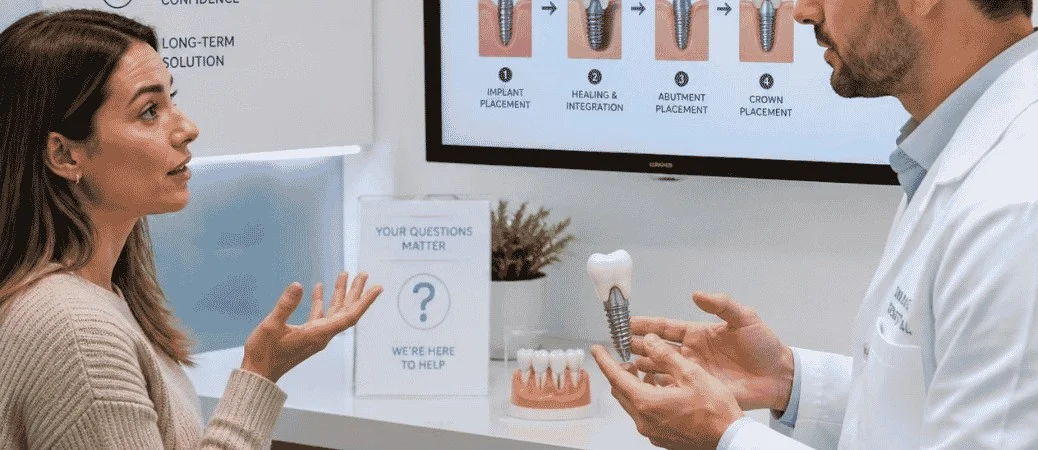
Getting dental implants is a major decision that affects your health, appearance, and budget for years to come.
Before you commit to the procedure, you need to know what happens during the procedure from your dental provider.
Asking the right questions helps you understand what to expect and ensures you feel confident about replacing your missing teeth.
You should ask the right questions before dental implants, such as your candidacy for implants, the total cost and timeline, what risks or complications might occur, how to prepare for surgery, and what long-term care your implants will need.
These questions help you avoid surprises during recovery and make sure you’re working with a provider who has the experience and transparency you deserve.
The answers you get will show you whether dental implants are the best solution for your tooth loss.
This guide walks you through the most important questions to ask before getting dental implants.
You’ll learn what to discuss with your dentist about the procedure, costs, healing process, and how to take care of your new teeth for decades to come.
Key Takeaways
- Ask your dentist about your candidacy, the procedure timeline, total costs, and what materials will be used for your implants
- Understand the risks like infection or implant failure and confirm your provider has a clear plan for monitoring your healing
- Learn what habits to avoid during recovery and what long-term care is needed to keep your dental implants lasting 20 years or more
Table of Content
- Understanding Dental Implants and Their Benefits
- Choosing the Right Dental Professional
- Evaluating Candidacy and Preparing for Treatment
- Dental Implant Procedure: Steps and Timing
- Understanding Risks, Costs, and Long-Term Care
- Frequently Asked Questions
Understanding Dental Implants and Their Benefits
Dental implants are medical devices that replace missing teeth by anchoring into your jawbone. They offer a permanent solution that looks natural and can last many years with proper care.
What Are Dental Implants and How Do They Work?
Dental implants are small posts made of special materials that dentists surgically place into your jawbone. They act as artificial tooth roots that support replacement teeth like crowns, bridges, or dentures.
The implant body goes directly into your jawbone where your natural tooth root used to be. An abutment connects to the top of the implant and sticks up through your gums.
Your dentist then attaches the artificial tooth to this abutment.
The process works through something called osseointegration. This means your jawbone actually grows around and bonds with the implant over time.
This fusion makes the implant stable and strong, just like a natural tooth root. The healing process usually takes several months, but this bond is what makes implants so secure.
Types of Dental Implants and Materials
Most dental implants are made from titanium or zirconia. Titanium implants have been used for decades and have a proven track record. They bond well with bone and rarely cause allergic reactions.
Zirconia implants are a newer option made from ceramic material. They’re white in color, which some people prefer for cosmetic reasons.
Some dentists also use other materials like gold alloys or cobalt-based alloys, though these are less common.
Your dentist will recommend the best implant type based on your specific needs. Factors like bone density, location in your mouth, and any allergies you might have all play a role in this decision.
Advantages and Longevity of Implants
Dental implants restore your ability to chew and improve how you look when you smile. They also help keep your jawbone from shrinking, which happens when you lose teeth.
This bone preservation helps maintain your face shape over time.
Key benefits include:
- Natural appearance and feel
- No need to remove them for cleaning
- Better speech compared to dentures
- Protection for surrounding teeth
- Improved comfort when eating
How long do dental implants last? With good care, they can last 20 years or longer. Many people keep their implants for life. Your daily brushing and flossing habits matter a lot.
Regular dental checkups also help your implants stay healthy. Smoking can reduce how long implants last since it affects healing.
Choosing the Right Dental Professional
The specialist you choose for your dental implants affects both your safety and
long-term results. Training, experience, and proven outcomes help you identify providers who can handle your specific needs.

Experience and Qualifications to Look For
During your dental implant consultation, ask about the provider’s specialized training and years of experience with implant procedures.
Prosthodontists, oral surgeons, and periodontists are recognized as specialists with extensive implant training.
Find out how many implant procedures your provider performs each year. A specialist who places implants regularly develops better skills and judgment than someone who only does them occasionally.
Ask if they have board certification in their specialty. This shows they’ve met higher standards of education and testing in implant dentistry.
You should also ask about continuing education. Implant techniques and materials improve over time, so your provider should stay current with new methods.
Role of Oral Surgeon and Periodontist
An oral surgeon specializes in surgical procedures of the mouth and jaw. They handle complex cases that involve bone grafting, sinus lifts, or difficult extractions before implant placement.
A periodontist focuses on gum health and the supporting structures around teeth. They’re trained in placing implants and managing soft tissue to create natural-looking results.
Some providers work as part of a team where different specialists handle specific steps. Ask if all procedures are done in one office or if you’ll need to visit multiple locations.
Find out who will perform each part of your treatment. Clear communication between specialists matters for your final outcome.
Checking Success Rates and Patient Outcomes
Ask your provider about their implant success rates. Most experienced specialists have success rates above 95% for standard cases.
Request information about complications they’ve seen and how often they occur. A provider who’s transparent about risks and shows you how they handle potential problems demonstrates confidence and honesty.
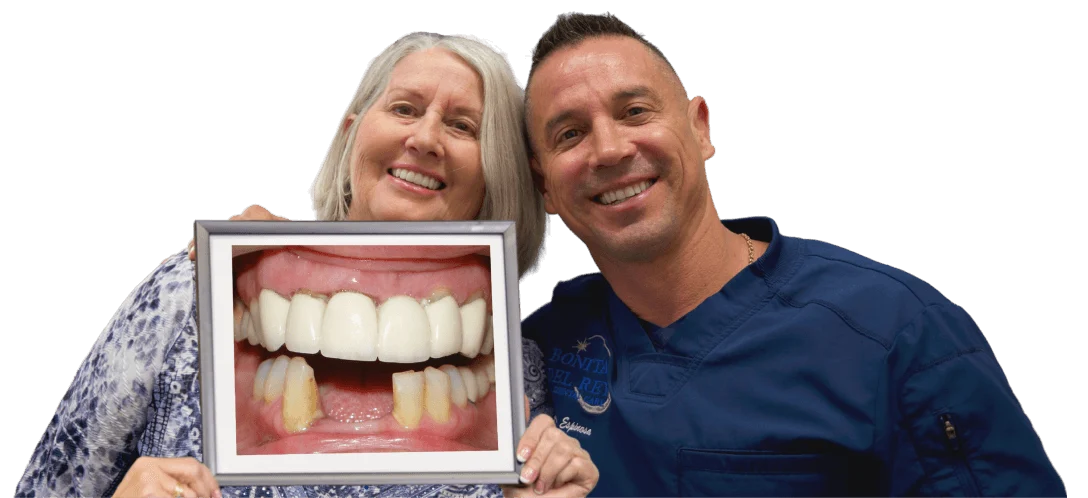
Look for before-and-after photos of actual patients with similar cases to yours. This helps you see the quality of their work and set realistic expectations.
Ask if you can speak with previous patients about their experiences. Patient testimonials give you insight into the level of care and support you’ll receive throughout treatment.
Evaluating Candidacy and Preparing for Treatment
Not everyone qualifies for dental implants right away. Your dentist needs to check your bone density, gum condition, and overall health to create a treatment plan that works for your specific situation.
Who Is a Candidate for Dental Implants?
Most adults with missing teeth can be a candidate for dental implants, but certain factors affect your eligibility.
You need adequate jawbone density to support the implant post. Your gums should be healthy and free from active periodontal disease.
Medical conditions like uncontrolled diabetes, active cancer treatment, or autoimmune disorders may affect healing. Smoking can reduce success rates because it slows bone integration.
Certain medications, particularly bisphosphonates used for osteoporosis, can complicate the healing process.
Your dentist will review your complete medical history during the dental implant consultation. Age isn’t typically a barrier if your jaw has finished growing and you’re in good general health.
Assessing Gum and Bone Health
Your dentist examines your gum health and bone structure before recommending implants. Healthy gums provide the foundation that holds implants in place over time.
Active gum disease must be treated first. Infected or inflamed gum tissue won’t support an implant properly and increases the risk of implant failure.
Your dentist may recommend deep cleaning or other periodontal treatments before moving forward.
Bone density matters ju.st as much. Your jawbone needs enough height, width, and density to anchor the implant securely.
A 3D CT scan and computer-guided implants shows exactly how much bone you have and where it’s located. This imaging reveals whether you can proceed immediately or need additional preparation.
Bone Grafting and Sinus Lift Considerations
If your jawbone lacks sufficient volume, a bone graft can rebuild the area before implant placement. Bone grafting adds material to your jaw that eventually fuses with your natural bone.
This process typically takes three to six months before implants can be placed.
A sinus lift becomes necessary for upper back teeth when your sinus cavity sits too close to your jaw. The procedure raises the sinus membrane and adds bone beneath it.
This creates adequate space for the implant without risking sinus damage.
Some patients also need gum grafting if they lack enough healthy gum tissue around the implant site. This protects the implant and improves the final appearance.
Your dentist will explain which procedures you need and how they affect your timeline and total cost.
Dental Implant Procedure: Steps and Timing
The dental implant process involves multiple stages spread over several months. Each step plays a role in making sure your implant bonds properly with your jaw and functions like a natural tooth.
Overview of the Dental Implant Surgery Process
Getting dental implants typically happens in stages rather than all at once. Your dentist will first assess your teeth and jaw to determine if you’re a good candidate for the procedure.
The dental implant stages begin with an assessment where your dentist checks your jawbone quality and overall oral health.
If you need bone grafting to strengthen your jaw, that happens first and requires its own healing period.
During implant surgery, your dentist places a titanium post into your jawbone. This post acts as an artificial tooth root. The procedure is done as an outpatient surgery, which means you go home the same day.
After the post is placed, you’ll wait several months for osseointegration to occur. This is when the implant fuses with your jawbone. This healing phase is critical because it determines how stable and long-lasting your implant will be.
Implant Placement and Temporary Crown
Once the implant has fused with your bone, your dentist attaches a piece called an abutment. This connector sits on top of the implant post and holds your replacement tooth.
Your gums need about two weeks to heal around the abutment. During this time, you might receive a temporary crown to protect the area and maintain your appearance.
The temporary crown looks like a real tooth but isn’t as strong as your final restoration. You’ll need to be careful with it while eating.
Some dental practices handle all procedures in one office with one team, which can make the process more convenient.
Your final crown is custom-made to match your natural teeth in color, shape, and size. Once it’s ready, your dentist removes the temporary crown and secures the permanent one.
What to Expect During Recovery and Healing

Recovery from dental implant surgery varies by person, but most people experience mild swelling and discomfort for the first few days.
You can manage this with ice packs and pain medication your dentist recommends.
You’ll need to avoid smoking before and after surgery because it can prevent proper healing. Hard and crunchy foods should also be avoided during the initial healing period.
The complete process from initial implant placement to final crown typically takes three to six months.
Your specific timeline depends on whether you need additional procedures like bone grafting and how quickly your body heals.
Regular follow-up appointments help your dentist monitor healing and catch any problems early. Most people return to normal activities within a few days, though the bone continues healing beneath the surface for months.
Understanding Risks, Costs, and Long-Term Care
Dental implants come with specific risks like infection and nerve damage, require a clear understanding of all costs involved, and need proper daily care to last decades.
Potential Risks and Causes of Implant Failure
Every dental procedure carries some level of risk. The most common complications include infection at the implant site, nerve damage that can cause numbness or tingling, and implant failure where the post doesn’t fuse properly with your jawbone.
Implant failure is rare but can happen for several reasons. Smoking reduces blood flow and slows healing. Poor oral hygiene allows bacteria to build up around the implant.
Certain health conditions like uncontrolled diabetes or osteoporosis can affect how well your bone accepts the implant.
Ask your provider how often they see these complications and what their protocol is if problems occur. You should also ask about signs to watch for during recovery, such as persistent pain, swelling that doesn’t go down, or movement of the implant.
Cost Breakdown and Financing Options
The cost of dental implants varies widely depending on your specific needs. A single implant typically costs between $3,000 and $4,500. Full arch replacements can range from $20,000 to $45,000 per arch.
Ask for an all-inclusive quote that covers:
- Initial consultation and imaging
- Anesthesia or sedation
- The surgical procedure
- Abutment and crown placement
- Follow-up visits and adjustments
Some providers offer financing plans that let you pay over time. Check if your dental insurance covers any portion of the treatment.
While many insurance companies don’t cover implants fully, they may reimburse part of the cost if you submit a claim.
Ask about bone grafting or other prep work you might need, since these procedures add to your total cost and timeline.
Dental Implant Care and Maintenance Tips
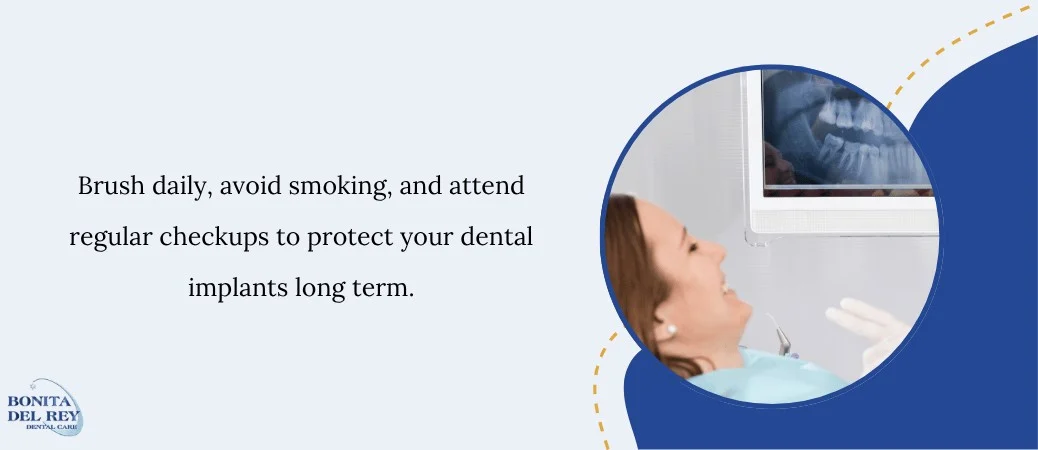
Dental implant care requires daily attention to keep your implants healthy for 20 years or longer.
Brush twice daily with a soft-bristle toothbrush and use interdental brushes or floss specifically designed for implants to clean between teeth and around the implant posts.
Avoid smoking, which restricts blood flow and increases your risk of implant failure. Stay away from very hard or sticky foods that could damage the crown or put too much pressure on the implant.
Schedule regular dental checkups every six months so your provider can monitor the implant and surrounding gum tissue.
Ask your provider what specific products they recommend for home care. They should give you a detailed list of what to avoid during the initial healing period and explain how long those restrictions last.
Frequently Asked Questions
Getting dental implants involves understanding your individual health status, choosing the right approach for your needs, and knowing what to expect during recovery.
These answers address the most common concerns patients have about candidacy, treatment options, healing timelines, and potential complications.
Am I a good candidate for dental implants based on my gum and bone health?
Your jawbone needs to be strong enough to support an implant, and your gums should be healthy without active disease.
Your dentist will take X-rays or CT scans to check if you have enough bone density in the area where the implant will go.
If your bone isn’t thick enough, you might need a bone graft first to build up the area. This adds time to your treatment but makes it possible for people who wouldn’t otherwise qualify.
Gum disease needs to be treated before you get implants. Healthy gums are important because they surround and protect the implant just like they do with natural teeth.
What implant options are available for my situation, and why would you recommend one over another?
Most dental implants use titanium posts because they fuse well with bone and last for decades. Some providers offer zirconia implants as an alternative, which are metal-free and appeal to patients with metal sensitivities.
You might be offered different types of implant restoration options depending on how many teeth you’re replacing.
Single tooth implants get individual crowns, while multiple missing teeth might use an implant-supported bridge.
Full arch solutions replace all your upper or lower teeth with implants supporting a full set of fixed teeth.
Your dentist should explain why they recommend a specific approach based on your bone structure, budget, and how many teeth need replacing.
What will the full treatment timeline look like, including healing time before the final crown is placed?
The complete dental implant process typically takes several months from start to finish.
After the implant post is placed in your jaw, you’ll need three to six months for the bone to fuse with the implant in a process called osseointegration.
Some patients need preparatory procedures like extractions or bone grafting, which add extra time before the implant can even be placed. Your dentist should give you a personalized timeline that outlines each stage.
Once the implant has fully integrated with your bone, you’ll return to have an abutment attached, followed by your permanent crown.
The full dental implant process can span several months depending on your individual case.
When can I start chewing on the implant side, and when will I be able to eat normally again?
You should avoid chewing on the implant side for the first few days after surgery while the area is healing. Most people can return to softer foods within a week, but you’ll need to be careful with the surgical site.
Your temporary crown or healing cap isn’t meant for heavy chewing pressure. Wait until your permanent crown is placed and your dentist gives you the all-clear before using that side for regular chewing.
Full chewing function usually returns once your final restoration is in place and your dentist confirms everything has healed properly. This timing varies by person but typically happens several months after the initial surgery.
What foods should I avoid during recovery, and when can I safely eat crunchy foods like chips?
Stick to soft foods like yogurt, mashed potatoes, smoothies, and scrambled eggs for the first week after surgery. Avoid anything hot, spicy, or acidic that could irritate the surgical site.
Crunchy foods, hard foods, and anything that requires significant chewing should be avoided during the initial healing period. This includes chips, nuts, raw vegetables, and crusty bread.
You can gradually add more challenging foods back into your diet as healing progresses, but wait for your dentist’s approval before eating anything particularly hard or crunchy.
Most patients can return to their normal diet once the permanent crown is placed and fully settled.
What are the possible risks or complications, and how will we handle them if they happen?
Infection at the implant site is one possible complication, though it’s relatively uncommon. Your dentist will prescribe antibiotics if needed and monitor the area closely during follow-up visits.
Implant failure can occur if the post doesn’t fuse properly with your jawbone. While implant failure is rare, your provider should explain their protocol for replacing or fixing an implant that doesn’t take.
Nerve damage, sinus issues, or damage to surrounding teeth are other potential risks depending on where the implant is placed.
Ask your dentist how often they see these issues and what steps they take to prevent them during surgery.