If you have severe upper jaw bone loss, you may feel stuck with loose dentures or told implants will not work for you. Zygomatic implants offer a different option by using the strong cheekbone for support when the upper jaw cannot. This approach opens the door to fixed teeth for people once turned away from implant care.
You may be the best zygomatic implants candidate if you lack enough upper jaw bone for standard implants, and they work because they anchor into the dense cheekbone instead of the weak jawbone.
That strong anchor can support a full set of upper teeth without bone grafting. In many cases, you can receive fixed teeth faster and with fewer surgeries.
Understanding how these implants work, who qualifies, and what to expect can help you decide if this option fits your needs. The details ahead explain the process in clear terms, so you can move forward with confidence.
Key Takeaways
- Zygomatic implants help when upper jaw bone is too weak for regular implants
- The implants anchor into the cheekbone for strong, stable support
- Proper planning and care lead to long-term, reliable results
Understanding Zygomatic Implants
Zygomatic implants support your teeth when bone loss in your upper jaw makes standard dental implants unsafe. They rely on the strength of your cheekbone instead of weak jawbone areas.
What Makes Zygomatic Implants Unique
Zygomatic implants stand out because they anchor into your zygomatic bone, also called the cheekbone. This bone has dense cortical bone that stays strong even when your upper jaw loses volume. That strength gives the implant firm support.
These implants are longer than standard dental implants and sit at an angle. This design lets them bypass weak bone in the maxilla. You often avoid bone grafts, which saves time and reduces surgery steps.
Many dentists use zygomatic implants when severe bone loss rules out other options. You can learn more about what zygomatic implants are and who needs them if you want deeper detail.
Key features
- Longer length than standard dental implants
- Anchors in the cheekbone, not the upper jaw
- Works well with poor bone structure
How Zygomatic Implants Differ from Traditional Dental Implants
Standard dental implants depend on healthy jawbone in your upper jaw. When that bone shrinks, implants may fail or need grafting. Zygomatic implants solve this by changing the anchor point.
Here is a simple comparison:
| Feature | Standard Dental Implants | Zygomatic Implants |
| Anchor bone | Upper jaw (maxilla) | Cheekbone (zygoma) |
| Bone grafting | Often needed | Often avoided |
| Implant length | Shorter | Much longer |
Zygomatic implants also help some patients get teeth faster. In certain cases, dentists place temporary teeth soon after surgery.
Have questions about zygomatic implants? Reach out to Bonita Del Rey Dental Care in Chula Vista, CA for expert answers.
The Role of the Zygomatic Bone and Cheekbone
Your cheekbone plays a key role in making zygomatic implants work. The zygomatic bone connects to your skull and supports facial structure. It keeps its density even after tooth loss.
Because this bone stays strong, it offers a stable base when your upper jaw cannot. Dentists angle the implant so it locks into this solid bone without harming nearby areas like the sinus.
This approach lets you restore function without rebuilding lost jawbone first. Many patients with long-term denture use or failed grafts benefit from zygoma-based implant placement for severe bone loss.
Who Is a Candidate for Zygomatic Implants?
You may qualify for zygomatic implants if standard dental implants will not work in your upper jaw. This often relates to bone loss, past implant failure, or specific medical and anatomical limits that affect implant stability.
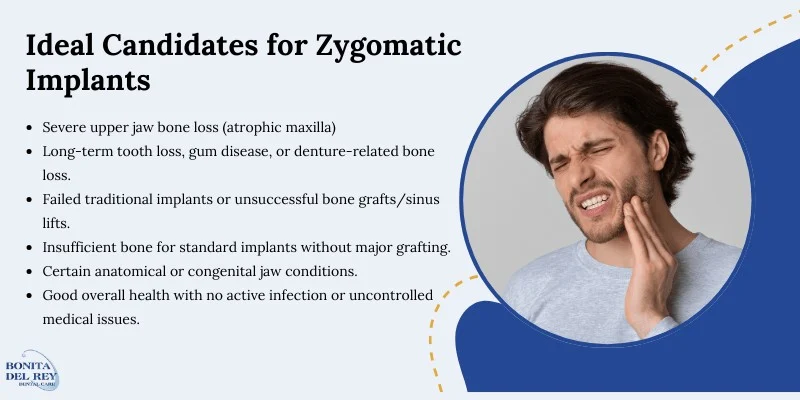
Severe Bone Loss and Upper Jaw Bone Loss
You may be a candidate if you have severe bone loss in the upper jaw, also called maxillary bone loss. This often happens after long-term tooth loss, advanced periodontal disease, or years of denture use. Over time, the jawbone shrinks when it no longer supports teeth.
Zygomatic implants work well in cases of an atrophic maxilla, where jawbone density is too low for standard implants. Instead of relying on the weakened upper jaw bone, these implants anchor into the cheekbone, which stays strong even after tooth loss.
This approach helps you avoid large bone grafting procedures and long healing times. Many people choose this option when the amount of remaining maxillary bone cannot safely support regular implants.
Failed Traditional Implants and Bone Grafting
You may also qualify if you have failed traditional implants or unsuccessful bone grafting. Implant failure often occurs when the jawbone cannot hold the implant firmly, even after grafting or sinus lifts.
If you have already undergone sinus lifts or bone grafting procedures without success, zygomatic implants may offer a more predictable solution. They bypass weak bone areas and anchor in stable bone higher in the face.
This option can reduce the need for repeat surgeries. It can also shorten treatment time compared to multiple grafting stages. For many patients, this means fewer procedures and a clearer path to fixed teeth.
Medical and Anatomical Considerations
Your overall health and anatomy also affect whether zygomatic implants are right for you. Dentists assess jawbone density, sinus anatomy, and the shape of your upper jaw using advanced imaging.
You may qualify even with congenital anomalies that affect the maxillary bone or upper jaw structure. These conditions can make standard implants difficult or unsafe.
Some medical issues may limit eligibility, such as active infections or uncontrolled systemic disease. A detailed evaluation helps ensure the implants fit your anatomy and support long-term function and comfort.
Wondering if you’re a zygomatic implants candidate? Learn more and explore our services at Bonita Del Rey Dental Care to restore your smile.
How Zygomatic Implants Work
Zygomatic implants support fixed teeth by anchoring into strong cheekbone tissue. This approach avoids weak upper jaw bone and often allows faster dental restoration with fewer procedures.
Implant Placement and Angulation
Your surgeon places zygomatic implants through the upper jaw and into the cheekbone. This bone sits above the jaw and stays dense even after long-term tooth loss.
The implant length is much longer than standard implants, often 30–50 mm. The implant follows a precise angle so it reaches the cheekbone without pressing into the sinus.
Key parts of implant placement include:
- Angled positioning to reach stable bone
- Careful planning with 3D scans
- Fewer or no bone grafts in most cases
This zygomatic implant procedure demands skill because the implant passes near the sinus. Proper angulation keeps the implant stable and reduces surgical risk. When placed correctly, the cheekbone provides strong support for a full arch of teeth. Learn more about how zygomatic implants are placed in complex maxillary cases.
Immediate Loading and Dental Restoration
Many patients receive immediate loading on the same day as surgery. This means you leave with fixed teeth instead of waiting months without teeth.
Your dentist attaches a temporary prosthetic bridge to the implants. The bridge restores basic function and appearance while healing begins.
Immediate dental restoration often includes:
- Temporary fixed teeth
- Light chewing limits at first
- Careful bite adjustment
This approach works because the cheekbone offers strong initial stability. Not everyone qualifies, but many patients with severe bone loss do. Immediate loading can reduce treatment time and the number of visits. A patient-focused overview explains how zygomatic implants support faster dental restorations.
Osseointegration and Long-Term Stability
After placement, the implants go through osseointegration. Your bone slowly bonds to the implant surface over several months.
During this time, your dentist monitors healing and adjusts your bite. Once integration is complete, the temporary bridge is replaced with a final dental restoration.
Long-term stability depends on:
- Healthy bone contact
- Proper oral hygiene
- Regular dental visits
When osseointegration finishes, the implants can support a full arch of teeth with strong bite force. With daily care, zygomatic implants can hold fixed dental restorations for many years. A clear patient guide explains why cheekbone anchoring improves long-term implant stability.
The Zygomatic Implant Procedure
Zygomatic implant surgery relies on careful planning, precise implant surgery steps, and the skill of a trained specialist. Each stage focuses on safety, accuracy, and long-term support for your final teeth.

Pre-Operative Planning and 3D Imaging
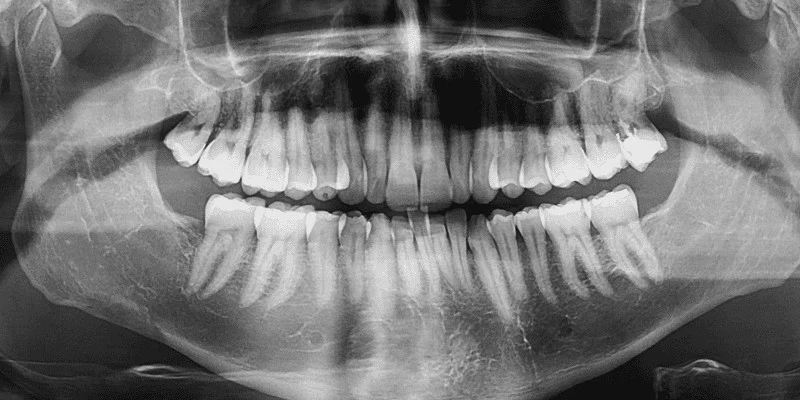
Your implant procedure starts with detailed planning. Your care team uses a CT scan and 3D imaging to study your facial anatomy in detail. This scan shows bone density, sinus shape, and the position of nearby nerves.
The images help map the exact path for the titanium implants. This step reduces risk and improves fit. It also helps decide implant length and angle.
Planning often includes:
- Measuring the zygomatic bone for strength
- Checking sinus health and space
- Planning implant position to support a fixed bridge
Many clinics use digital tools to simulate zygomatic implant surgery before the actual day. This approach supports safer surgical procedures and more predictable results.
Surgical Steps and Anesthesia Options
On surgery day, your team prepares you for comfort and control. The implant surgery may use local anesthesia, IV sedation, or general anesthesia, depending on your needs and case complexity.
During the procedure, the oral surgeon places long titanium implants through the upper jaw and into the cheekbone. These implants anchor in dense bone for strong support.
Key steps usually include:
- Creating access to the implant site
- Preparing the implant path through bone
- Securing the implant with controlled torque
Zygomatic implant surgery often allows immediate support for temporary teeth. This reduces waiting time while healing begins.
Role of the Oral and Maxillofacial Surgeon
An oral and maxillofacial surgeon leads this type of implant surgery. This specialist has advanced training in facial anatomy, surgical procedures, and complex implant placement.
The surgeon plans and places implants while protecting nearby structures like the sinuses and eyes. Experience matters because zygomatic implants require precise angles and depth control.
Many patients choose a surgeon who focuses on advanced cases, such as severe bone loss. According to this guide on zygomatic implant placement by an oral and maxillofacial surgeon, careful planning and technique help reduce complications.
Your surgeon also coordinates with the restorative team to align implant placement with your final teeth design.
Post-Procedure Recovery and Care
After zygomatic implant surgery, your actions during healing shape comfort, safety, and long-term success. Care focuses on diet, cleaning habits, and early response to warning signs.
Initial Healing and Soft Diet
The first few days matter most for post-operative care. Expect swelling, mild pain, and bruising, especially near the cheeks and upper jaw.
Follow a soft diet to protect the implant and nearby bone. Start with cool liquids, yogurt, and smooth soups. Move to soft foods like eggs, mashed vegetables, and soft fish after a few days.
Avoid hard, hot, or spicy foods. These can disturb blood clots and slow healing. Do not use straws, since suction raises sinus pressure and may trigger sinus inflammation.
Sleep with your head raised. This step helps limit swelling and reduces stress near the sinus area, where sinus lift–related changes may exist.
Oral Hygiene and Dental Check-Ups
Careful oral hygiene lowers the risk of infection and gum disease. For the first 24 hours, avoid rinsing or brushing near the surgical area.
After one day, rinse gently with warm salt water two to three times daily. Use a soft toothbrush on teeth away from the implant site. Do not scrub stitches.
Your dentist may suggest an antimicrobial rinse for short-term use. Follow directions closely to avoid irritation.
Regular dental check-ups play a key role in recovery. Early visits allow your dentist to check healing, remove stitches, and confirm implant stability. Ongoing visits also help prevent plaque buildup that can threaten the implant over time.
Managing Potential Complications
Zygomatic implants sit close to the sinus and nerves, so you should watch for specific symptoms. Contact your dentist if you notice:
- Ongoing swelling or pain after the first week
- Fever or foul taste, which may signal infection
- Nasal discharge or pressure linked to sinusitis
- Numbness that may suggest nerve damage
Avoid blowing your nose or heavy lifting during early healing. These actions can increase sinus pressure and raise the risk of sinus complications or sinus inflammation.
If you smoke or drink alcohol, stop during healing. Both reduce blood flow and increase failure risk. Prompt care and clear communication help keep small issues from becoming serious problems.
Benefits, Risks, and Success Rates
Zygomatic implants can restore your bite when bone loss limits other options. They shorten treatment time, avoid bone grafts, and show strong long-term results, but they also carry higher costs and surgical risks.
Advantages Over Bone Grafting and Dentures
Zygomatic implants anchor in the cheekbone, not the upper jaw. This design lets you avoid bone grafting, which can add months to your treatment timeline. Many patients receive fixed bridges instead of removable dentures, improving comfort and speech.
You also gain better stability. The cheekbone offers dense bone quality, which supports chewing forces well. That stability helps protect your oral health by reducing sore spots and movement.
Key advantages
- No bone grafts for severe bone loss
- Faster loading compared with graft-based plans
- Fixed bridges instead of removable dentures
- Strong support from dense cheekbone bone
These benefits explain why advanced dental implantology often recommends this option when standard implants fail.
Success Rates and Long-Term Outcomes
Studies report high survival rates for zygomatic implants when placed by experienced surgeons. Reviews show long-term success rates often above 90%, even in patients with severe bone loss.
A large clinical review reported a 92% implant survival rate with manageable complications in long-term follow-up, as detailed in research on long-term success and biological complications of zygomatic implants.
Other summaries report survival rates near 95–97% over several years, according to data on zygomatic implant success rates and durability.
Long-term outcomes depend on daily care. Good hygiene, regular checkups, and stable bite forces help protect the implants and bridges.
Potential Limitations and Costs
Zygomatic implant surgery is complex. It requires advanced training and careful planning around the sinus area. Risks include sinus issues, gum problems, and infection, though careful follow-up can reduce these risks.
Cost also matters. The cost of zygomatic implants is higher than standard implants due to surgery time, planning, and custom bridges. Prices vary by region and case needs.
Common limitations
- Higher upfront zygomatic implants cost
- Limited provider availability
- Longer surgery time than standard implants
Even with these limits, many patients choose this option to avoid grafts and regain fixed teeth faster.
Still unsure if zygomatic implants are right for you? Contact Bonita Del Rey Dental Care in Chula Vista, CA to explore personalized treatment.
Frequently Asked Questions
Zygomatic implants help people with major upper jaw bone loss get stable teeth without bone grafts. They work by anchoring into the cheekbone, which stays strong even when the upper jaw has weakened.
What are the benefits of choosing zygomatic implants over traditional dental implants?
Zygomatic implants avoid bone grafting in many cases. This can shorten treatment time and reduce the number of surgeries you need.
They attach to the cheekbone, which gives strong support. Many patients can receive fixed teeth much sooner than with traditional implants.
Can anyone get zygomatic implants, or are there specific criteria patients must meet?
Zygomatic implants suit people with severe bone loss in the upper jaw. Dentists often recommend them when standard implants will not hold.
You must be in good general health and able to heal after surgery. A specialist reviews scans to confirm that your cheekbone can support the implant.
What makes zygomatic implants a viable solution for those with insufficient bone density?
These implants anchor into the dense cheekbone instead of the upper jaw. The cheekbone resists bone loss better than the maxilla.
This design allows treatment even when the upper jaw lacks enough bone. Many patients avoid sinus lifts or grafting by using this approach, as explained in guides on zygomatic implants for severe bone loss.
How do zygomatic implants differ in procedure and recovery compared to other dental implants?
Zygomatic implants are longer and placed at an angle. The surgeon positions them to reach the cheekbone for stable support.
Recovery often matches or improves on traditional implant timelines. Some patients receive temporary teeth soon after surgery, as described in comprehensive zygomatic implant guides.
What should patients expect during the recovery period after receiving zygomatic implants?
You can expect swelling and soreness during the first few days. Most people manage this with prescribed pain control and rest.
Your dentist will give clear care steps for cleaning and eating. Follow-up visits help ensure proper healing and implant stability.
Are there any potential risks or complications associated with zygomatic implant surgery?
Risks include infection, sinus issues, or implant placement problems. These risks stay low when an experienced surgeon plans the procedure carefully.
Detailed imaging and proper technique reduce complications. Articles on zygomatic implant risks and prevention explain how careful planning supports safe outcomes.