If you struggle with loose dentures or severe bone loss in your upper jaw, you may feel stuck with limited options. Zygomatic implants offer a different path.
They anchor into the cheekbone, which often has more strength than the upper jaw.
Zygomatic implants can improve your quality of life by giving you stable teeth that let you eat, speak, and smile with more comfort and confidence. They can directly improve your jaw health.
Many patients report strong improvements in daily function and satisfaction after treatment. You can also learn more about how these implants support full-arch restorations in this guide on zygomatic implants and their benefits.
When traditional implants are not possible due to bone loss, this approach may help you avoid bone grafts and move forward with fixed teeth.
As you explore your options, you can see how this treatment restores daily function and comfort in many cases.
Key Takeaways
- You can regain stable teeth even with severe upper jaw bone loss.
- This treatment can improve eating, speaking, and daily comfort.
- Careful planning and proper recovery support long-term results.
Discover how zygomatic implants life quality improves daily comfort and explore your options
How Zygomatic Implants Enhance Quality of Life
Zygomatic implants support full-arch restoration when you do not have enough upper jaw bone for traditional implants. They improve how you eat, speak, and feel each day, while also restoring a natural look and steady bite.
Functional Improvements: Eating, Speaking, and Comfort
Zygomatic implants anchor into the cheekbone, which is often stronger than the upper jaw. This creates a stable base for full-arch restoration without bone grafting in many cases.
Because the implants stay fixed in place, your teeth do not shift when you chew. You can bite into firmer foods and chew on both sides of your mouth with more balance.
Many patients report better daily function after treatment with zygomatic implants that improve quality of life.
Speech often becomes clearer as well. Loose dentures can move during conversation, which affects certain sounds. Fixed dental restorations stay steady, so your tongue can move naturally.
Comfort also improves. You avoid the pressure points and gum irritation that dentures can cause. This reduces soreness and makes daily wear easier.
Aesthetic Benefits and Restored Confidence
Severe bone loss in the upper jaw can cause facial changes. Your lips may look thinner, and your cheeks may appear sunken.
Zygomatic implants support full-arch dental restorations that can help facial trauma and restore facial structure. Properly designed teeth help support your lips and mid-face area. This creates a more balanced and natural look.
You also gain teeth that stay fixed in place. They do not slip when you smile or laugh. That stability can help you feel more at ease in social settings.
Research has shown higher satisfaction in patients treated with this approach compared to some traditional methods, as seen in this study on zygomatic implants and improved quality of life.
Feeling secure in your smile often leads to greater confidence at work and in personal life.
Transition from Dentures to Fixed Teeth
If you have worn dentures for years, you may feel frustrated by movement, adhesives, and food restrictions. Zygomatic implants offer a fixed alternative when bone loss limits other options.
Unlike removable dentures, implant-supported teeth stay attached. You clean them like natural teeth, without removing them at night. This can simplify your daily routine.
Treatment may also move faster in some cases because it can avoid bone grafts. Some providers note a reduced overall timeline with zygomatic dental implants that skip grafting steps.
Moving from removable dentures to fixed teeth changes how you experience daily life. You eat with fewer limits, speak without worry, and rely on stable dental restorations that feel secure.
Understanding Zygomatic Implants
Zygomatic implants give you a fixed tooth solution when your upper jaw does not have enough bone. They anchor in your cheekbone, avoid bone grafts in many cases, and show strong long‑term results.
How Zygomatic Implants Differ from Traditional Implants
Traditional dental implants sit in your upper jawbone. If you have severe bone loss, you often need bone grafting before placement. That can add months to your treatment time.
Zygomatic implants take a different path. Your surgeon places them at an angle so they anchor in the stronger zygomatic bone instead of the thin upper jaw.
This approach often removes the need for bone grafts. This graft‑free method can shorten treatment from 12–18 months to about 3–6 months in many cases.
You may also receive temporary teeth soon after surgery. That means you can leave the office with fixed teeth instead of waiting months without them.
Anchoring in the Zygomatic Bone
The key difference is where the implant attaches. Instead of relying on weak upper jawbone, zygomatic dental implants anchor in your zygomatic bone, also known as your cheekbone.
Your cheekbone has dense cortical bone. This density helps the implant gain strong primary stability at placement.
The implant passes through or beside the maxillary sinus and locks into this solid bone. Over time, osseointegration occurs. That means your bone grows around the implant surface and bonds to it.
This design helps patients with:
- Severe upper jaw bone loss
- Failed traditional implants
- Long-term denture use
You gain a stable base for a full-arch bridge even when your upper jaw alone cannot support regular implants.
Long-Term Durability and Success Rates
Durability depends on bone quality and proper placement. The dense zygomatic bone supports strong anchorage, which improves long-term stability.
With good oral hygiene and regular checkups, your implants can last 15–20 years or longer. You must brush, floss around the bridge, and attend follow-up visits to protect the surrounding tissue.
Strong bone support plus proper care gives you a fixed solution that restores chewing, speech, and comfort for the long term.
Contact Bonita Del Rey Dental Care in Chula Vista, CA to learn more about zygomatic implants
Candidacy: Who Should Consider Zygomatic Implants?
You may qualify for zygomatic implants if you have severe upper jaw bone loss, failed past implant treatment, or want to avoid complex bone graft surgery.
A careful exam and imaging help your dental team decide if this option fits your needs.

Severe Upper Jaw Bone Loss and Maxillary Atrophy
You may be a candidate if you have severe upper jaw bone loss or advanced maxillary atrophy. This often happens after long-term tooth loss, gum disease, trauma, or tumor surgery.
When the upper jaw shrinks, it may not hold regular implants. Sinus expansion and bone resorption can reduce both height and width of the bone. In these cases, traditional implants may not stay stable without grafting.
A review on the indications for zygomatic implants found that extreme maxillary bone atrophy is the main reason dentists use this approach. Zygomatic implants anchor into the cheekbone instead of the weak upper jaw.
You might benefit if you:
- Cannot wear dentures comfortably
- Have been told you lack enough bone for standard implants
- Want to avoid long healing times from bone graft surgery
In implant dentistry, this method offers a graft‑free option for people with severe maxillary bone loss.
Failed Traditional Implants
You may also qualify if you had failed traditional implants in the upper jaw. Implant failure can happen when bone quality is poor or when grafting does not heal as planned.
Some patients go through sinus lifts or bone grafts that do not succeed. Others lose implants because the bone was too thin from the start.
This treatment often helps patients who cannot support regular implants. Instead of rebuilding weak bone, your surgeon uses the dense zygomatic bone for support.
You might consider this option if you:
- Lost one or more upper implants
- Experienced repeated graft failure
- Want a fixed solution after denture problems
This approach can reduce the need for more grafting and shorten treatment time.
Consultation and Evaluation Process
You need a detailed exam before moving forward. Zygomatic implants require advanced training and careful planning.
Your provider will review:
| Step | What It Involves |
| Medical history | Checks for diabetes, cancer history, or gum disease |
| 3D imaging (CBCT) | Measures bone loss and sinus position |
| Oral exam | Reviews soft tissue and bite alignment |
| Treatment planning | Chooses classic, quad, or unilateral approach |
Experts in implant dentistry stress that this is a complex procedure. The Indications for Zygomatic Implants – Consensus Statements note that skilled surgical and restorative teams improve safety and results.
You should feel comfortable asking about experience, risks, and alternatives. A clear plan helps you understand if zygomatic implants match your goals and health condition.
The Zygomatic Implant Procedure Explained
Zygomatic implant surgery follows a clear plan that focuses on safety, accuracy, and fast function. Your care team studies your bone structure, places long implants into the cheekbone, and often attaches temporary teeth right away.
Initial Diagnostics and Surgical Planning
Your dentist or oral and maxillofacial surgeon starts with a full exam. They review your medical history and check your gums, bite, and jaw function.
You will need 3D imaging, such as a CBCT scan. This scan shows the shape of your upper jaw and cheekbone. It helps your surgeon measure bone height, sinus position, and implant angles.
Zygomatic implants anchor into the dense cheekbone instead of the thin upper jaw. This approach avoids bone grafting in many cases.
Your surgeon then creates a detailed surgical plan. Many teams use a surgical guide to control depth and angle during implant surgery. Careful planning lowers risk and shortens treatment time.
Surgical Placement of Implants
On the day of your zygomatic implant procedure, you receive local anesthesia and often IV sedation. This keeps you comfortable and relaxed.
The surgeon makes small openings in your upper gum. They prepare a channel that passes through the upper jaw and into the cheekbone.
The implant is longer than a standard implant and locks into dense bone for strong support.
The surgical phase usually takes about 2 to 4 hours, depending on how many implants you need and whether they place standard implants at the same visit.
Your surgeon checks implant stability before closing the gums. Strong initial stability allows the next step to move forward quickly.
Immediate Loading and Temporary Restorations
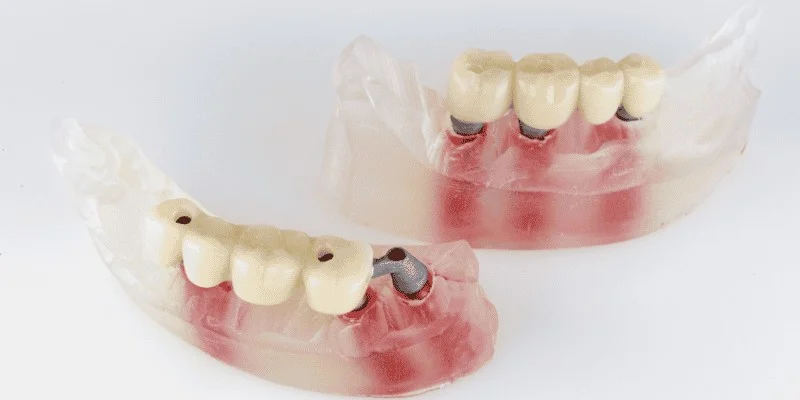
In many cases, you leave the office with fixed temporary teeth the same day or within 24 hours. This step is called immediate loading.
Your care team attaches a temporary bridge to the implants. These teeth restore your smile and let you speak clearly. They also help support your lips and cheeks, which can improve facial shape.
Immediate loading can reduce total treatment time compared to traditional implants. Some clinics report that full treatment may take 3 to 6 months instead of a year or longer when bone grafting is required.
You will follow a soft diet during healing. After your implants fully integrate, your dentist replaces the temporary bridge with a custom final restoration designed for long-term use.
Recovery, Longevity, and Value
Your recovery, the strength of osseointegration, and the long-term durability of the implants all affect how much benefit you gain.
Cost also plays a role, especially when you compare this treatment to bone grafting and multiple surgeries.
Osseointegration and Healing Process
Zygomatic implants depend on osseointegration, which means your bone grows and locks tightly around the implant surface.
Instead of anchoring only in the upper jaw, these implants secure into the cheekbone, which is dense and stable.
Many patients receive immediate loading. That means your dentist attaches a temporary fixed bridge within days of surgery.
A large review published on PMC examining long-term treatment outcomes with zygomatic implants reported high survival rates even with immediate loading.
You can expect:
- Swelling and mild bruising for several days
- A soft diet during early healing
- Regular follow-up visits to monitor integration
Most healing happens in the first few weeks. Full osseointegration usually takes a few months, but you can often function with teeth much sooner.
How Long Do Zygomatic Implants Last
You may wonder, how long do zygomatic implants last? Research shows strong long-term survival.
The same systematic review on PMC reported a mean survival rate of about 96% at six years. That rate is similar to conventional implants in healthy bone.
Longevity depends on several factors:
- Your oral hygiene
- Smoking status
- Systemic health conditions
- Prosthetic design and maintenance
Many clinicians report that when placed correctly, these implants can function for decades.
You protect your investment by keeping regular cleanings and addressing small issues early.
Cost Considerations and Investment
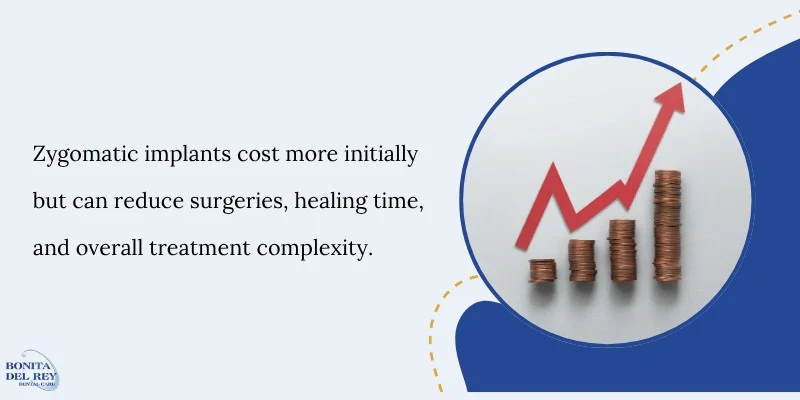
The cost of zygomatic implants is often higher upfront than traditional implants. The surgery is complex and requires advanced training and imaging.
However, you may avoid:
- Bone graft procedures
- Sinus lift surgeries
- Long healing periods between stages
By skipping grafting, you reduce the number of surgeries and recovery periods. Many specialists note that zygomatic implants can eliminate complex graft procedures and allow faster function.
When you compare total treatment time, surgical stages, and time off work, the long-term value often becomes clearer. You pay more at the start, but you may gain stability, faster teeth replacement, and fewer procedures.
Frequently Asked Questions
Zygomatic implants anchor in your cheekbone instead of your upper jaw. This approach can shorten treatment time, avoid bone grafts, and restore steady chewing and clear speech.
Who is a good candidate for zygomatic implants?
You may be a good candidate if you have severe bone loss in your upper jaw. Many people who were told they cannot get regular implants qualify for this option.
If you wear loose upper dentures or have failed bone grafts, your dentist may suggest this treatment. Zygomatic implants are often used for full-arch tooth replacement when the upper jaw does not have enough bone.
A full exam and 3D scan help your dentist confirm if your cheekbone can support the implants.
How do zygomatic implants differ from traditional dental implants?
Traditional implants sit in your upper jawbone. Zygomatic implants anchor in your cheekbone, which is denser and stronger.
Because of this placement, you often avoid bone graft surgery.
This change in location can make treatment possible even when your upper jaw has very little bone.
What are the main benefits of zygomatic implants for eating and speaking comfortably?
Zygomatic implants hold your teeth firmly in place. You can bite and chew without the shifting that often happens with dentures.
Fixed teeth also help you speak clearly. You do not need to worry about clicking sounds or movement while talking.
How long does the zygomatic implant treatment process usually take from start to finish?
Your process starts with a consultation, imaging, and treatment planning. Surgery usually takes place in one visit.
In many cases, your dentist places temporary fixed teeth within 24 hours. Final teeth often replace the temporary set after a healing period of about 3 to 6 months, depending on your case.
What can I expect during recovery, and when can I get back to normal daily activities?
You can expect swelling and mild to moderate discomfort for a few days. Your dentist will prescribe pain relief and may suggest antibiotics.
Most people return to light daily activities within a few days. You will need to follow a soft food diet at first to protect the implants.
Your dentist will schedule follow-up visits to check healing and adjust your temporary teeth if needed.
How long do zygomatic implants typically last, and how do I care for them long-term?
Zygomatic implants can last 15 to 20 years or longer with proper care. Their long lifespan depends on your oral hygiene and regular dental visits.
You should brush twice a day and use floss or special cleaning tools made for implant-supported bridges. Professional cleanings help remove buildup around the implants.
When you care for them well and avoid smoking, you give your implants the best chance to stay strong for many years.