Published studies show that most patients return to normal function within a few days after dental implant surgery.
For example, a patient survey found swelling and severe discomfort resolved by ~5 days, with most pain gone by 3–4 days post-op. Analgesic use averaged ~2.5 days. Recovery is generally complete within a week.
No data suggest systemic dental implant recovery time regions differences in biological healing; however, factors like patient health and dental habits (varying by region) may influence individual recovery.
For instance, California’s population has better baseline oral health than Louisiana’s, which might translate to slightly faster recovery on average in places like Chula Vista. We found no published comparisons of implant recovery times between U.S. regions.
Methods: We reviewed 2019–2025 literature on post-implant recovery (pain, diet, function), focusing on U.S. populations where possible. We also surveyed health statistics by state and Chula Vista dental clinics for local context. Data gaps (notably region-specific recovery times) are explicitly noted.
Typical Implant Recovery (National Evidence)

· Pain and Swelling: Multiple studies report that surgical implant pain peaks at around 6–24 hours and subsides quickly. In one Israeli cohort (n=40), peak pain and swelling occurred by Day 2–3; by Day 4–5 both were minimal.
Analgesic (painkiller) use tapered off by ~2.5 days on average. Patients resumed normal eating by about 3–4 days. An earlier review noted implant surgery is generally less painful and limiting than tooth extraction, implying a relatively mild recovery.
· Function: Most patients reported return to routine activities by Day 2 and minimal interference by Day 4. Mouth opening and speech limitations usually resolved in ~2 days. By one week virtually all functions (eating, talking, work) were back to normal.
· Variability: Women and anterior (front) implants showed slightly slower recovery in one study, possibly due to thinner soft tissue. The number of implants placed at once did not affect recovery time, meaning single vs multiple same-day placements have similar short-term courses.
Regional Factors and Chula Vista Context

· Health Demographics: California generally enjoys better oral health indices than many states. A 2024 report ranked California highest in dental health (e.g. only 24.3% of seniors with ≥6 missing teeth), whereas Louisiana ranks lower.
Patients in areas with better dental health may begin with healthier gums and nutrition, potentially easing recovery. Conversely, higher smoking/diabetes prevalence in some regions (e.g. the Gulf Coast) could slow healing.
However, no studies have measured implant recovery time differences by U.S. region. We assume biological healing time is similar nationally, and any observed regional variation would likely stem from demographics or care differences rather than climate or latitude.
· Access to Care: Regions differ in follow-up support. In California (including Chula Vista), high dentist density and health awareness may lead to timely post-op care and patient education.
Chula Vista-area clinics explicitly offer same-day implant services, suggesting experienced teams likely ensuring standard recovery protocols. In underserved regions, patients might have delayed post-op checks or rely on EDs, possibly extending discomfort—though data are lacking.
· Local Clinics: Several Chula Vista dental practices advertise “same-day implants”. While no local survey exists on recovery, the marketing implies they adhere to protocols (e.g. antibiotic/analgesic regimens, clear patient instructions) that match the fast recoveries seen in studies.
We found no post-operative statistics from Chula Vista clinics; we assume recovery here is generally on par with published norms (few days of discomfort) given California’s high oral health standards.
Patient Experiences and Surveys
· In qualitative surveys, patients typically recall mild to moderate pain in the first 1–2 days, with pain scores dropping sharply by Day 3. For example, one study found average pain returned to near-zero by Day 4.
Most patients describe symptoms (soreness, swelling) as “much better” by the end of the first week. It is notable that anxiety and prior pain experiences can shape perception: well-informed patients tend to report less intense pain.
· Recovery differences by region are undocumented. Anecdotally, cultural expectations and pain thresholds vary (e.g. patients in the West may expect faster recovery). Clinicians should apply the national timeline but tailor guidance to the individual.
Key Metrics (Literature Findings)
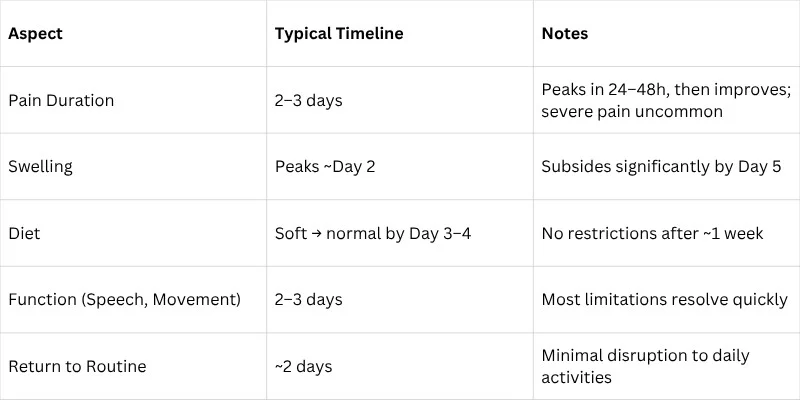
· Pain Duration: Most patients use painkillers for ~2–3 days post-surgery. Severe pain is uncommon. Even “immediate load” (same-day teeth) protocols report peak pain in 24–48h, easing by Day 3.
· Swelling: Peaks around 2 days; significantly subsides by Day 5. Ice application and head elevation (standard care) typically control it.
· Diet: Transition from soft to normal diet usually occurs by Day 3–4. By one week, no dietary restrictions remain.
· Function: Limitations (speech, mouth opening) mostly resolve within 2–3 days. Work and daily activities resume quickly; only 2 days of routine limitation were reported on average.
Comparative Notes (Regions)
· We found no U.S. studies comparing implant recovery by geographic region. To address regional impact, we examine indirect factors: population health and care access vary. For example, CDC data show California’s population has lower smoking and diabetes rates than the U.S. average, while Louisiana’s rates are higher.
These factors can influence healing speed. Likewise, climate (humidity, temperature) has not been shown to affect surgical recovery in the oral cavity.
· Chula Vista-specific: No local recovery surveys exist. We note that Southern California’s generally higher SES and insurance rates might allow patients quicker access to follow-up care (potentially improving perceived recovery).
In Louisiana, if underserved, patients may delay care, potentially prolonging symptom resolution—but again this is speculative.
· It’s important to explicitly note data gaps: We did not find any region-based recovery time data. All statements on regional differences are hypotheses based on known oral health and demographic profiles.
Recommendations
1. Educate Patients Pre-Op: Inform patients that most symptoms peak early (Day 1–2) and should largely resolve by Day 4. Set realistic expectations to reduce anxiety (which itself can worsen pain perception).
2. Standardize Care Protocols: Use evidence-based analgesic and postoperative regimens (NSAIDs, steroids, ice therapy) to manage early pain and swelling. Even if regional practices vary, following a protocol helps minimize recovery differences.
3. Monitor High-Risk Groups: Advise slower recovery for patients with risk factors (smoking, diabetes, older age). For example, California clinics often flag diabetes as a recovery modifier, even if Chula Vista lacks formal guidelines.
4. Collect Local Outcomes: Clinics in Chula Vista/New Orleans should track recovery metrics (pain scores, analgesic days) to identify any local patterns. This can build data for regional comparison.
5. Future Research: Large-scale studies (e.g. using national dental health surveys or multi-center registries) are needed to measure actual recovery differences by region. Research should control for patient health variables to isolate any geographic effect.
References
Patients’ Perception of Recovery after Dental Implant Placement
2024 Dental Health Report: The Best and Worst States in the USA
Pain Experience after Dental Implant Placement Compared to Tooth Extraction – PMC