Getting a tooth pulled is a common dental procedure, but knowing what happens afterward can help you feel more prepared.
The first 24 hours after tooth extraction are the most critical for your recovery, as this is when your body begins forming a protective blood clot and starting the healing process.
What you do during this time can make the difference between a smooth recovery and potential complications.
You can expect some bleeding, swelling, and discomfort during the first day after your procedure. These are normal responses to having a tooth removed.
Your dentist will place gauze over the socket right after the extraction, and you’ll need to bite down firmly for about 30 minutes to help stop the bleeding.
Understanding what’s normal and what requires a call to your dentist will give you confidence as you recover.
You’ll also need to follow specific instructions about eating, drinking, and caring for your mouth to protect the healing site and avoid problems like dry socket.
Key Takeaways
- The first 24 hours are critical for blood clot formation and require careful attention to control bleeding and minimize swelling
- You should avoid rinsing, smoking, using straws, and strenuous activity while focusing on rest and keeping your head elevated
- Most people need at least one full day of rest and should contact their dentist if bleeding doesn’t stop or pain becomes severe
First 24 hours tooth extraction, discover essential recovery tips
The Tooth Extraction Procedure: Immediate Aftermath
Right after your dentist or oral surgeon removes your tooth, several important things happen in your mouth.
Understanding what you’ll feel and what your body is doing helps you know what’s normal during these first crucial hours.
Role of Local Anesthetic and What You’ll Feel
Your dentist uses a strong local anesthetic to numb the area around your tooth before the extraction. This medication blocks pain signals so you won’t feel discomfort during the procedure.
After your tooth is pulled, the numbing effect continues for several hours. You might feel pressure or tugging sensations, but you shouldn’t feel sharp pain.
The numb feeling usually lasts 2 to 4 hours depending on the type of anesthetic used.
Be careful while your mouth is numb:
- Don’t bite the inside of your cheek or tongue
- Avoid hot drinks that could burn you without realizing it
- Skip eating until feeling returns to prevent accidental injury
As the anesthetic wears off, you’ll start to feel some discomfort. This is normal and expected. Taking pain medication before the numbness completely fades can help manage this transition.
What Happens Right After the Tooth Is Pulled
Once the tooth is removed, your oral surgeon or dentist places gauze over the empty tooth socket. This gauze serves an important purpose in controlling bleeding and helping a clot form.
You’ll need to bite down firmly on the gauze for about 20 to 30 minutes. This pressure helps stop the bleeding. Some bleeding is expected and normal during the first 12 to 24 hours.
The blood you see might look like more than it actually is. That’s because it mixes with your saliva and spreads throughout your mouth. If bleeding continues after 20 minutes of pressure, place fresh gauze and bite down again.
Protecting the Blood Clot in the Socket
A blood clot forms in the empty tooth socket within the first few hours after extraction. This clot is essential for proper healing and protects the bone and nerves underneath.
Activities to avoid that can dislodge the clot:
- Using straws (the suction creates pressure)
- Spitting forcefully
- Rinsing your mouth vigorously
- Smoking or vaping
- Touching the area with your tongue or fingers
Following specific aftercare steps during these first 24 hours protects this vital blood clot. If the clot becomes dislodged, you could develop a painful condition called dry socket.
Keep the gauze in place as directed and resist the urge to disturb the extraction site.
Schedule your appointment at Bonita Del Rey Dental Care in Chula Vista, CA for tooth extraction care
Managing Pain, Bleeding, and Swelling in the First 24 Hours
Your body will start healing right away after tooth extraction, but you need to take specific steps to control bleeding, manage discomfort, and keep swelling under control.
These first hours set the stage for how smoothly your recovery goes.

Controlling Bleeding and Encouraging Clot Formation
Your dentist will place gauze over the extraction site before you leave. You need to bite down firmly on this gauze for 30 minutes without checking it or moving it around.
Some bloody ooze that colors your saliva pink is normal during the first day. If bleeding continues after the initial 30 minutes, place a fresh moistened gauze pad over the socket and apply constant pressure for another 30 to 60 minutes.
A tea bag can work as an alternative to gauze. The tannic acid in tea helps blood clot faster. Moisten the tea bag with cool water, place it over the extraction site, and bite down firmly for 30 minutes.
Important things to avoid:
- Rinsing your mouth
- Spitting forcefully
- Using straws
- Smoking
These actions can dislodge the blood clot that forms in your socket.
This clot protects the bone and nerves underneath and is essential for proper healing. If bleeding doesn’t stop after following these steps multiple times, contact your dentist right away.
Pain Relief Strategies and Medication
Take pain medication before your numbness wears off. This approach helps you stay ahead of discomfort rather than trying to catch up with it later.
Ibuprofen works well for mild to moderate pain after tooth extraction. Take it exactly as the package directs. If you can’t take ibuprofen, acetaminophen offers another option.
Your dentist may prescribe stronger pain medication if they expect your recovery to involve more discomfort. Take any prescribed medication exactly as directed and finish the full course if antibiotics were included.
Avoid aspirin because it can increase bleeding. If you notice a rash, itching, or other side effects from any medication, stop taking it and call your dentist immediately.
Most people need at least 24 hours of rest after the procedure. Plan to take it easy and avoid physical activity that could increase pain or restart bleeding.
Reducing Swelling With Ice Packs
Swelling is your body’s normal response to surgery. You can minimize how much swelling develops by applying ice packs wrapped in a damp towel to your face over the extraction area.
Start using ice packs right after your procedure. Apply them for 15 minutes, then remove them for 15 minutes. Repeat this cycle throughout your waking hours on the first day.
Best practices for ice pack use:
- Wrap ice packs in a moistened towel to protect your skin
- Apply to the outside of your face near the extraction site
- Use only during the first 24 hours
- Switch to warm compresses after the first day if needed
When you lie down to rest, prop your head up with two or three pillows. This elevated position helps reduce both bleeding and swelling.
The combination of ice packs for swelling and keeping your head elevated gives you the best results for managing common post-extraction issues.
Contact Bonita Del Rey Dental Care in Chula Vista, CA for post-extraction support
What You Should and Shouldn’t Do: Essential Aftercare Instructions
Following proper tooth extraction aftercare instructions during the first 24 hours helps your mouth heal correctly and prevents painful complications.
Your actions during this critical period directly affect how quickly you recover and whether you develop problems like dry socket.
Activity and Rest Recommendations
You should plan to rest for the remainder of the day after your tooth extraction. While you can return to light activities the next day, avoid strenuous exercise or physical activity for at least a week after surgery.
Keep your head elevated when lying down or sleeping. This position helps reduce bleeding and swelling at the extraction site.
Apply an ice pack to your face near the extraction area. Use it for 30 minutes at a time, then remove it for 15 minutes before reapplying. This reduces swelling and helps manage pain during your recovery.
Bite down on the gauze pad your dentist gave you for a few hours after surgery. The pressure helps a blood clot form where your tooth was removed, which is essential for proper healing.
Eating and Drinking Safely
Stick to soft foods and liquids for at least the first 24 hours. You can eat yogurt, applesauce, pudding, mashed potatoes, or ice cream during this time.
Avoid hot beverages like coffee for a few days since they can disrupt the healing process. Cold or room-temperature drinks are safer choices.
If your mouth is still numb from anesthesia, bite very gently when eating to avoid accidentally hurting your tongue or lips. Don’t eat hard foods or anything with small pieces like seeds or nuts that could get stuck in the extraction site.
You can drink smoothies or protein shakes, but use a spoon instead of a straw to consume them.
Habits to Avoid: Smoking, Alcohol, and Straws
Don’t use a straw for at least a week after your extraction. The sucking motion can dislodge the blood clot from the socket and cause dry socket.
Wait at least 72 hours before smoking. Smoking interferes with healing and significantly increases your risk of complications.
Avoid alcoholic, caffeinated, and carbonated drinks for 24 hours. These beverages can interfere with blood clot formation and slow your recovery.
Don’t spit or rinse your mouth for the first 24 hours. These actions can remove the blood clot that protects your extraction site. After 24 hours pass, you can gently rinse with warm salt water to keep the area clean.
Oral Hygiene and Keeping the Extraction Site Clean
Keeping your mouth clean after a tooth extraction requires a careful balance between maintaining hygiene and protecting the healing site. You need to modify your normal cleaning routine during the first 24 hours to avoid dislodging the blood clot that forms in the socket.
Safely Brushing and Flossing
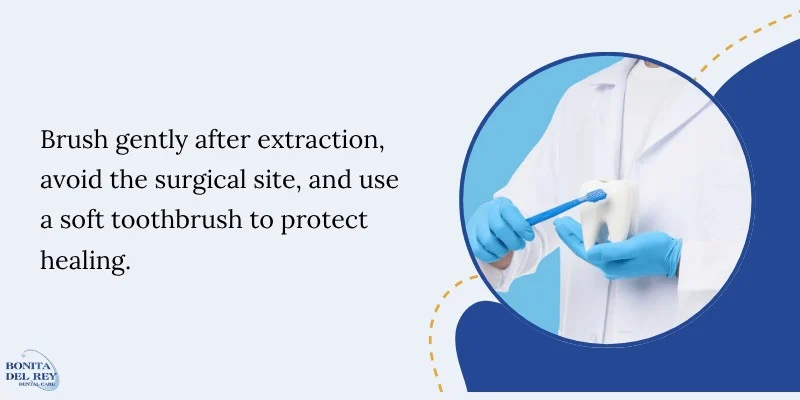
You can brush your teeth on the day of your extraction, but you must be extremely careful around the surgical area. Clean the teeth away from your extraction site using gentle motions.
A good rule is to stop brushing one tooth short on either side of where your tooth was removed. This gives the area enough space to heal without interference.
You should avoid the extraction site completely when flossing. Don’t let the floss snap down near the socket or touch the surrounding gum tissue. Use a soft-bristled toothbrush for all your cleaning during this time.
Be extra gentle with your entire mouth. Rough brushing can cause bleeding or disturb the protective blood clot forming in your socket.
Starting Saltwater Rinses
Do not rinse your mouth at all during the first 24 hours after your procedure. Rinsing too soon can loosen the blood clot and lead to complications.
After the initial 24-hour period passes, you can begin using saltwater rinses. Mix half a teaspoon of salt in eight ounces of warm water to create the solution.
Gently swish the saltwater in your mouth without using force. Let the liquid move around naturally rather than vigorously swirling it. Do this several times per day, especially after eating.
Saltwater rinses help cleanse the extraction area and support the natural healing process. The salt creates an environment that discourages bacterial growth.
Avoiding Disruption of the Blood Clot
The blood clot that forms in your tooth socket is essential for proper healing. Protecting this clot is your most important job during the first 24 hours.
Avoid vigorous spitting or creating suction in your mouth, as these actions can pull the clot loose. Don’t use a straw for drinking during this period. The sucking motion creates negative pressure that can dislodge the clot.
Skip rinsing and just let your saliva flow naturally if you need to clear your mouth. Any bloody ooze that tinges your saliva is normal during the first day.
When you do need to clear liquid from your mouth, let it drip out gently rather than spitting forcefully.
Monitoring Your Healing: What’s Normal and When to Call Your Dentist
During the first day after your procedure, you’ll notice several changes in your mouth as healing begins.
Most symptoms like mild bleeding, some swelling, and discomfort are expected, but certain warning signs require immediate attention from your dentist.
Typical Healing Stages in the First 24 Hours
Right after your tooth extraction, bleeding is normal for the first few hours. You should see it gradually slow down and stop within 3 to 4 hours when you keep gauze firmly in place.
A dark red blood clot will form in the empty socket where your tooth was. This clot is the foundation of your tooth extraction recovery and protects the bone underneath.
The clot should stay in place and look dark red or burgundy in color.
You’ll likely experience some swelling around the extraction area. This typically starts a few hours after the procedure and may get slightly worse before it improves.
Your jaw might feel stiff, and you may have difficulty opening your mouth fully.
Pain levels vary from person to person. You should feel manageable discomfort that improves with the pain medication your dentist prescribed. The area around the extraction site may feel tender to the touch.
Signs of Complications and Dry Socket
Dry socket happens when the blood clot breaks loose or doesn’t form properly. This exposes the bone and nerve endings beneath.
You’ll know something is wrong if you experience severe pain that suddenly gets worse 2 to 3 days after your extraction.
Watch for these warning signs:
- Intense, throbbing pain that spreads to your ear, eye, or neck
- Visible bone in the socket when you look in the mirror
- Bad taste or smell coming from the extraction site
- Fever above 100.4°F
- Heavy bleeding that doesn’t stop after applying pressure for 30 minutes
- Pus or yellow discharge around the wound
Infection symptoms include increased swelling that gets worse after day two, warmth around the area, and persistent bad breath. Understanding the stages of tooth extraction healing helps you spot problems early.
When to Seek Professional Help

Contact your dentist immediately if pain medication isn’t controlling your discomfort or if pain suddenly increases instead of gradually improving. This could indicate dry socket or infection.
Call right away if bleeding continues heavily beyond the first 4 hours or restarts after it had stopped. Some oozing is normal, but blood shouldn’t be pooling in your mouth.
You should seek help after tooth extraction if you develop numbness or tingling in your tongue, lips, or chin that lasts beyond the anesthetic wearing off. This may signal nerve irritation.
Reach out if you can’t drink fluids, have trouble breathing or swallowing, or notice excessive swelling that continues to worsen. Don’t wait to see if these symptoms improve on their own.
Your dentist can address complications quickly and keep your tooth extraction healing time on track.
Planning for Long-Term Recovery and Tooth Replacement
While the first 24 hours focus on immediate care, complete healing takes weeks to months, and you’ll need to consider how to replace the missing tooth to maintain your oral health and smile.
Timeline for Complete Healing
Your extraction site will go through several stages before it’s fully healed. The blood clot that forms in the first 24-48 hours is just the beginning of a longer process.
Tissue healing begins within the first week, with swelling and bruising going away. By two weeks, the extraction site should be mostly closed with new tissue instead of an open socket.
At three weeks, you shouldn’t have any pain, bleeding, or swelling, though the area may still feel sensitive.
Complete bone healing takes much longer than surface healing. The bone remodels over several weeks as your body rebuilds the socket where your tooth used to be.
This process typically takes 3-6 months for full completion.
During this time, you should keep follow-up appointments with your dentist to make sure everything is healing properly.
Exploring Tooth Replacement Options
Once your extraction site has healed enough, you’ll want to think about replacing the missing tooth. Leaving a gap can cause nearby teeth to shift and create bite problems.
Your main replacement choices include:
- Dental implants – A permanent solution that acts like a natural tooth root
- Dental bridges – Fixed prosthetics that use neighboring teeth for support
- Partial dentures – Removable options that can replace one or more teeth
Dental implants require sufficient bone healing before placement, which is why the waiting period matters. Your dentist will discuss which option works best for your situation, budget, and timeline.
Each choice has different benefits, so you’ll need to weigh factors like cost, durability, and how natural they look and feel.
Frequently Asked Questions
Many people have similar concerns about caring for their mouth after getting a tooth pulled. Knowing when to sleep with your head elevated, what drinks are safe, and which activities to skip can help you heal without problems.
What should I do during the first night after a tooth extraction?
You should keep your head elevated while sleeping by propping it up with two or three pillows. This position helps minimize bleeding and swelling during your recovery.
Avoid lying flat on your back during the first night. The elevated position reduces blood flow to the extraction site.
Continue applying ice packs during your waking hours if you haven’t gone to bed yet. Use 15-minute cycles with the ice pack on, then 15 minutes off.
What are the best foods to eat in the first 24 hours after a tooth extraction?
Soft foods and liquids work best during the first day after your extraction. Choose items like yogurt, pudding, smoothies, mashed potatoes, and applesauce.
Your food should be cool or room temperature, not hot. Hot foods can irritate your extraction site and increase bleeding.
Avoid hard, crunchy, or chewy foods that could damage the blood clot. Stay away from chips, nuts, popcorn, and sticky candies during this time.
How soon can I drink water after a tooth extraction?
You can drink water about one hour after your extraction is complete. Avoid eating or drinking for the first hour following your surgery, except for liquids needed to take medication.
Drink plenty of fluids throughout the day to stay hydrated. Water is your best choice for staying hydrated without causing problems.
Do not use a straw when drinking. The sucking action can dislodge the blood clot and cause complications.
What should I avoid doing in the first 24 hours after a tooth extraction?
Do not rinse your mouth, spit vigorously, or use a straw during the first 24 hours. These actions can disturb the blood clot that forms in your tooth socket.
Avoid smoking because it increases your risk of dry socket and other complications. Do not drink alcohol while taking pain medication or antibiotics.
Stay away from strenuous activities like exercise, sports, or heavy lifting. Rest is important for proper healing during the first day.
When can I start rinsing with salt water after a tooth extraction?
Wait until after the first 24 hours have passed before you start rinsing with salt water. Rinsing too early can dislodge the blood clot forming in your extraction site.
Your dentist will give you specific instructions about when to begin gentle rinsing. This usually starts on the second day after your extraction.
When you do start rinsing, be gentle and avoid swishing forcefully. Let the salt water sit in your mouth rather than moving it around aggressively.
Is it okay to sleep normally during the first 24 hours after a tooth extraction?
You should not sleep in your normal flat position during the first 24 hours. Keep your head elevated with two or three pillows to reduce swelling and bleeding.
Most people can sleep on their usual side, but avoid putting direct pressure on the extraction area. The elevated head position matters more than which side you choose.
Plan to get plenty of rest during the first day and night. Your body needs extra sleep to heal properly after oral surgery.