Your first dental visit after years away can feel intimidating, especially if you’re embarrassed about the condition of your teeth or worried about what the dentist might find.
Many people delay dental care because of fear, cost, or past experiences. Knowing what to expect can make returning to the dentist feel more manageable.
Here’s the direct answer: your first appointment will typically include a review of your health history, an examination of your teeth and gums, and X-rays when clinically necessary.
Depending on your oral health and the practice’s scheduling, a cleaning may also be completed during the same visit.
Dental anxiety and years of avoidance tend to feed each other. The longer you wait, the bigger the visit feels in your head, even though the actual appointment is usually calmer and more routine than people expect.
Key Takeaways
- Your first appointment back focuses on finding out what’s happening now, not judging how long you waited.
- A cleaning may happen during your first appointment or be scheduled separately, depending on your oral health needs.
- You can ask for a written, prioritized plan with costs before agreeing to anything.
What Happens at Your First Appointment Back?
Your first visit back centers on three things: a conversation about your health, a hands-on dental exam, and X-rays if your dentist decides they’re clinically useful.
Nothing about this first appointment requires you to agree to treatment that day. The goal is simply to build a clear, current picture of your oral health.
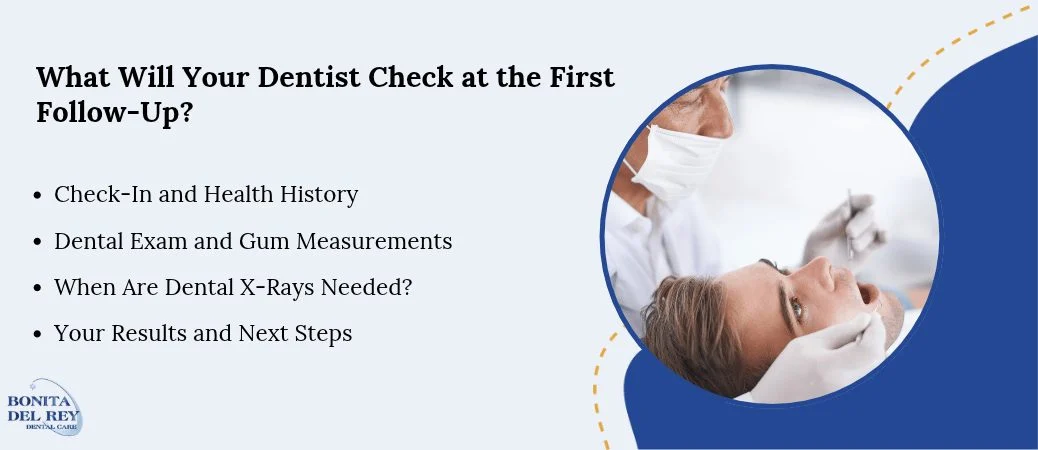
Check-In and Health History
You’ll fill out paperwork about your medical history, medications, and any symptoms you’ve noticed.
Bring a list of what you’re taking, including over-the-counter supplements, since things like blood pressure medication or dry mouth can affect your dental care.
The dentist also wants to know what’s bothering you now, whether that’s pain, sensitivity, or just wanting a checkup after a long break.
Dental Exam and Gum Measurements
The dentist or hygienist will look at your teeth, gums, bite, and any old fillings or crowns. Part of this exam usually includes measuring the small spaces between your teeth and gums, which helps show whether gum disease is present and how advanced it might be.
This step creates a new baseline, especially useful if it’s been several years since anyone checked.
When Are Dental X-Rays Needed?
Dental x-rays get ordered based on what the exam turns up, not just because of how long you’ve been away.
They help your dentist see cavities between teeth, bone levels, and problems hiding under old dental work that a visual exam alone can’t catch.
If you have recent X-rays from another office, mention it. They may be usable instead of starting over.
Your Results and Next Steps
After the exam and any X-rays, the dentist walks you through what they found in plain language. This is where you’ll hear whether anything needs prompt attention, what can be monitored, and what your options are for each issue.
Ask for a written summary so you can review the findings later. Your dentist can also explain how often you should schedule routine dental visits based on your oral health and treatment needs.
Will the Dental Team Judge You?
A good dental team treats a long gap between visits as useful information, not something to criticize. Dental anxiety rooted in embarrassment is common, and dentists who regularly see returning patients understand that life gets in the way of appointments: cost, fear, moving, caregiving, and plain avoidance all play a part.
What to Say If You Feel Embarrassed
You don’t need an explanation ready for why it’s been years. A simple “it’s been a while and I’m nervous” tells the team everything they need to know.
If a specific fear is driving the embarrassment, like worrying they’ll find something serious, saying that out loud can help the dentist adjust how they walk you through the visit.
How to Ask for Breaks or Explain Dental Anxiety
Tell the front desk about your anxiety when you book, not after you arrive. During the appointment, agree on a hand signal that means “pause” and ask the dentist to explain each step.
If your anxiety is severe, you can also discuss whether IV sedation for severe dental anxiety might be appropriate for any treatment you need.
Will You Get a Cleaning or Need Other Treatment?
Not every first visit back includes a cleaning that same day. If there’s a lot of tartar buildup or signs of gum disease, your dentist may need to figure out what kind of cleaning your mouth actually needs before doing one.
Why a Cleaning May Happen Later
A routine dental cleaning removes plaque and tartar from the teeth. However, if your examination reveals periodontitis, you may need scaling and root planning to clean below the gumline.
Your dentist will recommend the appropriate type of cleaning based on your gum health. This isn’t a delay tactic. It’s how they avoid causing unnecessary discomfort or missing a bigger problem.
When Is Deep Cleaning Recommended?
Scaling and root planing removes plaque and tartar from below the gumline and smooths the root surfaces to support gum healing.
Your dentist may recommend this treatment when periodontal measurements and other findings indicate periodontitis. The right gum disease treatment depends on the severity of the condition and your overall oral health.
Bleeding during a gum examination does not automatically mean advanced periodontal disease. However, it can be a sign of gum inflammation, so your dentist will assess your gum measurements and other findings before recommending treatment.
Understanding when bleeding gums need more than a routine dental cleaning can help you recognize why a periodontal evaluation matters.
What If the Dentist Finds Cavities or Tooth Pain?

If your dentist finds cavities, treatment depends on how far the decay has progressed. Smaller cavities may be treated with fillings, while deeper decay or infected pulp may require root canal treatment or another procedure. Your dentist will explain which approach is appropriate after examining the tooth.
Tooth pain alone does not mean a root canal is necessary. Either way, the dentist should explain the option, the alternative, and the cost before scheduling it, not during the same appointment where it was found.
How Can You Make the Visit Manageable?
You can shape a lot of what happens before you even sit in the chair. A short conversation when you book the appointment often makes the biggest difference in how the visit feels.
What to Tell the Office When You Book
Say plainly that it’s been years and that you feel anxious or embarrassed about it. You can also ask for a longer appointment slot, a quieter time of day, or confirmation that the practice works with anxious patients regularly.
For patients who need additional support during certain procedures, IV sedation dentistry may be an option worth discussing in advance.
How to Ask About Costs and Insurance
Ask about the estimated cost of the exam and any recommended X-rays before your appointment.
If you have dental insurance, confirm your benefits directly with your provider and ask the dental office about its billing process.
You can also request a written treatment estimate to understand the potential costs before proceeding.
How to Prioritize a Written Treatment Plan
Ask for your plan in writing, broken into what needs attention now versus what can wait. A clear plan should separate urgent problems, like pain or infection, from things that can be monitored or scheduled later.
If the list feels like too much at once, ask the dentist to name the first one or two steps and go from there.
Getting Answers Is the First Step

Returning to the dentist after years away can feel overwhelming, but your first appointment is an opportunity to understand your oral health without making every treatment decision at once.
An examination can help identify concerns, explain which problems need attention, and give you a clearer idea of the next steps.
At Bonita Del Rey Dental Care, our dental team evaluates your teeth and gums, listens to your concerns, and explains the treatment options available.
Whether you need a routine cleaning or additional dental care, understanding your oral health is the first step toward moving forward with confidence.
Frequently Asked Questions
What if I haven’t been to the dentist in 10 or 20 years?
A decade or two away just means your dentist will likely do a fuller exam and possibly more X-rays to build a complete picture. It’s still worth going; most issues found after a long gap can be treated in stages rather than all at once.
Can I book just an exam if I’m too scared for a cleaning?
Yes, you can ask for an exam-only visit, and most offices will accommodate that request. Tell them when you book that you want to understand what’s going on before committing to any cleaning or treatment.
Will the dentist judge me for the condition of my teeth?
A good dental team focuses on your current health, not on how long it’s been since your last visit. If a practice makes you feel shamed instead of supported, that’s a sign to find a different one.
Does bleeding during the exam mean I have gum disease?
Not necessarily. Bleeding gums can indicate inflammation, but bleeding alone does not confirm periodontitis. Your dentist will evaluate your gum measurements and other findings to determine whether treatment is needed.
Do I have to agree to treatment at my first visit?
No, you can ask for the findings and a written plan without committing to anything the same day. Most dentists expect you to take time to think over costs and options before scheduling further treatment.