If your gums bleed when you brush or your dentist has mentioned gum disease, you may wonder whether Invisalign with gum disease is possible or if your gums need treatment first.
Invisalign is often still possible with a history of gum disease, but active gum disease generally needs treatment and your gums need to be stable before any tooth movement starts.
The key question is not whether you have ever had gum problems. It is whether your gums are healthy and calm right now.
Gum disease and dental treatment are connected in an important way. Your teeth sit in bone, and that bone is held in place by gum tissue.
Moving teeth through bone that is inflamed or infected can make the problem worse. Once the infection is controlled, your gums and bone are often in a much better position to handle gentle movement.
This matters for your oral health well beyond your smile. Gum disease left untreated can lead to loose teeth and even tooth loss, so getting it addressed protects more than your orthodontic plans.
Key Takeaways
- Active gum disease usually needs treatment and a stability check before Invisalign can safely begin.
- A past diagnosis of gingivitis or periodontitis does not automatically disqualify you if your gums are now healthy.
- Your dentist or periodontist will look at bleeding, pocket depths, bone support, and tooth mobility before clearing you for aligners.
Table of Content
- When Is Invisalign an Option?
- What Gum Treatment Comes First?
- How Do Clinicians Decide Your Gums Are Stable?
- What Changes If You Have Bone Loss or Receding Gums?
- How Can You Protect Your Gums During Treatment?
- Treat Your Gums First, Then Plan Your Smile
- Frequently Asked Questions
When Is Invisalign an Option?
Invisalign becomes an option once any active gum infection is under control and your gums have had time to heal. This applies whether you are dealing with early gum inflammation or a more advanced form of the disease.
Why Must Active Gum Disease Be Controlled Before Teeth Move?
Active gum disease means there is inflammation or infection happening right now, not just a past diagnosis.
Orthodontic tooth movement works by applying steady pressure that encourages bone to remodel around the tooth. If that bone is already under attack from infection, movement can speed up damage, raise the risk of tooth mobility, and in more serious cases contribute to tooth loss.
Clinicians want the infection resolved first so the bone has a fair chance to support the tooth through the shift.
Does a History of Gingivitis or Periodontitis Rule You Out?
A past diagnosis does not automatically rule you out of aligner treatment. Gingivitis is the early, reversible stage of gum disease; it causes redness, swelling, and bleeding but has not yet damaged the bone, and it can often be resolved completely with proper care.
Periodontitis is more advanced and can cause lasting bone and tissue loss, but even then, many adults who complete treatment and keep their gums stable go on to qualify for Invisalign. Your current gum health carries more weight than the diagnosis you received years ago.


What Gum Treatment Comes First?
Gum disease treatment almost always comes before orthodontic work, and what that treatment looks like depends on how far the disease has progressed.
Mild inflammation often clears with a thorough cleaning, while more advanced cases call for periodontal therapy.
What Usually Resolves Gingivitis?
A professional dental cleaning paired with better plaque control at home is often enough to resolve gingivitis. Removing plaque buildup along the gumline lets inflamed tissue calm down and heal, sometimes within a few weeks.
Your dentist may also check whether brushing and flossing habits need adjusting so the improvement holds.
If you are not sure whether your gums are inflamed or something more serious, reviewing how to know if you have gum disease can help you spot the early signs.
When Do You Need Scaling and Root Planing or Other Periodontal Care?
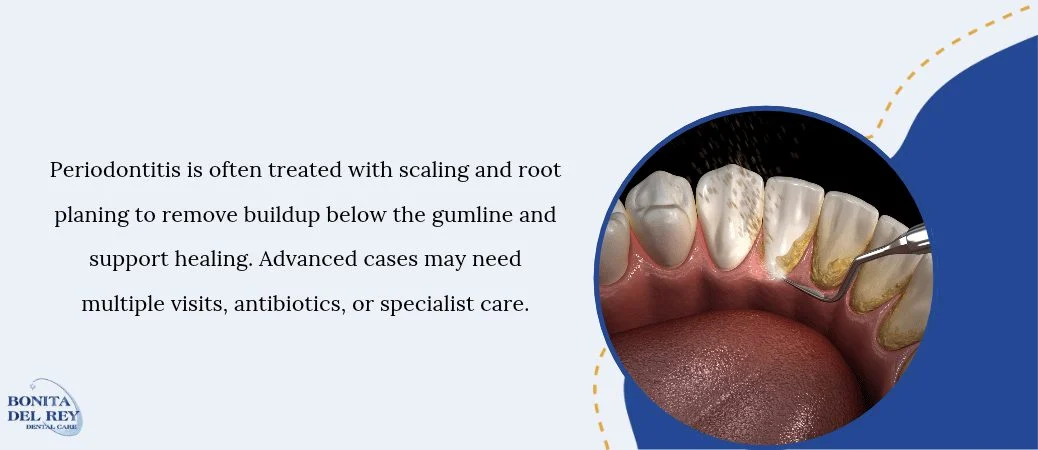
Periodontitis often requires scaling and root planning, a deep cleaning that removes plaque and tartar below the gumline and smooths the tooth roots to help reduce inflammation and support gum healing.
This treatment may take more than one visit. More advanced cases may require additional periodontal care, including antibiotics when appropriate or referral to a periodontist.
How Do Clinicians Decide Your Gums Are Stable?
Your dentist decides your gums are stable by checking a handful of specific signs, not just asking how you feel.
An evaluation for someone with a gum disease history usually includes a periodontal exam alongside the standard bite and alignment assessment.
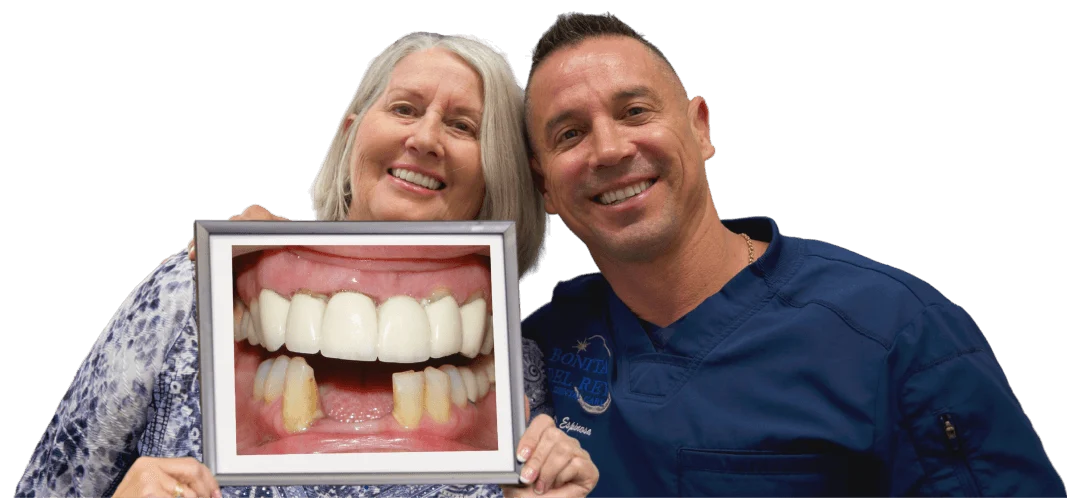
At Bonita Del Rey Dental Care, Dr. Espinosa can evaluate your gum health, check for signs of inflammation, and discuss whether periodontal treatment is needed before moving forward with Invisalign.
Which Exam Findings Matter Before Starting Aligners?
Several findings matter more than others. Bleeding on probing is one of the clearest signs that inflammation is still active, since healthy gum tissue does not bleed easily when gently checked.
Clinicians also measure pocket depths around each tooth, look for bone loss on x-rays, and check for tooth mobility that would suggest the supporting structure is not ready for movement.
Oral hygiene habits get reviewed too, since ongoing plaque control affects whether gains made in treatment will last.
How Long Might You Wait After Gum Treatment?
Healing time after gum treatment varies by person and by how much disease was present, so there is no single number that applies to everyone. Mild gingivitis may resolve within a few weeks of a cleaning.
More advanced periodontal therapy often calls for a longer healing window, sometimes a few months, before your clinician rechecks pocket depths and bleeding to confirm things have stabilized.
Your dentist will likely want to see consistent improvement over more than one visit before giving the go-ahead.
What Changes If You Have Bone Loss or Receding Gums?
Bone loss and gum recession change the planning process but do not automatically take Invisalign off the table. These conditions exist on a spectrum, and mild cases often allow treatment to proceed with some extra monitoring.
Can Teeth Move Safely with Reduced Bone Support?
Teeth with reduced bone support can often still move, but the approach may need to be slower and more carefully watched. Periodontal disease that has already caused bone loss leaves less anchorage around the tooth root, so your clinician may use lighter forces or smaller movements at a time.
Diagnostic imaging helps show exactly how much bone remains around each tooth, which guides how aggressive the orthodontic treatment plan can safely be.
When Might Grafting or a Modified Treatment Plan Be Considered?
Grafting or a modified plan comes up when bone loss or gum recession is more advanced.
Bone grafting can rebuild some support in certain cases, which may open the door to orthodontic movement that would otherwise carry more risk.
In other situations, your clinician may simply recommend gentler aligner movements paired with closer monitoring instead of surgery.
A periodontist and orthodontist working together typically decide which path fits your mouth best.
How Can You Protect Your Gums During Treatment?
Protecting your gums during Invisalign treatment comes down to consistent plaque control and keeping up with follow-up visits. Clear aligners offer a practical advantage here, since they come out of your mouth for cleaning.

Are Removable Aligners Easier to Clean Around Than Braces?
Invisalign aligners are removable, which makes brushing and flossing more thorough compared with traditional braces, where wires and brackets trap plaque around the gumline.
A pilot study comparing the two found that fixed appliances were linked to more plaque buildup and worse periodontal health than aligners in the same patients.
That said, aligners still trap plaque and bacteria against your teeth if you do not clean properly before putting them back in.
What Daily Habits and Follow-Up Visits Help Prevent a Flare-Up?
Daily brushing and flossing before reinserting your aligners, along with sticking to your routine dental visits, are the habits that keep gum disease from coming back during treatment.
These visits allow your clinician to catch early signs of inflammation before they turn into a bigger problem and prevent gum disease at an early stage.
Good oral hygiene habits built now also support straight teeth that stay healthy long after your aligners come off.
Treat Your Gums First, Then Plan Your Smile

Gum health comes before orthodontic planning, not after. Addressing active gum disease protects the bone and tissue that will need to support your teeth through Invisalign treatment.
Once your gums are stable, many adults with a history of gum disease, even those who have had periodontal therapy, go on to complete treatment successfully.
Frequently Asked Questions
Can you get Invisalign with receding gums?
Yes, gum recession alone does not automatically disqualify you from Invisalign. Your clinician will check whether your gums are free of active inflammation and whether there is enough periodontal support around your teeth to move them safely.
Can you get Invisalign if gum disease has caused bone loss?
Bone loss does not automatically rule out Invisalign, since the amount and location of bone loss varies from person to person.
Mild bone loss often allows treatment to proceed with a gentler approach, while more significant loss may call for a modified plan or additional periodontal care first.
Should gum grafting happen before or after Invisalign?
This depends on your specific case. Your dentist may coordinate with a periodontist to determine the best timing.
In some situations, grafting happens before Invisalign treatment, while in others, it may be considered during or after tooth movement, depending on your gum health.
Can Invisalign cause gum disease to come back?
Invisalign does not cause gum disease on its own, but trapped plaque under the aligners can contribute to inflammation if cleaning habits slip.
Keeping up with brushing, flossing, and regular dental visits during treatment helps keep gum disease from returning.
Can you get braces instead if you have active gum disease?
Active gum disease needs to be treated before starting either braces or Invisalign, since both apply pressure that can worsen an existing infection. Once your gums are stable, your dentist or orthodontist can help you decide which option is better for you.