If you smoke and plan to get dental implants, you need clear facts before surgery. Smoking affects how your body heals, and healing plays a big role in whether your implant stays strong.
You may wonder if a few cigarettes really matter.
Smoking increases dental implant failure rates because it reduces blood flow, slows healing, and raises the risk of infection around the implant.
Research shows that smokers face higher implant failure rates than non-smokers. A recent review on the effects of smoking on dental implant failure found a clear link between tobacco use and implant loss, especially with heavier daily smoking.
You still have control. When you stop smoking before surgery and avoid it during healing, you improve your chances of long-term implant success.
Knowing what happens in your body helps you make smart choices that protect your new smile.
Key Takeaways
- Smoking raises dental implant failure rates by slowing healing and increasing infection risk.
- The more you smoke, the higher your risk of implant problems.
- Quitting before and after surgery improves implant stability, it is regarded necessary for dental implant failure prevention.
Why Dental Implants Are Sensitive to Smoking
Dental implants depend on strong bone healing, healthy gum tissue, and steady blood flow. Smoking disrupts each of these steps and raises the risk of implant failure.
How Implant Integration Works
When you receive a dental implant, your surgeon places a small titanium post into your jawbone. Your body then starts a process called osseointegration.
Osseointegration means your bone grows tightly around the implant. This bond creates long-term implant stability and supports normal chewing.
This healing phase usually takes several months. During this time, your bone cells need oxygen and nutrients carried by healthy blood flow.
Smoking limits blood flow and reduces oxygen in your tissues. According to a recent systematic review on smoking and dental implant failure, many studies show higher implant failure rates in smokers, especially when cigarette use increases.
If implant integration weakens at any stage, implant survival drops. Even early healing problems can cause the implant to loosen before it fully bonds with bone.
Role of Healthy Bone and Gums
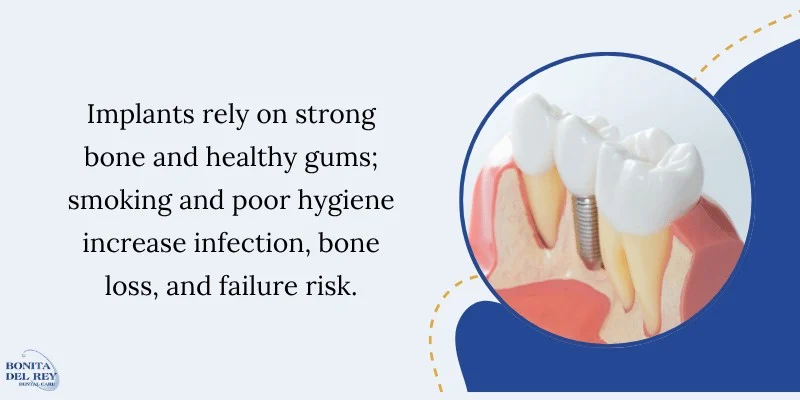
Your bone and gums form the foundation of implant success. Without strong support, even well-placed dental implants can fail.
Healthy bone holds the implant firmly in place. Healthy gums seal around the implant and protect it from bacteria.
Smoking damages both tissues. It reduces blood supply to the gums and slows healing after surgery. Research shows that smokers face higher risks of infection, bone loss, and delayed healing.
Poor oral hygiene makes this worse. When plaque builds up, inflamed gums can pull away from the implant. This condition, called peri-implantitis, can lead to bone loss and reduce implant stability.
If you smoke and struggle with gum disease, your risk increases even more.
Risks Unique to Tobacco Users
Tobacco use affects implants in ways that go beyond slow healing. The chemicals in cigarettes interfere with immune response and tissue repair.
Nicotine tightens blood vessels. Carbon monoxide lowers oxygen levels in your blood. Together, these effects slow healing and raise the chance of infection.
Studies also show a dose–response pattern. The more you smoke each day, the greater your risk of implant problems.
One review found that implant failure is more likely in smokers than non-smokers, as noted in research on the impact of smoking on dental implants.
Smokers also face higher risk of early implant failure, before the implant fully integrates. Even light or occasional smoking can affect implant survival.
If you use tobacco, your dentist must factor this into your treatment plan. Your habits directly influence how well your implant heals and how long it lasts.
The Science Behind Smoking-Related Complications
Smoking changes how your body heals after implant surgery. It reduces blood flow, slows new vessel growth, weakens soft tissue repair, and raises infection risk, all of which can increase implant failure rates.
Reduced Blood Flow and Impaired Angiogenesis
When you smoke, nicotine narrows your blood vessels. This limits oxygen and nutrient delivery to the surgical site.
Dental implants depend on strong blood supply during early implant healing. Your body must form new tiny blood vessels, a process called angiogenesis, to support bone cells around the implant. Smoking slows this process.
Research on the effect of smoking over one pack daily on implant healing and health shows that heavy smoking links to more bone loss and lower implant stability. Less blood flow means slower bone repair and weaker osseointegration.
If bone does not attach firmly to the implant surface, you face a higher risk of:
- Implant loosening
- Bone loss around implants
- Early implant failure
Even a short drop in blood supply during early healing can affect long‑term stability.
Impact on Wound Healing and Soft Tissue
Your gums play a key role in protecting the implant. After surgery, your soft tissue must close tightly around the implant site.
Smoking delays wound healing by reducing oxygen in the tissue and interfering with collagen production. Collagen gives strength and structure to healing gums. When collagen forms slowly, your incision may take longer to close.
A review on the impact of smoking on dental implant outcomes explains that tobacco use affects both hard and soft tissues around implants. Delayed healing increases swelling, discomfort, and tissue breakdown.
If your gums do not seal well around the implant, bacteria can enter more easily. This creates a weak barrier and raises the chance of inflammation around the implant site.
Weakened Immune Defense and Infection Risk
Smoking weakens your immune response. It reduces the function of white blood cells that fight bacteria.
After implant placement, your body must control bacteria in the mouth while bone and soft tissue heal. If your immune defense drops, harmful bacteria can grow near the implant surface.
A large review on tobacco smoking as a risk factor for dental implant failure found higher failure rates in smokers compared to non‑smokers. Infection around the implant, often called peri‑implantitis, can lead to progressive bone loss.
As bone breaks down, the implant may become unstable. Without treatment, this process can end in implant failure.
When you understand how smoking and dental implants interact at the biological level, you can see why quitting before surgery improves your chances of stable, long‑term results.
Short- and Long-Term Effects on Implant Outcomes
Smoking affects your implant at every stage, from the first weeks of healing to many years after placement.
It raises the risk of early implant failure, increases bone loss around implants, and lowers long-term implant survival.

Early Implant Failure and Delayed Healing
Early implant failure happens before the implant fully bonds with your jawbone. This stage usually covers the first few months after surgery.
Nicotine reduces blood flow and limits oxygen in your tissues. That slows healing and makes it harder for bone to attach to the implant surface.
A recent review of over 29,000 implants found that smoking significantly increased both early and late failures in most studies, with a clear dose–response pattern where heavier smoking raised risk further, as shown in this systematic review on smoking and dental implant failure rates.
Heavy smoking also affects short-term stability.
In a 15‑month study of patients who smoked more than one pack daily, researchers tracked bone loss and implant health and found worse healing outcomes in smokers compared to non-smokers in this prospective study on heavy smoking and implant healing.
If you smoke during this early phase, you increase your risk of early implant failure and delayed integration.
Marginal Bone Loss and Peri-Implantitis
After your implant heals, smoking still affects the tissue around it. The main concern is marginal bone loss, which means bone loss around implants near the gum line.
Smoking increases inflammation in your gums. That can lead to:
- Peri-implant mucositis (inflamed gums without bone loss)
- Peri-implantitis (inflammation with bone loss around the implant)
Peri-implantitis directly lowers implant survival because ongoing bone loss weakens support.
Studies show smokers face higher rates of implant failure and more marginal bone loss than non-smokers, as described in this systematic review and meta-analysis on smoking and dental implants.
The more you smoke, the higher your risk. Some research shows implant failure rates rise as daily cigarette use increases.
Even light smoking can worsen inflammation and bone changes over time.
Late Implant Failure and Long-Term Survival
Late implant failure happens after the implant has already integrated and functioned for months or years. This type of failure often links to progressive bone loss and untreated peri-implantitis.
Long-term follow-up studies show that smoking remains a strong risk factor for reduced implant survival, even though overall dental implant success rates are high, as explained in this current review on smoking and long-term implant survival.
When you continue smoking after surgery, you expose the implant to ongoing inflammation and reduced healing ability. Over time, that increases the chance of late implant failure.
If you want to protect your investment, you need to control both short-term healing risks and long-term bone health.
Key Risk Factors and Patient Considerations
Your smoking history matters as much as whether you smoke today. Dentists look at how often you smoke, how long you have smoked, and whether you have gum disease or other health issues that affect healing.
Smoking Frequency and Pack-Years
Your risk increases with smoking frequency and total lifetime exposure. Dentists often measure this in pack-years, which multiply the number of packs you smoke per day by the number of years you have smoked.
Research shows a clear dose–response pattern.
A recent review of studies from 2020 to 2024 found that higher daily cigarette use raised implant failure risk in both early healing and later stages, with many studies showing a strong link between smoking and implant loss.
You can read more about these findings in this systematic review on smoking and dental implant failure.
If you smoke one pack a day for 10 years, you carry 10 pack-years.
If you smoke two packs a day for the same time, that number doubles. Higher pack-years often mean slower healing, more bone loss, and more dental implant complications.
Your surgeon may delay treatment or suggest a stop-smoking plan if your pack-year history is high.
Heavy Smokers Versus Light Smokers
Not all smokers face the same level of risk. Heavy smokers often show more bone loss around implants and lower stability during early healing.
A clinical study that tracked patients who smoked more than 20 cigarettes daily for at least five years compared them with non-smokers and measured bone loss and implant stability over 15 months.
Light smokers may still face problems, but heavy tobacco use raises the odds of early implant failure. Some studies report that smokers are about twice as likely to experience early failure compared to non-smokers.
If you smoke daily, cutting back may help, but stopping before surgery offers stronger protection during the first critical months.
Periodontitis and Other Health Conditions
If you have periodontitis, your risk increases even more. Gum disease already weakens the bone and tissue that support implants.
Smoking and periodontitis together create a higher chance of infection and bone loss. This combination can lead to early implant failure or long-term problems with stability.
Other health conditions also matter. Diabetes, poor oral hygiene, and a history of tooth loss from gum disease can raise complication rates. Tobacco use adds stress to tissues that already struggle to heal.
Before surgery, your dentist may treat active gum disease, improve plaque control, and ask you to stop smoking for a set time. These steps lower your risk and improve your chance of long-term implant success.
How to Protect Implant Health Before and After Surgery
You can lower your risk of implant failure by stopping tobacco use, keeping your mouth clean, and following clear care steps. Simple daily habits and the right timing make a real difference in healing and long‑term success.
Best Practices for Smoking Cessation
You improve implant healing when you start smoking cessation before surgery. Tobacco reduces blood flow and slows bone repair, which can weaken the bond between the implant and your jaw.
If you plan to quit smoking before implant surgery, set a clear quit date at least a few weeks ahead. Ask your dentist or doctor about nicotine patches, gum, or prescription medicine to control cravings.
You can also call a quitline or join a support group. These tools raise your chance of success.
Research shows higher implant failure rates in smokers, especially during early healing. Even cutting back helps, but full quitting gives you the best outcome.
Write down your reasons for quitting. Keep them visible. Strong healing now can protect your smile for years.
Timing: When to Quit and Restart (If at All)
You should stop smoking as early as possible before surgery. Many dentists advise quitting at least 1–2 weeks before implant placement, but earlier is better.
Healing continues for several months. Smoking after dental implant surgery is considered to be one of the biggest mistakes you can make after dental implant surgery.
It can disturb early bone bonding, called osseointegration. This stage is critical.
Many experts advise avoiding tobacco for at least 2–3 months after surgery. Some recommend not restarting at all.
If you choose to restart, understand the risk. Smoking after dental implant placement raises the chance of infection and bone loss.
The safest plan is simple: quit before surgery and do not return to smoking after dental implant treatment.
Importance of Oral Hygiene and Patient Education
You protect your implant when you keep your mouth very clean. Plaque buildup can irritate the gums and lead to infection.
Brush at least twice a day with a soft toothbrush. Clean around the implant with floss, floss threaders, or small interdental brushes. Your dentist may suggest an antimicrobial rinse for short-term use.
Patient education matters. You need clear instructions on:
- How to clean around the implant
- What signs of infection look like
- When to call the office
Smoking increases infection risk because it weakens your immune response. Good oral hygiene helps lower that risk.
Attend all follow-up visits. Your dentist will check gum health, measure pocket depth, and take X-rays when needed.
Preventing Peri-Implantitis After Placement
Peri-implantitis is bone loss and inflammation around an implant. Smoking raises this risk, especially with long-term use.
Heavy smoking has been linked to greater marginal bone loss in clinical research, including this study on the effect of smoking over one pack daily on implant healing. Bone loss can begin early and continue over time.
You can lower your risk by:
- Staying tobacco-free
- Keeping plaque under control
- Scheduling cleanings every 3–6 months
- Reporting bleeding or swelling right away
Watch for warning signs like bleeding on brushing, bad taste, or gum swelling. Early treatment can stop further damage.
Preventing peri-implantitis takes daily effort. Your choices before and after surgery play a direct role in how long your implant lasts.
Frequently Asked Questions
Smoking lowers blood flow, slows healing, and raises the risk of infection around implants. Stopping before surgery and during recovery can improve how well your implant bonds with bone.
How much does smoking increase the risk of dental implant failure?
Smoking clearly raises your risk compared to a non-smoker. Studies show implant success rates in non-smokers often exceed 95%, while smokers may see rates closer to 85–90%, depending on how much they smoke.
Nicotine narrows blood vessels and reduces oxygen to your gums and jawbone. This makes it harder for the implant to fuse with bone.
Heavy smokers face the highest risk, especially those who smoke more than a pack per day.
What happens if I smoke during the healing period after implant surgery?
When you smoke during healing, you limit blood supply to the surgical site. Your body then struggles to deliver oxygen and nutrients needed for bone growth.
This can delay osseointegration, which is the process that locks the implant into your jawbone. In some cases, the implant may loosen or fail.
Smoking also increases your risk of infection. Dentists warn about higher rates of swelling, bleeding, and peri-implantitis in smokers.
How long should I stop smoking before getting a dental implant?
Most dentists recommend that you stop smoking at least 2–4 weeks before surgery. This gives your gums and bone time to improve blood flow and start healing.
You should also stay smoke-free for several months after placement. Many providers suggest avoiding smoking during the full 3–6 month healing phase.
The longer you stay smoke-free, the better your chances of long-term stability.
When is it safe to start smoking again after dental implant placement?
No period of smoking is truly safe for your implant. Even after healing, smoking continues to stress the gums and bone around the implant.
Most implant failures in smokers happen early, but long-term smoking can still cause bone loss years later. That means your implant may weaken over time.
If you choose to smoke again, understand that you increase your lifetime risk of complications.
Do nicotine vapes or nicotine patches affect dental implant healing the same way cigarettes do?
Nicotine itself reduces blood flow, no matter how you take it. Vapes and patches still deliver nicotine into your system.
Cigarettes add extra toxins and heat that can further irritate your gums. However, nicotine alone can still slow healing and reduce bone formation.
If you use nicotine replacement therapy, talk with your dentist and your doctor. You may need a short-term plan that limits nicotine during early healing.
Can smokers still be good candidates for All-on-4 dental implants, and what extra precautions are needed?
You can still qualify for All-on-4 implants if you smoke, but your dentist will assess your bone level and gum health closely. Smoking raises the risk of implant loss even with full-arch systems.
Your dentist may require a smoking break before and after surgery. You may also need more frequent cleanings and exams to monitor bone levels around the implants.
Taking these extra steps can help protect your investment and improve long-term results.