Dental implants can last 20 years or longer when you take care of them properly. They’re designed to be a permanent solution for missing teeth, but they need the same attention as natural teeth to stay healthy and functional.
The key to making your dental implants last involves brushing twice daily with a soft-bristled toothbrush, flossing around the implant carefully, and visiting your dentist every six months for professional cleanings.
Without proper care, bacteria can build up around the implant and cause peri-implantitis, which is a type of gum disease that leads to bone loss and implant failure.
Taking care of your implants doesn’t require complicated routines or expensive products. You just need to understand the right tools and techniques for dental implant maintenance and make them part of your daily habits.
In this guide, we will share dental implant care tips to help you protect your investment and keep your smile healthy for decades.
Key Takeaways
- Brush twice daily with a soft-bristled toothbrush and floss around your implants to prevent bacterial buildup
- Schedule professional cleanings every six months so your dentist can remove plaque and check for early signs of problems
- Use proper tools like water flossers and interdental brushes to clean hard-to-reach areas around your implants
Understanding Dental Implants and Their Structure
Dental implants function as artificial tooth roots made from biocompatible materials that fuse with your jawbone. The three-part system includes a surgically placed post, a connecting abutment, and a visible crown that mimics your natural tooth.
What Are Dental Implants?
Dental implants are permanent solutions for replacing missing teeth. They consist of small titanium posts that your dentist surgically places into your jawbone where teeth are missing.
Unlike dentures or bridges, implants don’t just sit on top of your gums. They actually become part of your jaw through a natural process. This makes them the closest thing to having your natural teeth back.
The titanium material is specially chosen because your body accepts it without rejection. Over 95% of dental implants successfully integrate with the jawbone. They can last decades or even a lifetime when you take proper care of them.
Key Components: Implant Post, Abutment, and Crown
The implant post is a screw-shaped piece of titanium that sits below your gumline. Your oral surgeon places it directly into your jawbone during implant surgery. This post serves as the root of your new tooth.
The abutment connects the implant post to the crown above. Your dentist attaches this small connector piece after your implant has healed and fused with the bone. It extends slightly above your gumline.
The crown is the visible part that looks like a real tooth. It’s custom-made to match your other teeth in size, shape, and color. Your dentist secures it to the abutment to complete your restoration.
All three parts work together to create a stable, functional tooth replacement.
Osseointegration and Bone Density
Osseointegration is the process where your jawbone grows around and bonds with the implant post. This typically takes three to six months after your implant surgery. The bone cells actually attach to the titanium surface, creating a solid foundation.
Your bone density plays a major role in implant success. Adequate bone density provides the stability needed for proper integration and long-term health of your implants. If you have low bone density, your dentist may recommend a bone graft before placing the implant.
Without sufficient bone, the implant post won’t have enough support to stay secure. Your dentist will evaluate your bone structure with X-rays or CT scans before recommending implants.
Why Proper Care Is Crucial for Dental Implant Longevity
Your dental implants can last decades with the right care, but neglecting them puts you at risk for serious problems. Without proper maintenance, bacteria buildup leads to infections that damage your gums and bone, potentially causing your implants to fail completely.
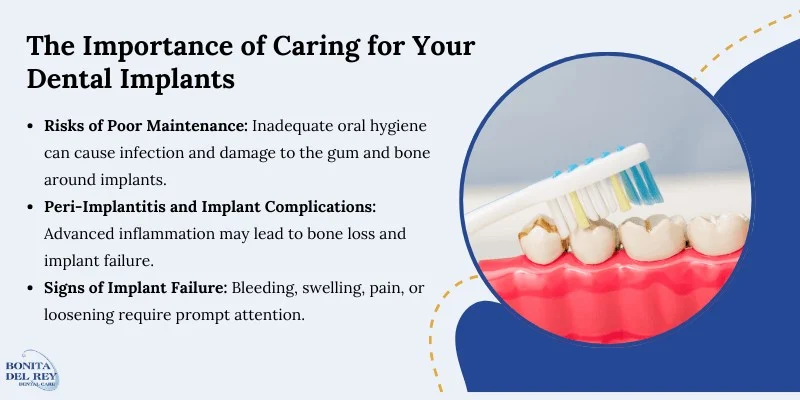
Risks of Poor Maintenance
When you skip brushing or flossing around your implants, plaque and bacteria accumulate just like they would on natural teeth. The difference is that implants lack the natural protective barrier that surrounds tooth roots.
This makes them more vulnerable to infection. Poor maintenance allows harmful bacteria to multiply unchecked, creating an environment where disease can develop quickly.
You might think implants don’t need as much attention because they can’t get cavities. That’s a dangerous misconception. While the titanium post won’t decay, the surrounding tissue and bone require constant protection through daily cleaning.
Skipping professional cleanings compounds the problem. Tartar builds up in areas you can’t reach at home, creating pockets where bacteria thrive. Over time, this neglect can compromise your oral health and lead to costly repairs or replacements.
Every smile is different. Talk to a professional at Bonita Del Rey Dental Care clinic to learn which dental implant care tips and tools work best for your specific implant type.
Peri-Implantitis and Implant Complications
Peri-implantitis is a serious gum disease that specifically affects dental implants. It happens when bacteria infect the soft tissue around your implant, causing inflammation that spreads to the supporting bone.
The condition starts with peri-mucositis, which affects only the gums. At this stage, you might notice redness, swelling, or bleeding when you brush. If you catch it early and improve your oral hygiene, you can reverse the damage.
But if left untreated, it progresses to peri-implantitis. This advanced stage destroys the bone that holds your implant in place. You’ll experience deeper pockets around the implant, increased bone loss, and potential loosening of the implant itself.
Peri-implantitis can cause bone loss and eventually lead to complete implant failure. The infection doesn’t just threaten one implant either—it can spread to adjacent teeth and implants if you don’t address it promptly.
Signs of Implant Failure
Recognizing warning signs early gives you the best chance of saving your implant. Pay attention to any changes in how your implant feels or looks.
Common warning signs include:
- Bleeding or swollen gums around the implant
- Pain or discomfort when chewing
- Loosening or movement of the implant
- Visible bone loss or gum recession
- Pus or discharge near the implant site
- Bad taste or odor coming from the area
You might also notice your implant feels different when you bite down. Any wobbling or shifting means the bone integration has weakened significantly.
Don’t ignore these symptoms hoping they’ll go away on their own. The sooner you contact your dentist about potential implant failure, the more treatment options you’ll have available. Early intervention can often save an implant that might otherwise need removal.
Daily Oral Hygiene for Dental Implants
Taking care of your dental implants every day requires the right brushing techniques, specialized cleaning tools, and products that protect rather than damage your investment.
Using a soft-bristle toothbrush with non-abrasive toothpaste, along with water flossers and antimicrobial mouthwash, keeps your implants and surrounding gums healthy for years to come.
Brushing Techniques and Soft-Bristle Toothbrushes
You need to brush your dental implants at least twice daily, just like natural teeth. A soft-bristle toothbrush is essential because harder bristles can scratch the implant surface and damage the surrounding gum tissue.
Hold your toothbrush at a 45-degree angle where the implant meets your gumline. Use gentle circular motions rather than harsh back-and-forth scrubbing. Pay extra attention to all sides of each implant, including the back surfaces that are harder to reach.
Electric toothbrushes with pressure sensors work well for daily oral hygiene with dental implants. The built-in timer helps ensure you brush for the full two minutes. Take your time around each implant to remove plaque buildup that can lead to infection.
Flossing and Specialized Tools
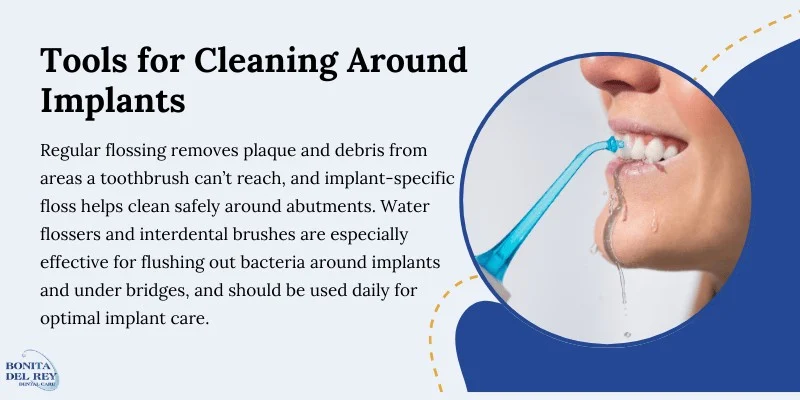
Regular flossing removes plaque and food particles from areas your toothbrush cannot reach. Implant-specific floss is designed to clean around the abutment without fraying or causing damage.
Effective tools for implant care include:
- Water flossers – Use pressurized water to flush out debris from hard-to-reach areas
- Interdental brushes – Small brushes with nylon-coated wire that clean between implants
- Implant-specific floss – Specially designed to slide around abutments safely
A water flosser is particularly effective for cleaning dental implants and surrounding gum tissue. The pulsating water stream reaches beneath bridges and around multiple implants. Use it at least once daily, especially before bed, to remove bacteria that accumulate throughout the day.
Antimicrobial Mouthwash
An antimicrobial mouthwash adds an extra layer of protection against bacteria that cause peri-implantitis. This condition can lead to bone loss around your implant if left untreated.
Rinse with mouthwash after brushing and flossing to reach areas you might have missed. Choose an alcohol-free formula to avoid drying out your mouth, which can actually increase bacterial growth. Swish for 30 to 60 seconds to ensure the antimicrobial agents contact all surfaces around your implants.
Your dentist may recommend a specific prescription-strength mouthwash if you have a higher risk of infection. Use it as directed to maintain healthy gums and prevent complications.
Choosing the Right Toothpaste
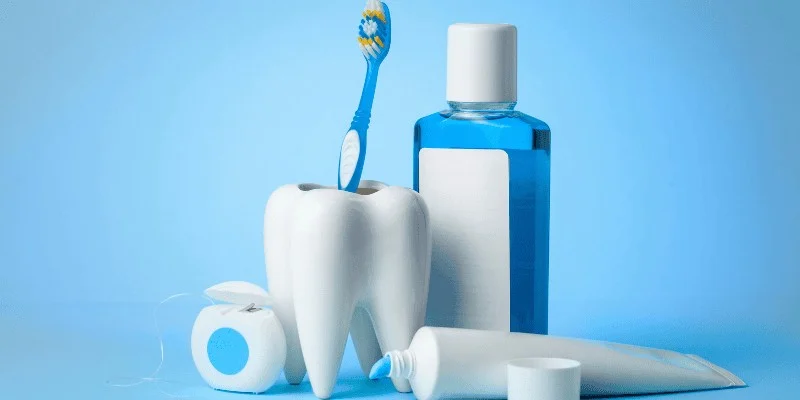
Non-abrasive toothpaste or low-abrasive toothpaste protects your dental implants from scratches that can harbor bacteria. Abrasive formulas with whitening agents or baking soda can damage the implant surface over time.
Look for toothpaste labeled as gentle, low-abrasive, or designed specifically for implants and sensitive teeth. Check the Relative Dentin Abrasivity (RDA) rating when possible—anything under 70 is considered safe for implants.
Avoid whitening toothpastes with harsh particles or charcoal-based products. These might work for natural teeth but create tiny grooves on implant surfaces where plaque accumulates. Fluoride toothpaste still benefits any remaining natural teeth without harming your implants.
Professional Dental Implant Maintenance
Regular visits to your dentist are just as important as your daily care routine. Professional cleanings remove buildup that home care can’t reach, and your dental team can spot potential issues before they become serious problems.
Importance of Regular Dental Checkups
You should schedule checkups every 3 to 6 months to keep your implants healthy. These visits are different from regular dental appointments because your dentist needs to examine both the implant and the surrounding tissue carefully.
During each visit, your dentist will check the stability of your implant and look for any signs of inflammation or infection. They’ll also take X-rays to monitor the bone level around your implant. This helps catch bone loss early, which is critical for preventing implant failure.
Your dentist will measure the depth of the gum pockets around your implants too. Healthy pockets should be shallow, typically 3mm or less. Deeper pockets can indicate peri-implantitis, a form of gum disease that threatens your implant’s success.
Professional Cleanings for Implants
Professional cleanings for dental implants require special tools and techniques. Your hygienist will use plastic or titanium scalers instead of metal ones to avoid scratching your implant surface. Metal instruments can damage the implant and create rough spots where bacteria collect.
Many dental offices use air polishing systems with glycine powder to gently remove biofilm and stains. This method is effective and won’t harm your implants or gum tissue.
The typical cost for these cleanings ranges from $200 to $300 per year for twice-yearly visits. Your hygienist can also remove your prosthetic if needed for a deeper cleaning underneath. This thorough approach keeps bacteria from building up in hard-to-reach areas.
Early Detection and Prevention of Problems
Catching problems early makes treatment easier and more successful. Your dental team looks for warning signs like redness, swelling, or bleeding around your implants during each visit.
They’ll also check for loose components or changes in how your implant feels when you bite down. These can signal that something needs adjustment before it becomes a bigger issue.
Common warning signs your dentist monitors include:
- Increased pocket depth around the implant
- Bone loss visible on X-rays
- Mobility of the implant or crown
- Persistent inflammation or bleeding
- Changes in your bite alignment
Your dentist can treat minor issues quickly with professional cleaning or medication. This proactive approach protects your investment and helps your implants last for decades.
If you’re in Chula Vista, CA, a quick implant checkup can help catch small issues early and keep your dental implants healthy for years.
Lifestyle Factors and Protective Habits for Implant Health
Your daily habits and lifestyle choices play a major role in how long your dental implants last. What you eat, how you protect your teeth from physical damage, and whether you grind your teeth at night all affect implant success.
Dietary Considerations and Foods to Avoid
A balanced diet supports healthy gums and bone tissue around your implants. Focus on foods rich in calcium, vitamin D, and vitamin C to maintain strong bone density and healthy gum tissue. Lean proteins help with tissue repair and regeneration.
You should avoid extremely hard foods that could crack or chip your implant crown. These include ice cubes, hard candy, popcorn kernels, and nutshells. Sticky foods like caramels and taffy can pull on crowns and potentially loosen them.
Foods that support implant health:
- Leafy greens and vegetables
- Dairy products or fortified alternatives
- Lean meats and fish
- Citrus fruits and berries
- Whole grains
Smoking dramatically increases your risk of implant failure and infection. If you smoke, quitting is one of the best things you can do to protect your investment. Heavy alcohol consumption can also weaken your immune system and affect healing around implants.
Protecting Implants from Physical Damage
Your implants need protection from excessive force and impact. If you play contact sports, wear a custom-fitted mouthguard to shield your teeth and implants from injury. A properly fitted sports guard distributes impact forces evenly and prevents damage.
Avoid using your teeth as tools to open packages, bottles, or tear tags. This puts unnecessary stress on both your implants and natural teeth. The force from these actions can crack crowns or damage the implant structure.
Be mindful when eating foods that require heavy chewing force. Cut tough meats into smaller pieces and chew carefully. Proper care for dental implants includes being aware of how much pressure you apply when biting and chewing.
Managing Bruxism and Night Guards
Teeth grinding and clenching, known as bruxism, creates excessive force on your implants. This constant pressure can lead to crown fractures, bone loss around the implant, or even implant failure over time. Many people grind their teeth during sleep without realizing it.
A custom night guard protects your implants from grinding damage. Your dentist will create a guard that fits your mouth precisely and cushions the force from clenching. Wearing it every night prevents stress on your implants and extends their lifespan.
Signs you might have bruxism include jaw pain, headaches upon waking, or worn tooth surfaces. If you notice these symptoms, talk to your dentist right away. They can examine your bite and recommend the appropriate night guard for your situation.
Benefits of wearing a night guard:
- Reduces pressure on implants by up to 70%
- Prevents crown fractures and chips
- Protects surrounding natural teeth
- Decreases jaw muscle tension
Long-Term Success and Monitoring for Dental Implants
Watching for problems early and keeping up with regular care helps your implants stay healthy for decades. Staying alert to changes in your mouth and working with your dentist ensures you catch issues before they become serious.
Recognizing Early Warning Signs
You need to watch for specific signs that something might be wrong with your implants. Healthy implants should feel stable and comfortable in your mouth.
Pay attention to these warning signs:
- Bleeding or swollen gums around the implant
- Pain or discomfort when chewing
- Loose implant or crown
- Bad breath that doesn’t go away
- Pus or discharge near the implant site
- Gums pulling away from the implant
Any of these symptoms could point to peri-implantitis, which is gum disease around your implant. This condition can damage the bone supporting your implant if you don’t treat it quickly.
Check your implants daily when you brush and floss. You should also run your tongue over them to feel for any changes. If you notice anything different, call your dentist right away instead of waiting for your next appointment.
Adjustments and Ongoing Care for Longevity
Your dentist will make small changes over time to keep your long-lasting dental implants working properly. These adjustments help prevent problems and extend the life of your implants.
Professional cleanings every 3-6 months remove plaque you can’t reach at home. Your hygienist uses special plastic or titanium tools that won’t scratch your implant surface. X-rays every year or two let your dentist check the bone around your implant.
Your dentist might need to tighten screws, adjust your bite, or replace worn parts of the crown. These minor fixes are normal and help your implants last longer. Proper implant aftercare includes keeping all your scheduled appointments, even when everything feels fine.
Tell your dentist about any health changes, new medications, or habits like teeth grinding. These factors can affect your implants and might require changes to your care plan.
Don’t ignore warning signs around your implants. Visit our clinic in Chula Vista, CA, to protect your investment and enjoy a strong, confident smile long term.
Frequently Asked Questions
Proper daily cleaning involves soft-bristled brushes and water flossers, while avoiding hard foods and attending regular dental visits helps prevent complications. Recognizing early warning signs and using non-abrasive dental products keeps your implants healthy for years to come.
What are the best practices for cleaning my dental implants daily?
You should brush your dental implants at least twice a day using a soft-bristled toothbrush. Hard bristles can scratch the implant surface and damage the surrounding gum tissue.
Use a non-abrasive toothpaste when cleaning your implants. Regular toothpaste can be too harsh and cause tiny scratches that allow bacteria to build up.
A water flosser is one of the most effective tools for cleaning dental implants. It uses pressurized water to flush out food particles and bacteria from hard-to-reach areas around the implant and beneath any bridges or crowns.
You can also use interdental brushes to clean between your implants and natural teeth. These small brushes reach spaces that regular toothbrushes miss.
Pay special attention to the area where your implant meets your gum line. This spot collects the most bacteria and plaque, so spend extra time cleaning it gently but thoroughly.
Can you share some tips for avoiding dental implant complications?
The biggest threat to your dental implants is peri-implantitis, which is a gum disease that can cause bone loss around the implant. You can prevent this by maintaining excellent daily oral hygiene and getting regular professional cleanings.
Don’t skip your dental appointments. Professional cleanings every 3-6 months allow your hygienist to remove hardened plaque that you can’t clean at home.
Avoid smoking if you have dental implants. Smoking reduces blood flow to your gums and significantly increases your risk of implant failure.
If you grind your teeth at night, ask your dentist about a nightguard. Grinding puts excessive pressure on your implants and can loosen them over time.
Watch for early warning signs of problems and address them quickly. Catching issues early makes treatment easier and helps you avoid more serious complications.
What foods should I avoid to protect my dental implants?
You should avoid extremely hard foods that can crack or damage your implant crown. This includes items like hard candy, ice cubes, popcorn kernels, and hard nuts.
Sticky foods like caramels and taffy can pull on your implant crown and potentially loosen it. These foods can also be difficult to clean from around your implants.
Be careful with very crunchy foods such as hard pretzels or crusty bread. While your implants are strong, the crowns on top can chip just like natural teeth.
You don’t need to eliminate all tough foods, but you should chew them carefully. Cut hard fruits and vegetables into smaller pieces rather than biting directly into them.
Acidic foods and drinks won’t harm the implant itself, but they can irritate the surrounding gum tissue. Limit your consumption of citrus fruits, tomatoes, and sodas.
How often should I visit the dentist for dental implant check-ups?
Most people with dental implants should visit their dentist every six months for check-ups and cleanings. This schedule is similar to what you’d follow with natural teeth.
Some people may need more frequent visits depending on their oral health. If you have a history of gum disease or other risk factors, your dentist might recommend professional cleanings every 3-4 months.
During these visits, your dentist will check the health of your gums and bone around the implant. They’ll also take X-rays periodically to make sure the bone is stable and there’s no hidden infection.
Your hygienist will use special plastic or titanium tools to clean your implants. Metal instruments can scratch the implant surface, so professional offices use materials designed specifically for implant care.
Don’t wait for problems to appear before scheduling an appointment. Regular preventive care is much less expensive and less invasive than treating complications after they develop.
What are the signs that my dental implants might be having issues?
Red, swollen, or bleeding gums around your implant are early warning signs of infection. Healthy gum tissue should be pink and firm, not puffy or tender.
Pain or discomfort around your implant isn’t normal once it has fully healed. If you feel persistent pain, especially when chewing, you should contact your dentist right away.
A loose implant or crown is a serious problem that requires immediate attention. While some movement in a crown can be fixed easily, a loose implant post may indicate bone loss.
Bad breath or a bad taste in your mouth that doesn’t go away with brushing could signal an infection. This often happens along with other symptoms like gum swelling.
You might notice pus or drainage coming from the gum tissue around your implant. This is a clear sign of infection that needs professional treatment.
Any changes in how your bite feels can indicate a problem. If your implant suddenly feels different when you bite down, schedule a dental appointment to have it checked.
Is there any special mouthwash or toothpaste recommended for dental implants?
You should use a non-abrasive toothpaste specifically designed for implants or sensitive teeth. Regular whitening toothpastes often contain harsh abrasives that can scratch your implant crown.
Look for toothpastes without baking soda or stain-removing agents. These ingredients are too rough for implant surfaces and can create tiny grooves where bacteria collect.
An antibacterial mouthwash can help reduce bacteria around your implants. Choose alcohol-free formulas because alcohol can dry out your mouth and irritate gum tissue.
Chlorhexidine mouthwash is sometimes recommended by dentists after implant surgery or if you develop early signs of infection. However, you shouldn’t use it long-term without your dentist’s guidance because it can stain teeth.
Ask your dentist which products they recommend for your specific situation. They may suggest certain brands based on your oral health needs and the type of implants you have.
You don’t necessarily need expensive specialty products. A simple fluoride toothpaste labeled as non-abrasive or for sensitive teeth usually works well for most implant patients.