Choosing between dental implants and dentures affects more than just your smile. It changes how you eat every single meal for years to come.
Many patients worry about whether they’ll be able to enjoy their favorite foods again after tooth replacement.
Dental implants restore about 90% of natural chewing power, while implant-supported dentures provide good function but may require you to avoid very hard or sticky foods.
This difference impacts everything from what you order at restaurants to how confident you feel at family dinners.
Your eating experience depends on factors like bite force, stability, and how secure your prosthetic teeth feel in your mouth.
Understanding what real patients experience with each option helps you make the right choice for your lifestyle. Both dental implants and dentures can improve your oral health and quality of life.
The key is knowing which type of tooth replacement matches your needs for comfort, function, and long-term satisfaction.
Key Takeaways
- Implants provide significantly stronger chewing power and stability compared to traditional dentures
- Dental implants support jawbone health and can last a lifetime, while dentures typically need replacement every five years
- The higher upfront cost of implants may offer better long-term value through durability and fewer maintenance requirements
Compare dental implants vs dentures eating comfort and find the right solution for your lifestyle
How Dental Implants and Dentures Function During Eating
The way your replacement teeth attach to your mouth directly affects how well you can chew and enjoy food.
Dental implants fuse with your jawbone through a biological process, while dentures rest on your gums and rely on suction or clips for stability.
Anchoring and Stability in Real-Life Meals
Dental implants provide the most secure anchoring because titanium posts are surgically placed into your jawbone. These posts act like natural tooth roots and don’t move when you bite into food.
You can eat tough steaks, crunchy apples, and sticky foods without worrying about your teeth shifting.
Traditional dentures work differently. They sit on top of your gums and stay in place through suction or denture adhesive. When you chew, the pressure can cause them to shift slightly or even slip.
This is especially true with lower dentures, which have less surface area to grip onto.
Implant-supported dentures offer a middle ground between removable dentures and individual implants. They snap onto a few implant posts in your jaw, giving you much better stability than traditional dentures.
You still remove them for cleaning, but they stay firmly in place while eating.
Partial dentures use metal clasps that hook onto your remaining natural teeth. These work better than full dentures for stability, but the clasps can put pressure on your natural teeth during meals.
Role of Osseointegration in Implant Success
Osseointegration is the process where your jawbone grows around and fuses with the titanium implant post. This biological bonding typically takes three to six months after your oral surgeon places the implant.
The bone cells actually attach to the implant surface, creating a permanent anchor.
This fusion is what makes implant-supported teeth feel like your natural teeth when eating.
The implant transfers chewing forces directly into your jawbone, just like natural tooth roots do. Implants restore about 90% of natural chewing power, which is significantly higher than what removable dentures can provide.
Your body treats the titanium post as part of your skeletal system once osseointegration is complete. This means you can bite with confidence without worrying about movement or damage to surrounding tissues.
Types of Denture Appliances and Their Fit
Full removable dentures cover your entire upper or lower gum ridge. Upper dentures typically fit better because they have a large palate plate that creates strong suction.
Lower dentures are harder to keep stable because your tongue takes up space and reduces the contact area.
Implant-retained dentures use two to four implant posts per arch to hold the prosthetic teeth in place. These are sometimes called snap-on dentures because they click onto ball attachments on the implants.
You remove them at night for cleaning, but they provide much better stability than traditional false teeth during meals.
Partial dentures replace only some missing teeth and use your existing teeth for support. The metal framework hooks onto your natural teeth, which helps keep them stable when you eat.
However, food can still get trapped under the base, requiring you to remove and clean them after eating certain foods.
Bite Force, Chewing Power, and Food Choices
Dental implants restore significantly more bite force than traditional dentures, which directly affects what foods you can eat comfortably and how well you can chew them.
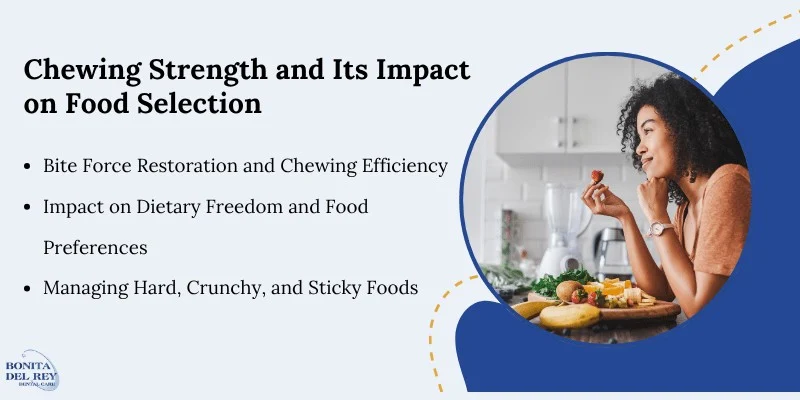
Bite Force Restoration and Chewing Efficiency
Dental implants can restore up to 90% of your natural bite strength. This means you can bite down with real force when eating tough or firm foods.
Traditional dentures only restore about 20-25% of natural bite force. Complete dentures sit on your gums and shift when you bite down, which limits how hard you can chew.
Implant-supported dentures improve chewing efficiency more than removable dentures, though they don’t fully match natural teeth. The implants anchor into your jawbone just like tooth roots, so they don’t move when you chew.
Your chewing power affects more than just comfort. Lower chewing function means you might not break down food properly, which can impact your nutrition.
With better chewing strength, you can eat a wider variety of healthy foods.
Impact on Dietary Freedom and Food Preferences
Dentures limit your food choices because many foods become difficult or impossible to eat. You might have to avoid steak, raw vegetables, nuts, and crusty bread.
With dental implants, you can eat nearly everything you enjoyed with natural teeth. Corn on the cob, apples, and tough meats are back on the menu. You don’t need to cut food into tiny pieces or avoid certain textures.
Foods typically difficult with traditional dentures:
- Steak and red meat
- Raw carrots and celery
- Whole apples
- Corn on the cob
- Bagels and crusty bread
- Nuts and seeds
An implant-supported bridge gives you the freedom to enjoy meals without worrying about your teeth slipping or losing grip on food.
Managing Hard, Crunchy, and Sticky Foods
Hard and crunchy foods pose the biggest challenge for full denture wearers. Biting into hard foods can cause dentures to shift or pop loose, which is uncomfortable and embarrassing.
Sticky foods like caramel or peanut butter can pull dentures away from your gums. You need denture adhesive to help, but even that doesn’t always prevent movement.
Dental implants handle these foods without issue. The implants are permanently anchored, so sticky foods won’t dislodge them. You can bite crunchy foods with confidence because implants don’t slip or click like removable dentures do.
Your bite force measurement matters when planning implant treatment, but most patients can handle normal food loads once healed. You’ll regain the ability to eat foods that have been off-limits for years.
Comfort, Speech, and Confidence in Daily Use
Daily life with replacement teeth involves more than just eating.
Implants typically feel more natural and stable during conversation, while dentures may require adhesives and adjustments that affect how you speak and interact with others.

Long-Term Oral Comfort and Fit
Dental implants fuse directly to your jawbone, which means they feel like your natural teeth. You won’t experience the rubbing or pressure points that dentures can create against your gums.
Once healed, your implant restoration becomes a permanent part of your mouth.
Dentures rest on top of your gums and can shift during the day. This movement often causes sore spots where the denture rubs against soft tissue.
About 120 million Americans deal with tooth loss, making these comfort issues common.
Your jawbone changes shape over time when you wear dentures. This means your dentures will need refitting every few years to maintain a proper fit.
Implants preserve bone density, which helps maintain your facial structure and eliminates the need for constant adjustments.
Speech Clarity and Social Confidence
Implants don’t affect your speech patterns because they’re fixed in place. You can talk, laugh, and yell without worrying about your teeth moving or clicking.
Dentures can slip when you speak, especially during certain sounds like “s” or “f.” Upper dentures cover your palate, which changes how your tongue moves and can muffle your speech clarity.
Many denture wearers report feeling self-conscious during conversations because they worry about slippage or unusual sounds.
Implants often provide better comfort and function during social situations. You won’t need to avoid certain words or speak more slowly to keep your teeth in place.
This freedom typically leads to greater confidence in professional and personal settings.
Adhesives, Slippage, and Denture Problems
Denture adhesive becomes a daily necessity for most denture wearers. You’ll need to apply it each morning and clean away the residue at night. Some adhesives have strong tastes that affect how food tastes throughout the day.
Even with adhesive, dentures can slip at inconvenient times. You might experience movement while eating sticky foods, laughing hard, or yawning. These denture problems create anxiety about social situations and public speaking.
Common denture issues include:
- Gagging sensations from upper dentures
- Food particles trapped under dentures
- Increased saliva production
- Difficulty with oral hygiene around denture edges
Implants eliminate these concerns entirely. Your oral hygiene routine stays simple because you brush and floss like you would natural teeth. You’ll maintain better long-term oral health without the complications that dentures bring to your daily routine.
Oral and Bone Health Considerations
Your jawbone needs stimulation to stay healthy, and the type of tooth replacement you choose directly affects whether your bone continues to deteriorate or stays strong.
Dentures sit on top of your gums while implants work below the surface, creating very different long-term health outcomes for your mouth and face.
Bone Loss and Jawbone Health Over Time
When you lose a tooth, your jawbone starts to shrink because it no longer receives pressure from natural tooth roots. This process happens gradually but consistently.
With dentures, nothing stops this bone loss. Your jawbone can shrink by 25% in width during the first year after tooth loss.
Over 10-20 years, you might lose several millimeters of bone height, which changes how your dentures fit and how your face looks.
This ongoing bone deterioration means you’ll need new dentures every 5-10 years as your jaw reshapes itself. The dentures that fit perfectly today will become loose and uncomfortable as your bone continues to recede.
Preserving Bone Density With Implants
Dental implants preserve jawbone health by acting like natural tooth roots. The titanium post fuses with your bone and transfers chewing forces directly into your jaw, just like your original teeth did.
This stimulation tells your body to maintain bone density in that area. Studies show implants can prevent bone loss almost completely in the areas where they’re placed.
If you’ve already experienced significant bone loss, you might need a bone graft before getting implants. This procedure adds bone material to your jaw to create enough foundation for the implant post.
While this adds time and cost to treatment, it rebuilds the structure your jaw has lost.
Impact on Gum Health and Facial Appearance
Your gum health stays better with implants because you brush and floss them like regular teeth. Dentures can trap food particles against your gums, potentially causing irritation or infection.
The bone loss from dentures creates what dentists call “denture face.” Your lower face gets shorter, your lips sink inward, and deep wrinkles form around your mouth.
These changes happen because your jawbone is literally shrinking away.
Implants maintain your facial structure by keeping your bone intact. Your face keeps its natural proportions and support. You won’t develop the sunken appearance that makes many long-term denture wearers look older than they are.
Cost, Maintenance, and Longevity
The financial investment and care requirements differ significantly between these two tooth replacement options.
Dentures require less money upfront but need frequent replacements, while implants cost more initially but can last decades with proper care.
Cost of Dental Implants vs Dentures

The cost of dentures ranges from $1,000 to $3,000 for a full set of traditional dentures. Partial dentures typically cost between $800 and $3,100 depending on the materials used.
The cost of dental implants is considerably higher upfront. A single implant typically runs $3,000 to $7,000.
Full-arch solutions like All-on-4 start around $18,000 per arch, while complete full mouth implants for both arches can range from $36,000 to $70,000.
However, you need to factor in ongoing expenses with dentures. You’ll spend money on:
- Adhesives for keeping dentures in place
- Special cleaning solutions
- Periodic adjustments and refittings
- Complete replacement every 5 to 7 years
Over 20 years, these recurring costs can add up to $3,000 to $5,000 or more beyond your initial denture purchase.
Long-Term Value and Replacement Needs
Dentures need replacing every 5 to 7 years due to wear and changes in your jaw structure. As your jawbone gradually shrinks from lack of stimulation, your dentures will fit poorly and require refitting or replacement.
Dental implants can last 20 years or even a lifetime with proper care. The titanium posts integrate permanently with your jawbone through a process called osseointegration.
While the crown on top may eventually need replacement after 10 to 15 years, the implant itself rarely fails.
The implant restoration preserves your jawbone density because it stimulates the bone just like natural tooth roots. This prevents the facial collapse and bone loss that commonly occurs with dentures.
When you calculate cost per year of use, implants often become more economical than dentures despite the higher initial price.
Daily Maintenance and Oral Hygiene Routines
Dentures require removal every night for soaking in cleaning solution. You’ll need to brush them separately with special denture cleaners, clean your gums, and use adhesives each morning to keep them secure.
Dental implants need the same basic care as your natural teeth. You simply brush twice daily, floss regularly, and visit your dentist for routine cleanings. There’s no removal, no soaking, and no messy adhesives.
Many patients find the simplified maintenance routine with implants more convenient for their lifestyle. You don’t need to worry about special products or remember nightly removal routines.
Frequently Asked Questions
People choosing between dental implants and dentures often have similar questions about eating comfort and what to expect. The answers depend on factors like the type of restoration you get, your jaw bone health, and how well you adapt to changes.
How does chewing feel with dental implants compared to traditional dentures?
Chewing with dental implants feels much closer to natural teeth than traditional dentures. The implants are anchored directly into your jaw bone, which means they don’t move or shift when you bite down.
You can apply more pressure when you chew without worrying about your teeth slipping.
Traditional dentures rest on top of your gums and have no connection to your jaw bone. This means they can move around when you eat, especially if they become loose over time.
You’ll feel less stable when biting and may need to use denture adhesive to keep them in place.
Implants restore significantly more chewing strength than dentures. Most implant patients can bite and chew with about 70 to 80 percent of the force they had with natural teeth.
Denture wearers usually have only about 20 to 25 percent of normal chewing force.
What foods are easiest or hardest to eat with dentures versus implants?
With dental implants, you can eat almost any food you enjoyed with natural teeth. Hard foods like raw carrots, apples, and nuts are usually no problem. Sticky foods like caramel or taffy also work fine because implants don’t come loose.
Traditional dentures make certain foods challenging or off-limits. Hard foods can damage the denture or cause pain by pressing the plate against your gums. Sticky foods can pull your dentures loose or get trapped underneath them.
Corn on the cob, tough meats, and crusty bread are particularly difficult with dentures. You’ll likely need to cut these foods into smaller pieces or avoid them completely.
Seeds and small particles can also get stuck under your dentures and cause irritation.
Do implant-supported dentures stay in place better while eating than regular dentures?
Implant-supported dentures stay firmly in place while you eat because they connect to dental implants in your jaw bone. They don’t rely on suction or adhesive like regular dentures do.
This means no slipping, clicking, or movement when you chew.
Regular dentures can shift around during meals, especially when eating chewy or sticky foods. The fit changes over time as your jaw bone shrinks. You may need to use more denture adhesive or get new dentures fitted every few years.
Implant-supported dentures can eliminate the bulk and unnatural feel of traditional dentures. Many patients say they feel more confident eating in social situations because they don’t worry about their teeth moving.
What does eating comfort usually feel like during the adjustment period for dentures versus implants?
The adjustment period for traditional dentures can be frustrating when it comes to eating.
You’ll need several weeks to learn how to chew properly without dislodging them. Your gums may feel sore, and you might need to stick to soft foods at first.
With dental implants, you’ll have some soreness right after surgery while your mouth heals. Most people need to eat soft foods for a few weeks during this time. Once healing is complete, eating feels natural and comfortable.
Dental implant surgery involves minimal discomfort and most patients report only mild soreness for a few days. The long-term comfort is usually worth the short recovery period.
How do fixed options like All-on-4 compare to removable implant overdentures for eating comfort?
All-on-4 implants are fixed in your mouth and can’t be removed except by your dentist. They feel and function like natural teeth when you eat. You can bite with full force and don’t need to worry about food getting trapped underneath.
Removable implant overdentures snap onto implants but you can take them out for cleaning. They’re more stable than regular dentures but not quite as solid as All-on-4. Some food particles may still get under the denture base.
Both options are significantly better for eating comfort than traditional dentures. The choice between them often depends on your budget and how much you value the convenience of not removing your teeth at night.
What are the most common eating-related problems people report with upper dentures, and do implants help?
Upper dentures cover the roof of your mouth with a plate, which can affect your sense of taste and temperature. Food doesn’t taste quite the same as it did with natural teeth. The plate can also make you gag, especially when you first start wearing dentures.
The upper denture can become loose more easily than the lower one because it has less suction area. You might feel it drop down when you bite into something. This is embarrassing and makes eating stressful in social situations.
Dental implants solve these problems by eliminating the need for a plate covering your palate. You can taste food normally and don’t have to deal with gagging. The implants keep everything firmly in place no matter what you’re eating.