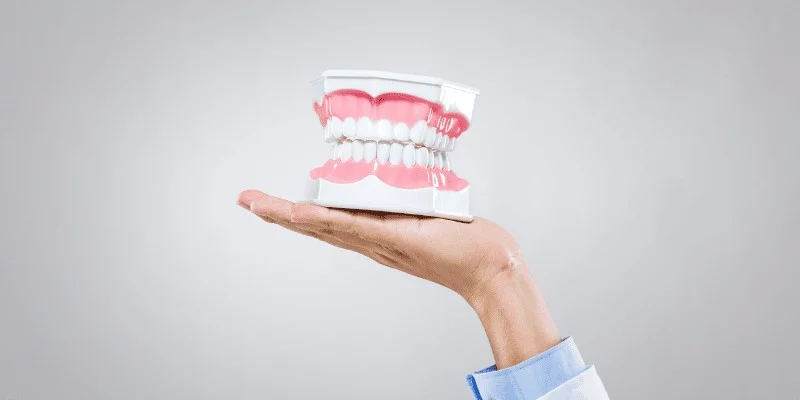
Missing teeth can affect how you eat, speak, and feel about your smile.
When you start looking into permanent tooth replacement options, you’ll quickly come across two main approaches: traditional dental implants and All-on-4 implants.
While both use titanium posts to replace missing teeth, they work in very different ways.
The main difference between traditional and All-on-4 implants is that traditional implants replace each tooth individually with its own post, while All-on-4 uses just four strategically placed implants to support an entire arch of teeth.
This means if you’re missing all your upper or lower teeth, traditional implants might require six to eight posts per arch, but All-on-4 accomplishes the same result with only four.
The approach you choose depends on how many teeth you need replaced, your bone density, and your budget.
Understanding these differences will help you make the right choice for your situation. Each option has its own benefits when it comes to treatment time, cost, and long-term care.
Key Takeaways
- All-on-4 uses four angled implants per arch while traditional implants place one post for each missing tooth
- All-on-4 typically requires fewer procedures and shorter recovery time compared to traditional implants
- Your best option depends on how many teeth you’re replacing, your jawbone health, and your treatment goals
Compare all-on-4 implants vs traditional implants and explore the best tooth replacement option
How Each Implant Approach Works
Both all-on-4 dental implants and traditional implants involve placing titanium posts in your jawbone during dental implant surgery.
The main differences are in how many implants your oral surgeon places, where they go, and when you get your new teeth.
All-on-4 Procedure Overview
The all-on-4 procedure uses four strategically placed implants to support a full arch of teeth. Your oral surgeon places two implants near the front of your jaw straight up and down.
The back two implants are placed at an angle of about 30 to 45 degrees.
This angled placement lets your surgeon use the strongest parts of your jawbone. It also helps avoid areas where bone might be weak or thin.
The angles create a wide support base for your new teeth without needing extra procedures.
During implant surgery, your surgeon makes small openings in your gums and drills into the bone. The titanium implants are then secured into these spots.
Most people get temporary teeth attached on the same day or within a few days after surgery.
Traditional Implant Process
Traditional implants require placing one titanium post for each missing tooth. If you need to replace many teeth, your oral surgeon will place multiple implants during one or more surgeries.
Each implant goes straight down into the jawbone where a tooth is missing.
The implant placement technique for traditional implants is more straightforward but takes longer when replacing many teeth.
Your surgeon must create a separate site for each implant and ensure proper spacing between them.
After implant surgery, you wait three to six months for osseointegration to happen. This is when the bone grows around and fuses with the titanium implants.
Once healing is complete, your surgeon attaches small connectors called abutments to each implant. These abutments hold your permanent crowns or bridges in place.
Implant Placement Techniques
The key difference in placement techniques is the angle and number of implants used. All-on-4 dental implants use angled placement to maximize contact with existing bone.
This technique often avoids the need for bone grafting even if you have some bone loss.
Traditional implants use vertical placement directly into the bone. This gives each implant its own independent support. Your surgeon must ensure each implant has enough bone around it to stay stable.
Both methods use titanium implants because this material bonds well with bone during osseointegration. The healing process is similar for both approaches, though all-on-4 typically requires less total healing time.
Role of Temporary and Permanent Teeth
With all-on-4 dental implants, you usually receive temporary teeth right after your implant procedure. These prosthetic teeth let you eat soft foods and smile while your implants heal.
The temporary teeth are lighter and protect the implants during osseointegration.
After a few months of healing, your dentist replaces the temporary teeth with permanent prosthetic teeth. These are stronger and designed to last many years with proper care.
Traditional implants often require you to wait longer before getting any teeth attached. You might use removable dentures during the healing period.
Once osseointegration is complete, your dentist attaches abutments and then places individual crowns or bridges as your permanent teeth.
Comparing Number of Implants and Restoration Types
The number of implants you need depends on how many teeth you’re replacing and which restoration method your dentist recommends.
Traditional implants typically use one implant per tooth, while All-on-4 uses just four implants to support a full arch of replacement teeth.
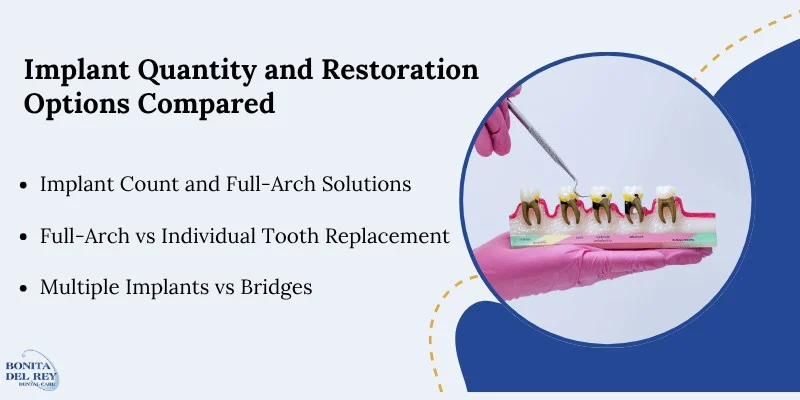
Implant Count and Full-Arch Solutions
All-on-4 implants use four strategically placed implants to support an entire upper or lower arch of teeth. If you need both arches restored, you’ll get eight implants total.
Traditional implants for full-arch restoration require many more implants. You might need between 6 to 10 implants per arch depending on your bone density and jaw structure. Each implant acts as an individual tooth root.
The four implants in All-on-4 are angled in specific positions to maximize contact with your existing bone. This approach eliminates the need for one implant per tooth, which saves you time and money when replacing a full arch.
Full-Arch vs Individual Tooth Replacement
Full-arch replacement works best when you’re missing most or all of your teeth in one jaw. All-on-4 provides a fixed denture that replaces an entire arch with just four implants supporting all your replacement teeth at once.
Individual tooth replacement uses conventional implants to fill specific gaps in your smile. If you’re only missing one, two, or a few scattered teeth, traditional implants give you the most natural-looking results.
Each tooth gets its own implant and crown.
Your implant options change based on how much tooth loss you’re dealing with. Full mouth restoration with traditional implants means more surgery appointments and longer treatment times compared to All-on-4.
Multiple Implants vs Bridges
Multiple implants can work together to support a bridge when you’re missing several teeth in a row. You might need two or three implants to anchor a bridge that replaces four or five teeth.
This option sits between single-tooth replacement and full-arch solutions.
Traditional bridges attached to multiple implants give you flexibility that All-on-4 doesn’t offer. If one implant fails, your dentist can often repair just that section instead of affecting your entire arch.
All-on-4 connects all replacement teeth together as one unit, so you can’t replace individual teeth separately. The four implants must work together to support the full fixed denture, which means any problems affect the whole restoration.
Get in touch with Bonita Del Rey Dental Care in Chula Vista, CA to discuss implant options
Suitability and Candidacy Factors
Your jawbone health and the number of teeth you’re missing determine which implant option works best for your situation. Bone density plays a major role in whether you’ll need extra procedures before getting implants.
Jawbone Density and Bone Loss
Your jawbone density affects which implant type you can receive. Traditional implants need adequate bone at each spot where a tooth is missing. If you don’t have enough bone, your dentist can’t place the implant safely.
When you lose teeth, your jawbone starts to shrink over time. This happens because the bone no longer gets stimulation from tooth roots. The longer you wait to replace missing teeth, the more bone loss you’ll experience.
All-on-4 implants work differently with bone density. The back two implants are angled at up to 45 degrees to use the strongest parts of your jaw.
This means you can move forward even if you have moderate bone loss in certain areas.
Traditional implants require healthy bone at every single implant site. If you’re missing eight teeth, you need good bone density in eight different spots.
Avoiding Bone Grafting
A bone graft adds months to your treatment timeline and increases your total cost. You need to wait 3-6 months for the graft to heal before your dentist can even place the implants.
All-on-4 lets most patients skip bone grafting entirely. The angled placement technique works around areas where your bone has deteriorated.
You only need four strong points instead of eight or more individual sites with adequate bone.
Traditional implants often require bone grafts if you’ve had missing teeth for years. Each weak area needs its own graft procedure. This means multiple surgeries and extended healing periods.
The ability to avoid bone grafting makes All-on-4 faster and more affordable for full-arch replacement.
Who Is a Candidate for Each Option

You’re a good candidate for All-on-4 if you’re missing most or all teeth in one arch. This option works well when you have some bone loss but still have strong areas in the front and back of your jaw.
Traditional implants are better for one or two missing teeth.
You need healthy gums and sufficient bone density at each gap. If you have severe bone loss throughout your jaw, you might need extensive grafting before traditional implants become possible.
Your overall health matters for both options. Conditions like uncontrolled diabetes or active gum disease can affect your candidacy. Smoking also impacts healing and success rates.
An implant consultation helps determine which option fits your needs. Your dentist will take X-rays or CT scans to evaluate your jawbone health and bone density levels.
Treatment Timeline and Recovery
All-on-4 implants offer faster recovery with most patients returning to normal activities within one to two weeks, while traditional full mouth implants may require several months of healing between procedures.
The number of implants and surgical complexity directly affects how quickly you’ll heal and when you can enjoy your final teeth.
Healing Time and Osseointegration
Your healing time depends on which implant method you choose. All-on-4 uses just four implants per arch, which means less surgery and quicker initial recovery.
You’ll typically feel better within 3-5 days after the procedure.
Traditional full mouth implants need 6-10 implants per arch. More implants mean more surgical sites that need to heal. Recovery from traditional implants usually takes 7-14 days before you feel ready to resume normal activities.
Both methods require osseointegration, which is when your jawbone fuses with the titanium implants. This process takes 3-6 months to complete for both All-on-4 and traditional implants.
Your bone needs this time to grow around the implants and create a stable foundation.
The main difference is that traditional implants often require multiple surgeries spread over several months. You might need bone grafting first, which adds another 3-6 months before implant placement can even begin.
Temporary Restorations
All-on-4 lets you leave the dental office with temporary teeth on the same day as surgery. This means you won’t go without teeth during the healing period. Your temporary restoration looks natural and lets you eat soft foods right away.
Traditional implants usually require a longer wait for temporary teeth. If you need bone grafting or multiple procedures, you might wear removable dentures during healing. Some patients wait several months before receiving any fixed temporary restoration.
Your temporary teeth protect the implants while osseointegration happens beneath the surface. They’re not as strong as your final teeth, so you’ll need to stick to softer foods.
Most people wear temporary restorations for 3-6 months until their jawbone fully heals.
What to Expect During Implant Recovery
First Week:
- Swelling peaks within 48-72 hours
- Pain managed with medication
- Stick to liquids and very soft foods
- Sleep with your head elevated
Weeks 2-4:
- Swelling decreases significantly
- Add soft pasta and well-cooked vegetables
- Return to work and light activities
- Surface tissue healing mostly complete
Your diet expands gradually as healing progresses. Start with smoothies, yogurt, and mashed potatoes for the first few days. By week three, you can add fish and ground meat.
Avoid strenuous exercise for 7-10 days after surgery. Heavy lifting can increase bleeding and swelling. Walking and light activities are fine during your implant recovery.
Rinse with warm salt water after meals starting 24 hours after surgery. Use a soft toothbrush to clean your temporary teeth carefully. Contact your dentist if you notice increased pain or signs of infection.
Follow the dental implant care tips provided by your dentist to get the best and long lasting results.
Costs, Maintenance, and Long-Term Outlook
The financial investment and care requirements differ significantly between these two approaches to restorative dentistry.
Traditional implants typically cost less upfront per tooth, while All-on-4 provides a complete arch solution at a higher total price but greater value for replacing multiple teeth.
Cost Comparison
Traditional dental implants cost $19,615 on average, while All-on-4 implants average $29,915 for a full arch. However, this comparison can be misleading.
If you need to replace an entire arch of teeth, traditional implants would require 8-10 individual implants. This would cost far more than All-on-4, which uses only four implants to support all your prosthetic teeth.
The materials you choose for your new teeth also affect the price.
Material Options:
- Porcelain – Most natural-looking but more expensive
- Zirconia – Very durable and long-lasting
- Hybrid acrylic/titanium – Cost-effective option
- Ceramic or resin – Mid-range pricing
You may need additional procedures before getting implants. Bone grafting, sinus lifts, or gum treatments can add to your total cost.
Your dental insurance might cover some costs of maintaining these dental options over time, especially if tooth loss affects your health.
Maintenance and Care
Both options require similar daily care to restore your smile for the long term. You need to brush twice daily and floss around your implants just like natural teeth.
Traditional implants with individual porcelain crowns are easier to clean between each tooth. You can use regular floss and interdental brushes.
All-on-4 requires special flossing tools to clean under the full arch of prosthetic teeth.
You should visit your dentist every six months for professional cleanings and checkups. Your dentist will check the stability of your implants and look for any problems. Wearing a nightguard protects your investment if you grind your teeth while sleeping.
Longevity and Success Rates
All-on-4 implants last about 20 years on average with proper care. Traditional implants can last 25 years or longer when you maintain good oral hygiene.
The main difference between the procedures is that All-on-4 uses fewer implants, but both options successfully replace missing teeth. Individual traditional implants have success rates above 95% over 10 years.
All-on-4 systems show similar long-term success when placed by experienced providers.
The longevity of your results depends on several factors. Your oral hygiene habits matter most. Smoking, diabetes, and gum disease can shorten how long your implants last.
The quality of materials used for your prosthetic teeth also affects durability.
Frequently Asked Questions
The number of implants, cost differences, and candidacy requirements vary between these two approaches. Recovery experiences and long-term satisfaction also depend on choosing the right option for your specific dental needs.
How do traditional dental implants and All-on-4 differ in the number of implants used and overall support?
All-on-4 uses just four implants to support a full arch of teeth. Two implants are placed near the front of your jaw, and two are angled toward the back to maximize bone contact.
Traditional implants typically require one implant for each missing tooth. If you need a full arch of teeth, this could mean six to eight implants or more per arch.
The number of implants and placement strategy affects how the teeth are supported. All-on-4 distributes chewing forces across four strategically placed posts.
Traditional implants provide individual support for each tooth, which can offer more natural distribution of pressure when you bite and chew.
Who is a good candidate for All-on-4 compared with traditional implant treatment?
You might be a good candidate for All-on-4 if you’re missing most or all of your teeth in one arch. This approach works well if you want a faster solution and may not have enough bone for multiple individual implants.
All-on-4 is often chosen when you have lower bone density because the implants are placed at angles in areas with stronger bone. This means you’re less likely to need bone grafting procedures before getting your implants.
Traditional implants work better if you’re only missing a few teeth spread out in your mouth. You need healthy jawbone in the specific spots where each implant will go.
If you have good bone density and want to replace individual teeth while keeping other healthy teeth, traditional implants give you more flexibility.
Your overall health, gum condition, and whether you smoke also affect which option is right for you.
What’s the typical cost difference between traditional implants and an All-on-4 full-arch solution?
All-on-4 typically costs between $15,000 and $30,000 per arch. This includes the four implants, surgery, and the prosthetic teeth attached to them.
Traditional implants for a full arch usually cost between $25,000 and $50,000 or more. The higher price comes from needing more implants, more surgery time, and more materials.
The comparison of treatment costs depends on how many teeth you need to replace. For single tooth replacement, traditional implants might cost $3,000 to $5,000 per tooth.
But when you need a full mouth of teeth, All-on-4 becomes more affordable because it uses fewer implants.
Keep in mind these costs often don’t include extra procedures like bone grafting or tooth extractions. Your final price depends on your specific dental needs and where you live.
How does All-on-4 compare to All-on-6 in terms of stability, longevity, and recovery time?
All-on-6 uses six implants instead of four to support your full arch of teeth. The extra two implants provide more points of contact with your jawbone, which can increase stability.
Recovery time for All-on-6 is usually similar to All-on-4, though you might experience slightly more discomfort because two additional implants are placed. Both procedures often let you get temporary teeth the same day as surgery.
For longevity, All-on-6 may offer better long-term support because the extra implants distribute chewing forces across more points. This can be helpful if you have a strong bite or want extra security.
However, All-on-4 has been used successfully for many years and remains durable when properly cared for.
All-on-6 costs more than All-on-4 because it requires two additional implants and more materials. Your dentist might recommend All-on-6 if you have stronger bone and want maximum stability.
What are the most common reasons people feel regret after getting All-on-4, and how can those risks be reduced?
Some people experience regret when their expectations don’t match reality. This can happen if they expected their new teeth to feel exactly like natural teeth right away or didn’t understand the adjustment period.
Complications like infection, implant failure, or discomfort can lead to dissatisfaction. These risks increase if you don’t follow post-surgery care instructions or if you have health conditions that affect healing.
Poor treatment planning can also cause problems. If your dentist doesn’t properly assess your bone density or doesn’t place implants correctly, you might face issues with fit, comfort, or appearance.
You can reduce these risks by choosing an experienced dentist who specializes in implant procedures. Ask to see before-and-after photos and talk to previous patients if possible.
Make sure you understand the healing timeline, maintenance requirements, and what your new teeth will feel like.
Following all post-surgery instructions carefully helps prevent infection and implant failure. Attend all follow-up appointments so your dentist can catch and fix small problems before they become bigger ones.
Where can patients look for more affordable options for full-arch implant treatment without sacrificing safety or quality?
Dental schools often offer implant procedures at lower costs because dental students perform the work under close supervision from experienced instructors. The procedures take longer, but you still receive quality care with proper oversight.
Some dentists offer payment plans or financing options that let you spread the cost over several months or years. This makes treatment more affordable without requiring you to pay everything upfront.
Dental insurance rarely covers the full cost of implants, but some plans cover part of the procedure. Check with your insurance provider to see what’s included and what you’ll need to pay out of pocket.
Health savings accounts (HSAs) or flexible spending accounts (FSAs) let you use pre-tax money for dental procedures. This can reduce your overall cost by lowering your taxable income.
Some dental practices offer discounts if you pay in full upfront or if you need treatment on multiple arches. It’s worth asking about any available discounts or seasonal promotions.
Be careful about choosing treatment based only on price. Very low prices might mean less experienced dentists, lower quality materials, or hidden costs.
Research any practice thoroughly, read reviews, and verify credentials before committing to treatment.