Most dental offices advertise implant prices between $3,000 and $6,000 per tooth, but that number rarely tells the complete story.
The actual cost of dental implant surgery often climbs much higher once you factor in diagnostic scans, bone grafting, tooth extractions, sedation fees, temporary crowns, and follow-up appointments that aren’t included in the base price.
These extra expenses can add thousands of dollars to your final bill if you don’t know what to ask about upfront.
The good news is that you can avoid financial surprises with the right information. Understanding which procedures might be necessary for your specific situation helps you get accurate dental implant cost estimates before treatment begins.
Many patients discover hidden costs of dental implants only after they’ve already committed to the procedure, but asking detailed questions during your consultation gives you control over your budget.
This guide breaks down the most common extra charges associated with implant surgery and shows you practical ways to plan for them.
You’ll learn which procedures might apply to your case, what they typically cost, and how to get transparent pricing from your dental provider.
Key Takeaways
- Dental implant surgery includes multiple procedures beyond the implant post that can add $2,000 to $5,000 or more to your total cost
- Requesting a detailed written treatment plan that lists all potential procedures helps you avoid unexpected charges
- Comparing quotes from different providers and asking about all-inclusive packages gives you better control over your dental implant budget
Find out the hidden costs of dental implants. Explore the full breakdown and cost-saving tips
Understanding the True Cost of Dental Implant Surgery
A single dental implant involves three separate parts that work together, and the cost of dental implants depends on each component plus additional procedures you might need.
Most advertised prices only show the starting cost and leave out important expenses that affect your final bill.
Key Components of Dental Implants
Every dental implant has three main parts that your dentist bills separately. The implant post is a titanium screw that goes into your jawbone and acts as an artificial tooth root. This piece typically costs between $500 and $2,500.
The abutment connects the implant post to the crown on top. You’ll pay $200 to $1,200 for this connector piece. Your dentist might use a stock abutment for back teeth or a custom one for front teeth where appearance matters more.
The crown is the visible tooth that sits on top. Dental crown costs range from $800 to $3,000 depending on the material. Basic porcelain-fused-to-metal crowns cost less while full zirconia crowns for front teeth cost more.
Single Dental Implant Cost Breakdown
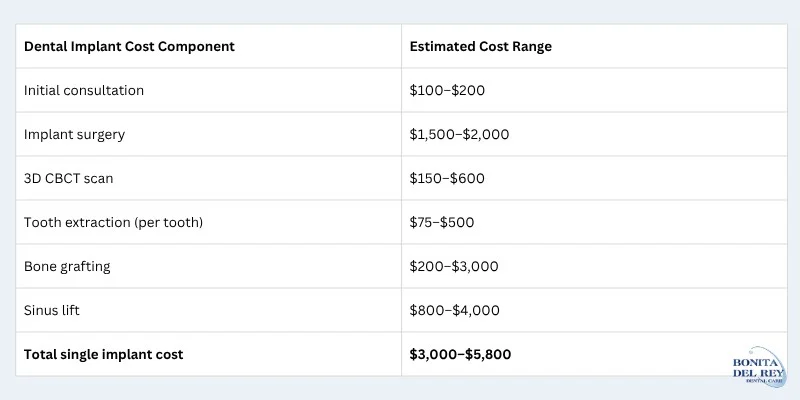
A single dental implant costs $3,000 to $5,800 when you add up all the pieces. Your first consultation runs $100 to $200. The implant surgery itself costs $1,500 to $2,000.
You’ll also need diagnostic imaging before surgery. A basic X-ray might be included, but a 3D CBCT scan costs an extra $150 to $600. Many dentists require this imaging for safe placement near nerves or sinuses.
Some patients need preparatory work first. Tooth extractions add $75 to $500 per tooth. Bone grafting ranges from $200 to $3,000 if you don’t have enough jawbone.
A sinus lift for upper back teeth can cost $800 to $4,000 more.
Base Price Versus Real-World Costs
Advertised prices often show only the implant post cost without the abutment or crown. This makes the true cost of dental implants seem lower than what you’ll actually pay.
Your real-world price depends on your mouth’s condition. If you need bone grafting or extractions, your bill increases significantly. Sedation options add another $150 to $1,200 if you want more than local anesthesia.
Follow-up visits for healing checks are sometimes included but ask your dentist to confirm. Some practices charge separately for suture removal or adjustments.
Getting an itemized estimate before you start helps you compare practices accurately and avoid surprise bills later.
Common Hidden Costs To Watch Out For
Many dental practices quote you a base price for implants, but several necessary procedures can add thousands of dollars to your final bill.
Diagnostic imaging, tooth extraction, and bone grafting represent the most common expenses that catch patients off guard.
Diagnostic Imaging and Consultation Fees
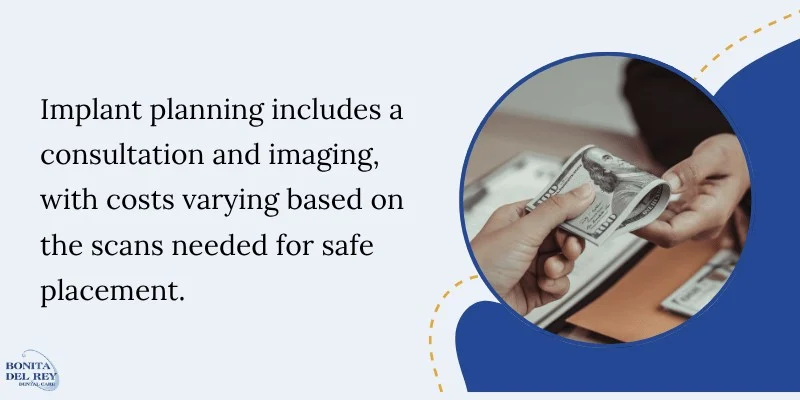
Your implant journey starts with a thorough evaluation that comes with its own price tag. You’ll pay $50 to $300 for your initial consultation where the dentist examines your mouth and discusses treatment options.
The real costs come from the imaging you need. Basic X-rays run $25 to $200, but most implant cases require more detailed scans. A 3D CT scan gives your dentist a complete view of your jawbone structure and costs $100 to $500.
These scans aren’t optional extras. Your dentist needs this detailed imaging to plan the exact placement of your implant and spot potential problems before surgery.
Some practices bundle these fees into their package price, while others charge separately. Ask upfront whether imaging costs are included in your quote.
Tooth Extraction Before Placement
You can’t place an implant until the damaged tooth is removed. Each extraction costs $75 to $600 depending on how complicated the procedure is.
Simple extractions for teeth that are already loose or broken above the gum line stay on the lower end of this range. Surgical extractions cost more when the tooth is impacted or broken below the gum line.
Your dentist might need to section the tooth or remove bone tissue to extract it completely.
If you need multiple teeth removed, some dental offices offer package deals that reduce the per-tooth cost. The extraction site needs time to heal before implant placement, which can extend your treatment timeline by several weeks.
Bone Grafting Requirements
Your jawbone must be thick and strong enough to support an implant. Research shows that 58% of all dental implants need bone grafting to create sufficient bone density.
The bone grafting cost ranges from $200 to $3,000 per site based on how much bone you need. Synthetic bone grafts are the most affordable option at $200 to $1,200.
Using your own bone harvested from another part of your body can cost up to $4,000 per graft.
You might also need a sinus lift if you’re getting upper jaw implants. This procedure creates enough bone height and costs $1,500 to $5,000. Some practices charge up to $5,000 for this surgery.
Bone grafting adds months to your treatment because the graft needs time to integrate with your existing bone before implant placement. This healing period typically takes three to six months.
Contact Bonita Del Rey Dental Care in Chula Vista, CA to discuss your dental implant costs
Specialized Surgical Procedures and Their Impact on Cost
Some patients need extra procedures beyond the basic implant placement.
These additional surgeries can significantly increase your total treatment cost, with procedures like sinus lifts adding $1,500 to $3,000 and premium materials like zirconia implants potentially doubling the base price.
Sinus Lift and Surgical Fees
A sinus lift becomes necessary when you need an implant in your upper jaw but don’t have enough bone height.
Your sinuses sit right above your upper teeth, and sometimes the bone in this area is too thin to hold an implant securely. The procedure involves lifting the sinus membrane and adding bone to create more space.
The cost typically ranges from $1,500 to $3,000 per side. This price includes the surgical expertise required, the bone grafting materials, and additional healing time.
You’ll also need to wait several months after a sinus lift before the implant can be placed. This extended timeline means more appointments and potentially more time off work, which adds indirect costs to your treatment.
Custom Abutments and Material Upgrades
The abutment connects your implant to the final crown. While standard abutments work for many cases, you might need a custom-designed piece for better aesthetics or function.
Custom abutments are made specifically for your mouth using advanced CAD/CAM technology.
These personalized components typically cost $200 to $500 more than standard options. The extra expense pays for the design work, specialized manufacturing, and materials that match your unique anatomy.
Benefits of custom abutments:
- Better gum contours around the implant
- Improved appearance in visible areas
- Stronger support for the crown
- Reduced risk of complications
Your dentist will recommend custom abutments if you’re replacing front teeth or have unusual jaw positioning.
Zirconia Implants Versus Titanium Implants
Titanium has been the standard implant material for decades, but zirconia offers an alternative for patients with specific needs or preferences. Zirconia is a white ceramic material that blends better with your natural tooth color.
The main cost difference is substantial. Zirconia implants typically run $500 to $1,000 more per tooth than titanium options.
| Feature | Titanium | Zirconia |
| Color | Gray/metallic | White/tooth-colored |
| Track record | 50+ years | 15-20 years |
| Cost | Standard | 30-40% higher |
| Biocompatibility | Excellent | Excellent |
You might choose zirconia if you have metal sensitivities or worry about gray showing through thin gums. However, titanium has a longer proven success rate and works well for most patients.
Post-Surgical Factors Influencing Final Expenses
Your dental implant costs don’t end when you leave the surgery center. The healing process, follow-up visits, and potential complications can add thousands of dollars to your final bill over the coming months.
Osseointegration and Healing Timeline
Osseointegration is the process where your jawbone fuses with the titanium implant post. This crucial healing phase typically takes three to six months and directly affects your total costs.
During this period, you’ll need multiple check-up appointments to monitor the integration process. Each visit usually costs between $100 and $300, depending on your dentist’s fees and location.
If your bone doesn’t fuse properly with the implant, you may need additional procedures like bone grafting, which can add $500 to $3,000 to your expenses.
Your healing timeline can extend if you smoke, have diabetes, or take certain medications. A longer healing period means more appointments and monitoring.
Some patients require temporary prosthetics during osseointegration, adding another $300 to $1,500 to their costs.
Follow-Up Care and Adjustments
You’ll return to your dentist several times after surgery for adjustments and fittings. These visits ensure your crown or bridge sits correctly and feels comfortable.
Most patients need at least three to five follow-up appointments in the first year. Standard adjustment visits cost $75 to $200 each. Your dentist may need to modify the abutment (the connector piece) or reshape your crown, which involves lab fees of $150 to $500.
Professional cleanings around implants require special tools and techniques. You’ll pay $150 to $300 per cleaning, typically needed every three to six months initially.
Your dental team will also check for signs of peri-implantitis, an infection that affects the tissue around implants.
Managing Implant Failure and Complications
Implant failure happens in about 5 to 10 percent of cases. When an implant fails, you face significant additional expenses to address the problem.
Early-stage implant failure occurs when osseointegration doesn’t happen properly. Removing the failed implant costs $500 to $1,000, and you’ll wait several months before attempting replacement. A second implant procedure runs $1,500 to $3,000 or more.
Late-stage failures happen after successful integration, often due to infection or excessive force on the implant.
Treatment for peri-implantitis includes deep cleanings ($300 to $800), antibiotics ($50 to $200), and sometimes surgical intervention ($1,000 to $4,000).
Nerve damage, though rare, may require specialist care costing $2,000 to $5,000 for treatment. Many dentists offer warranties covering implant failure within the first year, but you’ll still pay for related procedures and materials.
How to Avoid Surprise Bills and Control Your Implant Budget
Getting a clear picture of your dental implant expenses before treatment starts can help you avoid unexpected charges.
Knowing how to compare providers, understand your insurance benefits, and find ways to reduce costs puts you in control of your budget.
Requesting Itemized Cost Breakdown
Ask your dentist for a detailed, written cost estimate that lists every procedure and fee separately.
This breakdown should include the implant post, abutment, crown, diagnostic imaging, extractions, bone grafting, sedation, and any other potential charges.
A complete itemized estimate helps you understand exactly where your money goes. Many dental offices only advertise the cost of the implant fixture itself, which leaves out several required procedures.
Request that your dentist specify which services are included in the quoted price and which will be billed separately.
Some offices include follow-up visits and temporary restorations in their packages, while others charge extra for these services.
Ask about potential hidden expenses beyond the implant like laboratory fees for custom crowns and additional appointments. Getting this information upfront prevents billing surprises later in your treatment.
Comparing Dental Providers and Quotes
Contact at least three different dental providers to compare their prices and treatment plans. Each office may structure their fees differently, so comparing multiple quotes helps you find the best value.
When comparing quotes, make sure each estimate includes the same procedures and materials. One office might quote $3,500 for an implant but exclude bone grafting, while another quotes $5,000 with bone grafting included.
Pay attention to the experience level of each provider and the quality of materials they use.
The lowest price doesn’t always mean the best deal if it comes with less experienced dentists or lower-quality implant components.
Ask each provider about their success rates and what happens if complications occur. Understanding what fees are included in dental implant treatment helps you make fair comparisons between offices.
Understanding Insurance and Financing Options

Check with your dental insurance company to see which parts of implant treatment they cover. Many plans cover diagnostic X-rays, tooth extractions, and crowns, even if they don’t cover the implant post itself.
Get pre-authorization from your insurance before starting treatment. This tells you exactly how much they’ll pay and what your out-of-pocket costs will be.
Look into dental financing plans offered through your dentist’s office or third-party lenders. Many providers offer payment plans with low or zero interest if you pay within a specific timeframe.
Consider a dental savings plan if you don’t have insurance. These membership programs offer discounted rates at participating dentists, which can reduce the true cost of dental implants significantly.
Tips for Reducing Out-of-Pocket Costs
Ask if your dentist offers package pricing that bundles multiple procedures together at a discounted rate. Some offices provide comprehensive implant packages that cost less than paying for each step separately.
Consider dental schools or teaching hospitals where supervised students perform procedures at reduced rates. These facilities maintain high standards while offering lower prices.
Schedule less urgent procedures like bone grafting in a different calendar year to split costs across multiple insurance benefit periods. This strategy can maximize your annual coverage limits.
Ask about generic or alternative materials that cost less but still provide good results. Your dentist might offer different crown materials at various price points to fit your budget.
Frequently Asked Questions
Patients often have questions about unexpected charges, ways to lower costs, required procedures before surgery, insurance coverage details, payment alternatives, and how implants compare to other tooth replacement options.
What extra fees can show up during the dental implant process that people often don’t expect?
Diagnostic imaging often catches patients off guard as an early expense. You’ll likely need digital X-rays costing $50 to $200 and possibly a cone beam CT scan ranging from $250 to $600.
Tooth extraction is another common hidden cost of dental implants that adds $150 to $800 depending on complexity. Simple extractions cost less than surgical ones that involve damaged roots or bone removal.
Sedation fees vary based on the type you need. Nitrous oxide runs $50 to $150, while IV sedation can reach $500 to $1,000 for more complex procedures.
Temporary teeth during healing represent an often-overlooked expense. You may need temporary crowns for $200 to $500 or temporary dentures costing $300 to $1,000 while your implant fuses with your jawbone.
Laboratory fees for custom crown fabrication can add $1,000 to $2,000 to your final bill. These charges cover the precise design and materials needed to match your natural teeth.
How can I reduce the overall cost of dental implants without sacrificing quality or safety?
Request a detailed written treatment plan that lists every procedure, material, and visit involved in your care. This helps you compare prices accurately between different dental practices.
Ask about comprehensive implant packages that bundle all treatment stages into one price. These packages often include imaging, surgery, follow-up visits, and the final crown at a lower total cost than paying separately.
Compare prices at multiple dental clinics in your area while checking their credentials and patient reviews. Cost differences don’t always reflect quality, so look for experienced providers with strong track records.
Consider dental schools where supervised students perform procedures at reduced rates. You’ll receive care from trained professionals under expert oversight at significant savings.
Time your treatment strategically if possible. Some practices offer discounts during slower seasons or promotional periods throughout the year.
What pre-surgery procedures (like bone grafts or sinus lifts) might increase the total price, and how can I know if I’ll need them?
Bone grafting becomes necessary when your jawbone lacks sufficient density or volume to support an implant securely. Minor grafts cost $300 to $800, moderate ones run $800 to $1,500, and major grafts reach $2,000 to $3,000.
Your dentist determines if you need bone grafting through diagnostic imaging that shows your bone structure. Long-term tooth loss often causes bone deterioration that requires rebuilding before implant placement.
Sinus lift surgery applies specifically to upper jaw implants near your sinus cavities. This procedure costs $1,500 to $3,500 and lifts the sinus membrane to create space for bone material.
You’ll know if these procedures are necessary after your initial consultation and imaging. Your dentist will review the scans and explain whether your existing bone can support implants or needs augmentation first.
Ask your dentist to explain exactly why you need any pre-surgery procedure and what would happen without it. Getting a second opinion can confirm whether these treatments are truly necessary for your situation.
Does Delta Dental typically help cover implant-related procedures, such as sinus lifts or bone grafting, and what should I ask to confirm?
Delta Dental coverage varies significantly between plans and employers. Most plans classify implants as cosmetic and exclude the implant fixture itself from coverage.
Some Delta Dental plans cover portions of implant treatment like tooth extractions, diagnostic imaging, or the final crown. Pre-surgery procedures like bone grafting and sinus lifts typically aren’t covered unless deemed medically necessary.
Call your Delta Dental customer service number and ask specifically about coverage for each component. Request information about your annual maximum benefit, waiting periods, and any percentage coverage for extractions or crowns.
Ask your dentist’s office to submit a pre-authorization request to Delta Dental before treatment begins. This process reveals exactly what your plan will cover and what you’ll pay out of pocket.
Get written confirmation of coverage details rather than relying on verbal explanations. Plans change annually, and having documentation protects you from surprise denials later.
If I can’t afford dental implants right now, what practical options can help make treatment more manageable?
Payment plans through your dental office let you spread costs over several months or years. Many practices offer in-house financing with low or zero interest for qualified patients.
Third-party healthcare financing companies like CareCredit provide credit specifically for medical and dental procedures. These options often feature promotional periods with no interest if you pay within a set timeframe.
Dental savings plans function like membership programs where you pay an annual fee for discounted rates. These plans typically reduce implant costs by 10% to 60% at participating dentists.
Health savings accounts (HSAs) and flexible spending accounts (FSAs) let you use pre-tax dollars for dental implants. This approach reduces your effective cost by your tax bracket percentage.
Some nonprofit organizations and dental charities provide grants or reduced-cost care for qualifying patients. Research local programs that serve people facing financial hardship.
What are the best alternatives to implants or dentures, and how do their long-term costs compare?
Dental bridges replace missing teeth by anchoring artificial teeth to neighboring natural teeth. The initial cost runs $2,000 to $5,000 per bridge, lower than implants, but bridges typically last 5 to 15 years before needing replacement.
Traditional dentures cost $1,000 to $3,000 for a full set and represent the most affordable option upfront. However, dentures require replacement every 5 to 8 years and may need adjustments as your jawbone changes shape.
Fixed partial dentures provide a middle ground between removable dentures and implants. These permanently attached prosthetics cost $1,500 to $3,500 per unit and last longer than traditional dentures.
Over a 20-year period, implants often prove more cost-effective despite higher initial prices. A single implant costing $4,000 can last 25 years or more, while bridges and dentures require multiple replacements during the same timeframe.
The best choice depends on your bone health, number of missing teeth, budget, and lifestyle needs. Discuss all options with your dentist to understand which solution provides the best long-term value for your specific situation.