Dental implants give you back your smile and your ability to eat comfortably. But like any surgical procedure, they need proper care to heal correctly.
The good news is that infection after dental implant surgery is preventable when you follow the right steps.
Infection prevention starts in the dentist’s office and continues at home, where what you do in the first 72 hours after your procedure can determine whether your implant succeeds or fails.
Your dentist will use strict sterilization and careful surgical techniques during the procedure. After that, your job begins.
Understanding how to care for your implants properly helps you avoid complications and protects your investment.
This guide will walk you through everything you need to know about keeping your mouth clean, recognizing warning signs, and building habits that keep your implants healthy for years to come.
Key Takeaways
- The first 72 hours after implant surgery require careful attention to medication, gentle cleaning, and avoiding activities that disturb the surgical site
- Normal healing includes mild tenderness and swelling, but increasing pain, pus, fever, or foul odor after day three signals infection that needs immediate dental care
- Long-term implant health depends on daily brushing and flossing around the implant, regular professional cleanings, and avoiding smoking
Prevent infection dental implants, explore expert care tips and guidance!
Understanding Dental Implant Infections
Dental implant infections happen when bacteria invade the tissue around your implant, and knowing the difference between mild and serious infection helps you protect your investment in replacing missing teeth.
What Causes Implant Infections
Bacteria are the main cause of dental implant infections. When bacteria build up around your implant, they can trigger inflammation and infection in the surrounding gum tissue and bone.
Poor oral hygiene lets plaque and bacteria collect around your implant just like they would on natural teeth. If you skip brushing or flossing, these bacteria multiply and attack the tissues that support your dental implant.
Smoking significantly increases your risk of implant infection. Tobacco reduces blood flow to your gums, which slows healing and makes it harder for your body to fight off bacteria.
Other common causes include:
- Diabetes or other conditions that affect immune function
- Leftover cement from the implant crown
- Trauma to the surgical site during the first few days
- Previous gum disease or bone loss
- Not following post-surgical care instructions
Your risk also goes up if the surgical area wasn’t properly sterilized during placement. That’s why choosing an experienced dentist who follows strict infection control protocols matters for long-term success.
Peri-Implant Mucositis vs. Peri-Implantitis
Peri-implant diseases include two distinct conditions that affect dental implants differently. Understanding the difference helps you catch problems early.
Peri-implant mucositis affects only the soft gum tissue around your implant. Your gums may look red, feel tender, and bleed when you brush or floss.
The good news is that mucositis doesn’t damage the bone supporting your implant. You can usually reverse it with improved oral hygiene and professional cleaning.
Peri-implantitis is more serious because it affects both the gums and the bone. This condition causes progressive bone loss around your dental implant, which can lead to implant failure if left untreated.
Signs of peri-implantitis include:
- Deeper pockets forming around the implant
- Pus or discharge from the gum tissue
- The implant feeling loose
- Gum recession that exposes the implant
Think of mucositis as the early warning stage. If you treat it quickly, you can prevent it from turning into peri-implantitis and save your implant.
Risks of Implant Failure
Infection can jeopardize your entire procedure and potentially cause you to lose the implant completely. Dental implant failure happens when your body rejects the implant or infection destroys the supporting bone.
Early implant failure occurs within the first few months after surgery. This usually happens because the implant didn’t properly fuse with your jawbone, often due to infection during the critical healing period.
Late implant failure can happen years after your surgery. Peri-implantitis is the leading cause of late failure because the slow bone loss eventually leaves your implant without adequate support.
Your personal risk factors affect your chances of implant failure. Uncontrolled diabetes, heavy smoking, and poor oral hygiene all increase the likelihood that infection will compromise your implant. People with a history of gum disease also face higher risks.
The consequences of implant failure extend beyond losing the implant itself. You may need bone grafting before placing a new implant. Some patients experience pain, swelling, and difficulty eating during the failure process.
Schedule your appointment at Bonita Del Rey Dental Care in Chula Vista, CA for dental implant care
Critical Steps Immediately After Dental Implant Surgery
The first few days after your dental implant surgery are the most important for healing and preventing complications.
Taking the right medications and knowing what warning signs to look for can help you prevent implant failure.
First 48-72 Hours: Protecting the Surgical Site
The initial days after dental implant surgery require careful attention to your mouth. You should eat only soft foods like yogurt, mashed potatoes, and smoothies to avoid putting pressure on the surgical area.
Hard or crunchy foods can disturb the implant site and slow down healing.
Apply a cold compress to the outside of your face for 15-20 minutes at a time during the first 24 hours. This helps reduce swelling and discomfort around the surgical area.
Avoid touching the implant site with your fingers or tongue. You should also skip using straws since the suction can dislodge blood clots that protect the healing tissue.
Rest is important during this time. Avoid exercise and physical activities for at least a week to prevent bleeding or increased swelling.
Most people can return to normal routines within a day or two, but strenuous activities need more time.
Gently rinse your mouth with warm salt water after 24 hours have passed. Mix half a teaspoon of salt in a cup of warm water and swish it gently around your mouth. This helps remove food particles and keeps the area clean.
Medication and Antimicrobial Use
Your dentist will likely prescribe antibiotics after your dental implant surgery to prevent infection from developing. Take these medications exactly as directed, even if you feel fine.
Stopping antibiotics early can allow bacteria to grow and cause problems.
Chlorhexidine is a special antimicrobial mouthwash that dentists often recommend after implant surgery. This rinse kills bacteria more effectively than regular mouthwash.
Use it twice daily as instructed, usually starting 24 hours after surgery.
You may need pain medication during the first few days for pain management.
Most people require little to no pain medication after getting dental implants, but over-the-counter options like ibuprofen can help manage any discomfort.
Don’t use regular mouthwash that contains alcohol right after surgery. Alcohol can irritate the surgical site and slow healing. Stick with the antimicrobial mouthwash your dentist provides or simple salt water rinses.
Early Signs of Infection to Watch For
Knowing the warning signs of infection helps you get treatment quickly if problems develop. Contact your dentist immediately if you notice any of these symptoms:
- Bleeding gums around the implant that won’t stop
- Red or swollen gums that get worse after a few days
- A bad taste in your mouth that doesn’t go away
- Pus or discharge coming from the implant site
- Fever above 100°F
- Increasing pain instead of improvement
Some swelling and mild discomfort are normal for the first few days. But symptoms should improve, not worsen. If your pain gets worse after three days or you see pus around the implant, something is wrong.
The implant should feel stable in your mouth. If it feels loose or moves when you touch it gently with your tongue, this could signal an infection or other problem.
Contact Bonita Del Rey Dental Care in Chula Vista, CA for dental implant support
Safe Oral Hygiene Practices for Healing Implants
Keeping your mouth clean after implant surgery requires the right tools and a gentle approach. You need to protect the healing site while preventing bacteria buildup that could lead to infection.
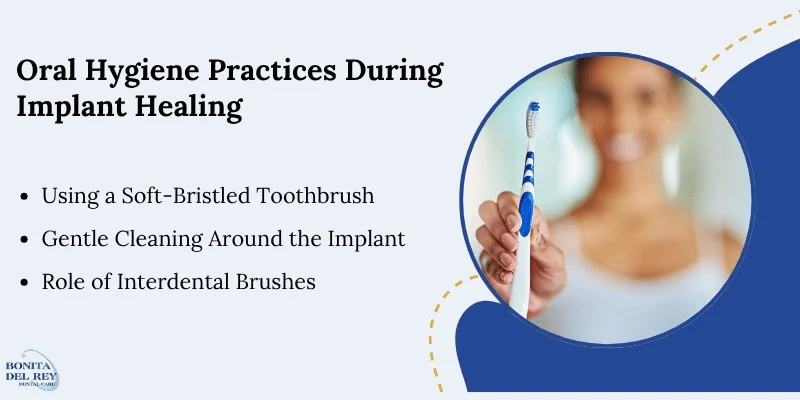
Using a Soft-Bristled Toothbrush
A soft-bristled toothbrush protects your healing implant from damage while keeping your mouth clean. Hard or medium bristles can irritate the surgical site and disrupt tissue that’s trying to heal.
You should continue brushing the rest of your teeth normally, but stay away from the implant area for the first few days. Brush twice daily to prevent bacteria from building up in other parts of your mouth.
This keeps your overall oral environment clean without risking damage to the new implant.
When your dentist clears you to brush near the implant, use light pressure and slow movements. Don’t scrub or apply force to the area.
The goal is to remove food particles and bacteria without disturbing the healing tissue around your dental implant.
Gentle Cleaning Around the Implant
Cleaning around dental implants during the first few days requires extra care and attention. You should avoid brushing directly over the surgical site initially, but don’t skip cleaning the surrounding areas.
Your dentist will likely prescribe an antimicrobial rinse to control bacteria without physical contact. Use this exactly as directed.
Don’t swish aggressively or use straws, as the suction can disrupt blood clots that protect the healing site.
Once healing progresses, you can carefully clean closer to the implant. Move slowly and pay attention to how the area feels. If you notice pain or bleeding, you’re being too aggressive.
Role of Interdental Brushes
Interdental brushes help clean tight spaces around your dental implants that regular toothbrushes can’t reach. These small brushes are designed to fit between teeth and around implant posts.
You won’t use these right after surgery, but they become important tools for long-term implant care. Your dentist will tell you when it’s safe to start using them.
Some patients also benefit from water flossers as an additional cleaning tool.
When you do start using interdental brushes, choose ones specifically designed for implants. Insert them gently and move them back and forth without forcing them into tight spaces.
Regular use prevents bacteria and food from collecting around the implant, which reduces your risk of developing peri-implant infections.
Lifestyle Choices That Reduce Infection Risk
Your daily habits play a major role in protecting your dental implant during healing and beyond. Smoking slows tissue repair and increases complications, while proper nutrition gives your body the fuel it needs to heal the surgical site.

Avoiding Smoking and Alcohol
Smoking is one of the biggest threats to your dental implant success. When you smoke, nicotine restricts blood flow to your gums and jaw, which starves the healing tissue of oxygen and nutrients it needs.
This delayed healing creates more opportunities for bacteria to enter the surgical site.
Studies show that smokers face up to three times higher risk of implant failure compared to non-smokers. The chemicals in tobacco also weaken your immune system’s ability to fight off infection.
You should avoid smoking for at least two weeks before surgery and several weeks after. If you can quit permanently, your chances of long-term implant success improve dramatically.
Alcohol also interferes with preventing infection after dental implants. It thins your blood and can interact with medications like antibiotics and pain relievers.
Skip alcoholic drinks for at least 72 hours after surgery, or longer if you’re still taking prescription medications.
Healthy Diet and Hydration
Your body needs specific nutrients to repair tissue and fight infection around your dental implant. Protein helps build new tissue, while vitamins C and D support immune function and bone integration.
Focus on soft, nutrient-rich foods during the first few days. Good options include yogurt, eggs, smoothies with protein powder, and cooked vegetables. Avoid hard, crunchy, or sticky foods that could disturb the surgical site.
Staying hydrated helps flush bacteria from your mouth and supports overall healing. Drink plenty of water throughout the day, but avoid using straws since the suction can dislodge blood clots.
If you have diabetes, keeping your blood sugar controlled is critical for preventing infection and avoiding implant failure. High blood sugar slows healing and makes you more vulnerable to bacteria.
Long-Term Maintenance and Regular Dental Visits
Protecting your dental implants years after placement requires daily cleaning habits and routine professional monitoring to catch early signs of inflammation before they turn into serious complications like peri-implantitis.
Consistent Home Care Habits

You need to clean your dental implants every single day just like your natural teeth. Brush twice daily with a soft-bristled toothbrush to avoid scratching the implant surface while still removing plaque effectively.
Pay special attention to the areas where your implant meets the gum line. Use floss or interdental brushes designed specifically for implants to clean between teeth and around the implant post. A water flosser can help reach areas that regular floss might miss.
Antimicrobial mouthwash can reduce bacteria in your mouth and lower your risk of infection. Rinse as directed by your dentist, typically once or twice daily. Avoid alcohol-based rinses that might irritate your gums.
If you notice any bleeding, swelling, or soreness around your implant, contact your dentist right away.
These early warning signs could indicate developing peri-implantitis, which damages the bone supporting your implant and can lead to dental implant failure if left untreated.
Importance of Professional Checkups
Schedule dental checkups and professional cleanings every six months at minimum. Your dentist can detect early inflammation before it progresses to peri-implantitis during these visits.
Professional cleanings remove hardened plaque and tartar that your toothbrush can’t eliminate at home. Your dental team will use specialized tools designed for implants that won’t damage the surface.
During checkups, your dentist will examine the tissue around your implants, check for bone loss, and measure pocket depths. X-rays may be taken to monitor bone levels and ensure your implant remains stable.
These preventive visits catch problems early when they’re easier and less expensive to treat.
Frequently Asked Questions
Knowing what to watch for and how to care for your implant can make the difference between success and complications. These answers address common concerns about infection risks, daily care routines, and long-term implant health.
What are the early warning signs that a dental implant might be getting infected?
Some discomfort after implant surgery is normal, but certain signs mean you need to call your dentist right away. Increasing pain after the third day is a red flag, especially when it gets worse instead of better.
Watch for swelling that spreads beyond the implant site. Other warning signs include pus around the implant, a foul taste or smell in your mouth, fever, or bleeding that won’t stop.
Mild tenderness, slight bruising, and minor oozing during the first few days are part of normal healing. These symptoms should get better each day.
If they get worse or new symptoms appear, contact your dentist instead of waiting to see what happens.
Which daily oral hygiene habits are most important to protect a new dental implant from infection?
Brushing twice daily with a soft-bristled toothbrush helps prevent bacteria from building up around your implant. You should continue cleaning the rest of your mouth normally, even right after surgery.
For the first few days, avoid brushing directly over the surgical site. Use any prescribed antimicrobial rinse as your dentist directs to control bacteria without disturbing healing tissue.
Once your dentist gives you permission, you can carefully brush around the implant area without applying pressure. Clean around the implant with floss or interdental brushes designed specifically for implants.
Some dentists recommend using a water flosser as an additional cleaning tool.
Neglecting hygiene actually creates a bigger infection risk than gentle, controlled cleaning does.
Do I need antibiotics after dental implant surgery, and how do I know if they’re necessary?
Your dentist decides whether you need antibiotics based on your specific health situation and risk factors. Antibiotics are used strategically rather than automatically given to every patient.
Factors that influence this decision include your overall health, whether you have conditions like diabetes, your immune system function, and the complexity of your surgery.
Some patients need preventive antibiotics before surgery, while others only receive them if infection signs appear.
If your dentist prescribes antibiotics, take them exactly as directed. Finishing the full course is important even if you feel fine.
Can an implant infection show up on an X-ray, and when should imaging be done?
X-rays can show bone loss around an implant, which often indicates infection or inflammation.
Your dentist typically takes X-rays during your initial consultation, immediately after implant placement, and at regular follow-up appointments.
Early-stage infections may not always appear on X-rays right away. Your dentist relies on a combination of visual examination, your symptoms, and imaging to diagnose problems.
Regular dental checkups with professional cleanings are critical because early inflammation can be detected and treated before it progresses to more serious infection.
Most dentists schedule imaging at six months, one year, and then annually unless problems arise.
What should I eat or avoid after implant surgery to lower the risk of infection?
Stick to soft foods for the first few days to avoid putting pressure on the surgical site. Good options include yogurt, smoothies, mashed potatoes, scrambled eggs, and soup at a comfortable temperature.
Avoid hard, crunchy, or sticky foods that could disturb the healing area. Don’t use straws because the suction can disrupt blood clots that protect the implant site.
Skip extremely hot foods and drinks that might cause discomfort or interfere with healing.
Stay away from alcohol while taking antibiotics or pain medications. Drink plenty of water to stay hydrated and help your body heal. You can gradually return to your normal diet as your dentist advises, usually within a week or two.
Can a dental implant get infected years later, and what can I do to prevent that?
Yes, implants can develop infections years after placement, a condition called peri-implantitis. Long-term success depends on consistent daily hygiene and regular professional maintenance.
Brush twice daily, clean around your implant with floss or specialized brushes, and attend all scheduled dental checkups. Your dentist can spot early signs of inflammation before they become serious problems.
Avoid smoking, which significantly increases your risk of late implant failure and infection. Control systemic conditions like diabetes that can affect healing and immune response.
Respond quickly to any bleeding or soreness around the implant, even if it seems minor. These early symptoms are easier to treat than advanced infections that threaten the implant itself.