When you lose multiple teeth or need all your teeth replaced, you face an important choice between traditional full dentures and implant-supported dentures.
Both options can restore your smile and help you eat and speak more comfortably, but they work very differently in your daily life.
Implant-supported dentures attach to metal posts surgically placed in your jawbone for extra stability, while full dentures rest directly on your gums and rely on suction or adhesive to stay in place.
This key difference affects everything from how well you can chew your favorite foods to how often you need adjustments over the years.
Understanding the real differences between dentures and implants helps you make a choice that fits your health needs, budget, and lifestyle.
The right option depends on factors like your jawbone health, how much stability you want, and whether you prefer a removable or fixed solution.
Key Takeaways
- Implant-supported dentures stay much more stable than traditional full dentures because they attach to posts in your jawbone
- Full dentures cost less upfront but may require more frequent adjustments and replacements over time
- Your jawbone health plays a major role in determining which option works best for your long-term oral health
Compare implant-supported dentures vs full dentures and find the right option for your smile
Understanding Denture Options
When you lose teeth, you have several replacement choices available.
Full dentures replace all teeth in one or both jaws, while implant-supported dentures attach to metal posts in your jawbone, and partial dentures fill in gaps when you still have some natural teeth remaining.
What Are Full Dentures?

Full dentures are removable appliances that replace all your teeth on the top jaw, bottom jaw, or both. They rest directly on your gums and are custom-made to fit your mouth shape.
These dentures work well if you’re missing most or all of your teeth and want a non-surgical option. The dentist takes impressions of your mouth to create dentures that match your facial structure.
You can remove them for cleaning and while you sleep.
Full dentures restore your ability to eat and speak, though they may feel different from natural teeth at first. They stay in place through suction and by fitting snugly against your gums.
Some people use denture adhesive for extra security.
Over time, your jawbone can change shape, which may affect how your dentures fit. You’ll need adjustments or relining every few years to maintain comfort.
Traditional dentures are generally more cost effective upfront, ranging from a few hundred to a few thousand dollars.
What Are Implant-Supported Dentures?
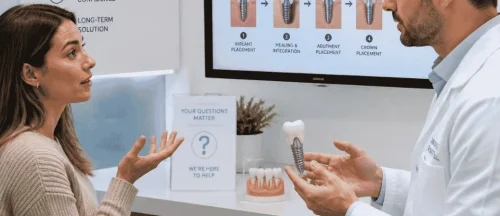
Implant-supported dentures attach to small titanium posts that your dentist surgically places into your jawbone. Instead of resting only on your gums, these dentures snap onto or are fixed to the implants.
This option gives you much better stability than regular dentures. You won’t worry about your teeth slipping when you eat or talk. The implants act like tooth roots and help preserve your jawbone from shrinking over time.
You’ll need minor surgery to place the implants, which then need time to fuse with your bone before the denture attaches.
The process takes several months but offers improved functionality, comfort, and confidence compared to traditional removable dentures.
Key benefits include:
- No slipping or moving
- Better chewing power
- More natural feel
- Longer lifespan (15+ years)
- Prevents bone loss
The initial cost is higher than full dentures, but many patients find the investment worthwhile for the added comfort and durability.
How Do Partial Dentures Fit In?
A partial denture replaces some missing teeth when you still have healthy natural teeth remaining. It fills in the gaps and prevents your remaining teeth from shifting out of position.
Partial dentures typically have replacement teeth attached to a gum-colored base. Metal clasps or precision attachments connect to your natural teeth to hold the partial denture in place.
You can remove them for cleaning just like full dentures.
These denture options work best when you’ve lost several teeth but don’t need a complete set of replacements. They help you chew food properly and improve your smile’s appearance.
Your dentist will evaluate which teeth you’re missing and design a partial that fits comfortably around your existing teeth.
Like full dentures, partials can also be supported by implants for better stability if you prefer a more secure fit.
Comparing Implant-Supported Dentures and Full Dentures
The way your teeth attach and function affects everything from what you can eat to how confident you feel when you smile.
Implant-supported dentures anchor to your jawbone through metal posts, while traditional dentures rest on your gums and rely on suction or adhesive to stay in place.
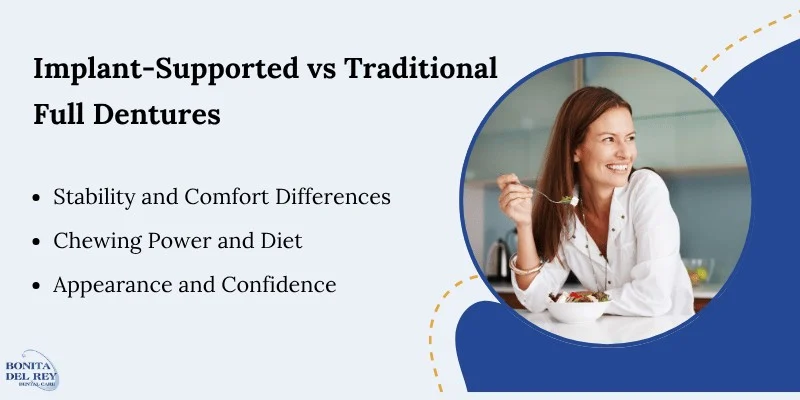
Stability and Comfort Differences
When you choose implant-supported dentures, you get a secure fit that doesn’t shift when you talk or eat. The implants act like tooth roots and hold your dentures firmly in place.
Traditional dentures sit on top of your gums and can move around, especially lower dentures which tend to slip more than upper ones.
You won’t need messy adhesives with implant-supported options. Removable dentures often require daily application of pastes or creams to help them stay put.
Over time, your gums and jawbone change shape, which means traditional dentures need adjustments or relining every few years to maintain a comfortable fit.
The difference in stability between implant-supported and traditional dentures becomes most noticeable during daily activities. Implant-supported versions eliminate the worry about your teeth slipping at the wrong moment.
Chewing Power and Diet
Your chewing power increases significantly with implant-supported dentures. Research shows these options can nearly double your bite force compared to conventional dentures.
This means you can enjoy foods like fresh apples, corn on the cob, and steak without hesitation.
Traditional dentures typically restore less chewing ability. You might need to avoid very hard, sticky, or chewy foods that could dislodge your dentures or cause discomfort.
Many people with removable dentures cut their food into smaller pieces or avoid certain meals at restaurants.
The improved chewing efficiency with implant options allows you to maintain better nutrition. When you can eat a wider variety of foods comfortably, you’re more likely to get the vitamins and nutrients your body needs.
Appearance and Confidence
Both types of dentures can restore your smile and improve your appearance. Modern dentures look natural and come in various shades and shapes to match your facial features.
The key difference lies in how they function when you use them.
Implant-supported dentures stay in position when you laugh, speak, or eat in public. This stability helps you feel more confident in social situations.
You won’t worry about clicking sounds or your teeth shifting during conversations.
Traditional dentures can sometimes affect your speech until you adapt to wearing them. The upper denture covers your palate, which may feel bulky at first.
Implant-supported options often feel more like your natural teeth and require less adjustment time.
Contact Bonita Del Rey Dental Care in Chula Vista, CA for guidance on dentures
Oral Health and Jawbone Considerations
Your jawbone health plays a major role in determining which tooth replacement option will work best for you. The density of your jawbone affects both the success of dental implants and your long-term oral health.
Jawbone Health and Density
Your jawbone needs stimulation from tooth roots to stay healthy and strong. When you lose teeth, the bone underneath starts to break down because it no longer receives that stimulation.
This process is called bone resorption.
Dental implants help preserve your jawbone because they act like natural tooth roots. The titanium posts fuse with your bone and provide the stimulation needed to keep it healthy.
Full dentures sit on top of your gums and don’t stop bone loss from happening.
Over time, bone loss can change the shape of your jaw and face. This makes full dentures fit poorly and require frequent adjustments or replacements.
Impact on Oral Health
Your oral health stays better protected with implant-supported dentures. The implants prevent the bone deterioration that typically happens with missing teeth.
Full dentures can sometimes irritate your gums, especially if they don’t fit properly. You might develop sore spots or infections if the dentures rub against your gum tissue.
Implant-supported dentures don’t move around, so they cause less irritation.
Implant-supported dentures provide better chewing power than traditional dentures. This means you can eat a wider variety of foods and maintain better nutrition.
Your remaining oral tissues also stay healthier because the implants distribute chewing forces more naturally.
Bone Graft and Implant Placement
Some patients need a bone graft before they can receive dental implants. If your jawbone density is too low, your dentist can add bone material to strengthen the area. This creates a solid foundation for implant placement.
The bone graft procedure adds time to your treatment. You’ll need to wait several months for the graft to heal before your dentist can place the implants. Not everyone needs a bone graft though.
Your dentist will use X-rays or CT scans to check your bone density before recommending treatment. A titanium post gets placed into your jawbone for each implant during a minor surgical procedure.
The healing process typically takes three to six months.
Cost, Maintenance, and Longevity
The financial commitment and upkeep requirements differ significantly between these two denture options.
Full dentures require a lower initial investment but need regular replacements, while implant-supported options cost more upfront but can last decades with proper care.
Upfront Costs and Insurance
Full dentures are the more budget-friendly choice at the start. A quality set of upper and lower dentures typically costs between $800 and $1,500. This makes them accessible if you’re working with a tight budget or need an immediate solution.
Implant-retained dentures cost considerably more, ranging from $6,000 to $30,000 depending on how many implants you need.
The higher price covers the surgical placement of titanium posts into your jawbone, which serve as anchors for your dentures.
Most dental insurance plans cover at least part of traditional dentures. Coverage for implant-supported versions is less common, though some plans may cover the denture portion even if they exclude the implant surgery itself.
Long-Term Value and Durability
Traditional dentures need replacement every five years on average. As your jawbone changes shape over time, your dentures will become loose and uncomfortable. You’ll likely need to use denture adhesive to keep them in place between replacements.
Implant-supported dentures can last 10 years or longer with good care. The implants themselves may last a lifetime since they fuse with your jawbone. You might only need to replace the denture portion after many years of use.
When you compare dentures and implants for long-term value, implant-supported options often cost less over decades despite their higher initial price.
Daily Care and Maintenance
You must remove traditional dentures every night for cleaning and soaking. This prevents bacteria buildup and keeps the material from drying out. You’ll also need to clean your gums and any remaining natural teeth.
Implant-supported dentures stay in your mouth permanently, so you care for them like natural teeth. Brush twice daily and floss around the implant sites.
You won’t need denture adhesive since the implants hold everything securely in place.
Both denture options require regular dental visits for checkups and adjustments.
Choosing the Best Tooth Replacement for You
Your choice between full dentures and implant-supported options depends on your daily habits, overall health, and personal preferences. Working with your dentist helps you find the solution that fits your mouth and your life.
Evaluating Lifestyle and Comfort
Think about how you want to eat, speak, and go about your day. If you enjoy tough or sticky foods, implant-supported dentures offer better chewing power and won’t slip during meals.
Full dentures work well if you prefer a removable option you can take out for cleaning. They require adhesives to stay in place, which some people find inconvenient.
Implant-supported versions stay fixed in your mouth, so you don’t need to worry about them moving when you talk or laugh.
Consider your comfort level with dental procedures too. Full dentures are non-invasive and don’t require surgery. Dental implants need minor surgery and healing time, but many patients find the long-term stability worth it.
Your social life matters as well. If you attend events where you eat in public often, the security of implant-supported dentures may give you more confidence.
Health and Suitability Factors
Your jawbone density plays a big role in which option works best. Dental implants need sufficient bone to anchor properly. If you’ve had missing teeth for years, bone loss may have occurred.
Your dentist can check your bone health with X-rays or CT scans. Some patients can get bone grafts if needed to support implants later.
Medical conditions affect your choices too. Conditions like uncontrolled diabetes or certain medications may slow healing after implant surgery. Your age and overall health help determine if you’re a good candidate for the surgical process.
Full dentures don’t preserve jawbone, which can change your facial appearance over time. Implant-supported options help maintain bone structure because the implants stimulate the jaw like natural tooth roots.
Professional Consultation and Next Steps
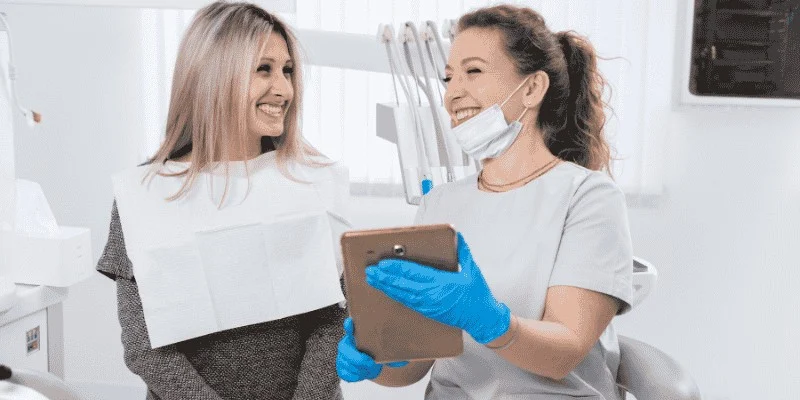
Schedule an exam with your dentist to discuss both options in detail. They’ll evaluate your mouth, take images, and explain what to replace missing teeth based on your specific situation.
Ask about costs, treatment timelines, and what maintenance each option requires. Making the decision to choose dentures or implants should happen after you understand all the facts.
Your dentist may refer you to a specialist for implant placement if that’s the route you choose. Get a written treatment plan that outlines each step and expected outcomes.
Don’t rush your decision. Take time to weigh the pros and cons of each tooth replacement method. Many dental offices offer payment plans to help with costs if that’s a concern.
Frequently Asked Questions
Many people have similar questions when deciding between these two tooth replacement options. Cost differences, candidacy requirements, and long-term value are common concerns that affect the final decision.
What’s the difference between implant-supported dentures and traditional full dentures?
Traditional full dentures rest on top of your gums and rely on suction or adhesive to stay in place. They can shift or slip when you eat or talk.
Implant-supported dentures attach directly to your jawbone using dental implants. These are small threaded posts that replace your missing tooth roots. This connection keeps your dentures stable and secure.
You can get removable implant-supported dentures that snap onto the implants. You can take these out for cleaning each day.
Fixed implant-supported dentures stay in your mouth permanently. Your dentist can remove them when needed, but you can’t take them out at home.
How much do implant-supported (snap-in) dentures typically cost compared to full dentures?
Traditional full dentures are usually the more affordable option upfront. They typically cost less because they don’t require surgery or implant posts.
Implant-supported dentures cost more because of the surgical components involved. You’re paying for the dental implants themselves, the surgical procedure, and the custom denture that attaches to them.
Full dental insurance policies often cover or partially cover both dentures and implant-retained dentures. You should check with your insurance provider to see what your plan includes.
Many dental offices offer patient financing options. These payment plans can help make implant-supported dentures more manageable for your budget.
Are implant-supported dentures worth it for older adults?
Age alone doesn’t determine whether implant-supported dentures are right for you. What matters more is your overall health and jawbone condition.
You need enough bone in your jaw to support the dental implants. Your dentist can add bone through grafting procedures if needed.
Many older adults find that implant-supported dentures improve their quality of life significantly. They make eating easier and feel more like natural teeth.
Traditional dentures may be a better choice if you have medical conditions that could affect healing after surgery. Your dentist will review your health history to help you decide.
What are the main pros and cons of choosing implants instead of full dentures?
Implant-supported dentures won’t shift, slip, or wobble when you chew or speak. Many traditional denture wearers eventually upgrade to implant-supported dentures because they’re more comfortable and secure.
The implants help preserve your jawbone. Traditional dentures can’t do this, and you may lose bone over time.
The main downside is the higher upfront cost. You’ll also need surgery to place the implants, which requires healing time.
Another consideration is that you need adequate bone density to qualify. Some people need additional procedures like bone grafting before getting implants.
How many implants are usually needed for snap-in dentures, and what’s the process like?
The number of implants you need depends on which type you choose. The All-on-4 method replaces an entire arch of teeth using just four dental implants.
Other approaches may use more implants for added stability. Your dentist will recommend the best number based on your jawbone health and the type of denture you want.
The process starts with a consultation and evaluation. Your dentist will take X-rays or CT scans to check your bone density.
During surgery, your dentist places the implants into your jawbone. You’ll need time for the implants to fuse with your bone before attaching the denture.
What should I know before getting dental implants for dentures (including recovery and maintenance)?
Recovery time varies by person, but most people heal within a few months. You may have some swelling and discomfort right after surgery.
Your dentist will give you specific care instructions for the healing period. Following these guidelines helps ensure successful implant integration.
With proper care, implant-supported dentures can last 10-20 years or longer. Regular check-ups and good oral hygiene are essential for their longevity.
If you have fixed implant-supported dentures, you’ll brush them like natural teeth. You can clean underneath them using floss threaders and special brushes.
Removable implant-supported dentures come out for easy daily cleaning. You’ll still need to keep your gums and the implant posts clean.