Nobody enjoys thinking about losing a tooth, but knowing when to get tooth extraction can prevent serious pain, infection, and long-term dental complications.
You may need a tooth extraction if you experience severe decay that can’t be fixed, advanced gum disease causing loose teeth, impacted wisdom teeth, persistent infection, or a tooth broken below the gumline.
These situations mean keeping the tooth could put your overall health at risk.
The good news is that tooth extraction is often the safest and quickest way to stop pain and protect your other teeth when conservative treatments won’t work. Your dentist will always try to save your natural tooth first with fillings, crowns, or root canals.
But sometimes removal is the right choice to prevent infection from spreading or to make room for proper alignment.
Understanding the warning signs helps you act quickly and avoid complications. This guide walks you through the most common reasons for extraction, what the process involves, and how to recover comfortably so you can get back to your normal routine.
Key Takeaways
- Severe tooth decay, advanced gum disease, impacted wisdom teeth, and fractures below the gumline are the most common reasons dentists recommend extraction
- Dentists use X-rays and clinical exams to determine if your tooth can be saved or if removal is the safest option
- Recovery typically takes one to three weeks, depending on the complexity, and replacement options like implants or bridges can restore your smile
Recognizing the Signs That Indicate Tooth Extraction Is Needed
Your body sends clear warning signals when a tooth can no longer be saved. Pain that won’t stop, deep-rooted decay, recurring infections, and wisdom teeth that cannot erupt properly all indicate the need for removal.
Persistent or Severe Tooth Pain
Tooth pain that lasts for days or keeps coming back often means something serious is wrong inside your tooth. Sharp, throbbing pain that wakes you at night or makes it hard to eat signals that the nerve may be dying or infected.
When over-the-counter pain medicine stops working, your tooth may be too damaged to fix. Persistent tooth pain that spreads to your jaw, ear, or head can mean the infection is spreading beyond the tooth itself.
You might feel constant pressure or a dull ache that never fully goes away. This type of severe tooth pain usually means the pulp inside your tooth is inflamed or dead. If a root canal can’t save the tooth, extraction becomes the best way to stop your pain and protect nearby teeth.
Advanced Tooth Decay and Cavities

Deep decay eats through your enamel and dentin until it reaches the nerve chamber. When cavities grow this large, fillings and crowns can’t hold anymore because there isn’t enough healthy tooth structure left.
Advanced tooth decay that extends below your gumline makes it impossible for your dentist to clean out all the bacteria. You might notice brown or black spots, holes you can see or feel with your tongue, or pieces of tooth breaking off when you chew.
Advanced decay creates pockets where bacteria multiply and produce toxins. These toxins can leak into your jawbone and cause bone loss around the root.
When more than two-thirds of your tooth structure is gone, tooth extraction prevents infection from spreading to neighboring teeth and gives you a fresh start for an implant or bridge.
Chronic or Recurrent Tooth Infections
Tooth infections create pockets of pus called abscesses that appear as painful bumps on your gums. You might taste something bitter or salty, see pus draining, or notice swelling in your face or neck.
When antibiotics only provide temporary relief and the infection keeps returning, your tooth has become a bacterial reservoir. Recurrent infections happen when bacteria hide in cracked roots, failed root canals, or areas dentists can’t reach with instruments.
Signs of chronic infection include bad breath that won’t go away, swollen lymph nodes under your jaw, and fever. If your immune system is weakened by diabetes or other conditions, these infections can spread quickly into your bloodstream.
Removing the infected tooth eliminates the source and allows your gums and bone to heal completely.
Impacted or Problematic Wisdom Teeth
Impacted wisdom teeth stay trapped under your gums or only partly break through because there isn’t enough room in your jaw. This creates a flap of gum tissue that traps food and bacteria, leading to repeated infections called pericoronitis.
You might feel pain at the back of your mouth, swelling in your cheek, difficulty opening your jaw fully, or a bad taste near your last molar. Problematic wisdom teeth can push against your second molars and cause crowding, decay, or damage to healthy teeth.
Some wisdom teeth grow sideways or at odd angles that make cleaning impossible. Cysts can form around impacted teeth and damage your jawbone over time. Your dentist uses X-rays to see the position of the roots and plan safe tooth extractions that prevent future problems.
Experiencing severe tooth pain or decay? Learn more about when to get tooth extraction and how our team ensures a comfortable, professional procedure.
Gum Disease and Oral Health Conditions Leading to Extraction
Gum disease can progress from mild inflammation to severe tissue damage that threatens your teeth’s stability. Advanced stages often require extraction when the supporting bone and tissues deteriorate beyond repair.
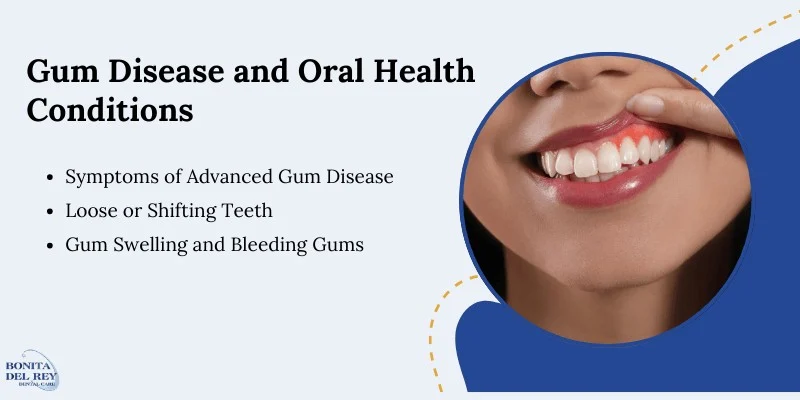
Symptoms of Advanced Gum Disease
Advanced gum disease shows clear warning signs that indicate your oral health needs immediate attention. You might notice persistent bad breath that doesn’t improve with brushing or mouthwash. Your gums may pull away from your teeth, creating pockets where bacteria collect and cause infection.
Periodontal disease damages the bone and tissue that hold your teeth in place. When you look in the mirror, your teeth might appear longer because your gums have receded. You may also experience pain when chewing or notice pus between your teeth and gums.
The disease starts with plaque buildup that hardens into tartar if not removed. This creates inflammation that spreads deeper into your gum tissues. Without treatment, the infection destroys the structures supporting your teeth.
Loose or Shifting Teeth
Your teeth should feel secure and stable in your mouth. If they start to wiggle or move when you touch them, this signals advanced gum disease affecting your tooth stability.
The bone loss from severe gum disease causes teeth to become loose or shift out of their normal position. You might notice gaps forming where there weren’t any before. Your bite may feel different when you close your mouth.
When teeth become very loose, extraction often becomes necessary to stop the infection from spreading. This prevents further damage to surrounding teeth and bone. Your dentist will evaluate how much bone loss has occurred and whether the tooth can be saved.
Gum Swelling and Bleeding Gums
Healthy gums are firm and pink. Bleeding gums when you brush or floss indicate inflammation from bacterial infection. This is one of the earliest signs of gum disease that you shouldn’t ignore.
Swollen gums appear red and puffy instead of their normal pink color. They may feel tender or painful to touch. You might notice blood on your toothbrush or when you bite into hard foods like apples.
While early-stage gingivitis can be reversed with proper care, bleeding and swelling that continues despite good oral hygiene suggests the disease has progressed. Chronic inflammation damages the tissues holding your teeth. If left untreated, this can eventually lead to tooth extraction.
Structural and Alignment Issues Requiring Tooth Removal
Sometimes teeth need to be removed not because of decay or infection, but because of how they’re positioned or damaged. Structural problems like overcrowding, serious breaks, or teeth that can’t be fixed can affect your bite and the health of nearby teeth.
Crowded or Overcrowded Teeth
When your mouth doesn’t have enough space for all your teeth, overcrowding happens. This creates alignment problems that make it hard to brush and floss properly.
Crowded teeth can cause bite issues and increase your risk of cavities and gum disease. Your dentist might recommend removing one or more teeth to create room for the others to shift into better positions.
This is common before you get braces or aligners. Extracting overcrowded teeth allows your remaining teeth to align correctly and improves your bite function.
The removal creates space so orthodontic treatment can work effectively. Your teeth will be easier to clean once they’re properly spaced, which protects your long-term oral health.
Dental Trauma or Cracked Tooth
Accidents, falls, or sports injuries can break or crack your teeth in ways that make them impossible to save. Minor cracks can often be fixed with fillings or crowns.
A severely damaged tooth that breaks below the gumline usually needs to be removed. Teeth broken beyond repair can’t be restored and may cause infections if left in place.
A cracked tooth that extends into the root often can’t hold a crown or filling. The damage creates openings where bacteria can enter and cause problems.
Leaving a broken tooth in your mouth risks infection spreading to surrounding tissue and bone. Tooth removal prevents these complications and protects your other teeth from damage.
Teeth Beyond Restoration
Some teeth reach a point where no dental restoration can save them. Advanced decay that destroys most of the tooth structure makes it impossible to place a crown or perform a root canal.
Severe gum disease can cause bone loss around the tooth, leaving it without enough support to stay in place. When teeth become loose from advanced periodontal disease, extraction prevents further bone loss.
Impacted teeth that grow at wrong angles or stay trapped under the gums often need removal. These teeth can damage neighboring teeth and create pockets where infections develop.
Your dentist will always try to save your natural teeth first. But when a tooth is too damaged or diseased to function properly, removal is the best option for your overall oral health.
Unsure if your tooth can be saved? Visit Bonita Del Rey Dental Care in Chula Vista, CA, for a thorough assessment and expert guidance.
Assessment and Diagnosis: How Dentists Determine Extraction Necessity
Dentists use a combination of visual examination, imaging technology, and treatment history to decide if a tooth can be saved or needs removal. Medical history and physical assessment play key roles in creating the right treatment plan for your specific situation.
Clinical Evaluation and X-Rays

Your dentist will start with a thorough visual inspection of the affected tooth and surrounding gums. They’ll check for visible signs of decay, cracks, or damage that might not be immediately obvious to you.
Dental X-rays provide essential information about what’s happening beneath the gum line. These images show bone levels, root structure, and the extent of infection or decay. X-rays also reveal how close the tooth is to important structures like nerves and sinuses.
During the clinical assessment, your dentist will test tooth mobility and check for signs of gum disease. They’ll ask about pain levels, swelling, and how long you’ve been experiencing symptoms. Your oral hygiene habits and overall dental care history also factor into the decision.
The dentist will consider whether the tooth has enough healthy structure left to support a dental crown or other restoration. Sometimes what looks like a simple problem on the surface extends deep into the root or bone.
When Root Canal Therapy Isn’t Enough
Root canal therapy can save many damaged teeth, but it’s not always the right solution. If the infection has spread too far into the surrounding bone, extraction might be necessary instead.
Teeth that have already undergone root canal treatment can still fail. The tooth might fracture below the gum line or develop new infections that can’t be treated. Endodontically treated teeth have specific fracture patterns that sometimes make them impossible to repair.
Your dentist will evaluate whether there’s enough healthy tooth structure remaining after removing decay. A tooth that’s too broken down won’t hold a crown properly, even with a successful root canal.
Cost and time commitments also matter when deciding between extraction and repeated attempts to save a failing tooth.
Consulting an Oral Surgeon for Complicated Cases
Some extractions require specialized training beyond general dental care. Your dentist might refer you to an oral surgeon for impacted wisdom teeth, teeth with curved or multiple roots, or teeth close to nerves.
Certain medical conditions require management in secondary care settings, especially if you take blood thinners or have bleeding disorders. An oral surgeon has the expertise to handle these complex situations safely.
Teeth broken off at the gum line or extensive infections involving the jaw bone also need surgical expertise. The oral surgeon will review your X-rays and medical history before creating a treatment plan tailored to your needs.
Types of Tooth Extractions and What to Expect
Dentists perform two main types of tooth extractions based on the tooth’s condition and position. Simple extractions work for visible teeth that come out easily, while surgical extractions handle more complex cases like impacted or broken teeth.
Simple Extraction Procedure
A simple extraction is performed on teeth you can see in your mouth. Your dentist will give you a local anesthetic shot to numb the area around your tooth.
Once the area is numb, your dentist uses a tool called an elevator to loosen the tooth from its socket. They then use forceps to gently rock the tooth back and forth until it comes free from the jawbone.
The whole procedure usually takes just a few minutes. You’ll feel pressure during the extraction, but you shouldn’t feel any pain. After the tooth is removed, you’ll bite down on gauze for about 30 minutes to help stop the bleeding.
Surgical Extraction for Impacted or Broken Teeth
Surgical extractions are more complex and necessary when a tooth hasn’t fully come through the gums or has broken at the gum line. Your dentist or oral surgeon will make a small cut in your gum to access the tooth.
They may need to remove some bone around the tooth or break the tooth into smaller pieces to extract it safely. This approach is common for wisdom teeth or teeth damaged by severe decay.
You might receive local anesthesia or general anesthesia depending on the complexity. The dentist will clean the area thoroughly after removing the tooth and may place stitches to help your gum heal properly. The procedure takes longer than a simple extraction, usually 20 to 40 minutes.
Recovery, Aftercare, and Replacement Options
Most people recover from a simple extraction within a few days when they follow proper care instructions. Taking steps to protect the extraction site helps you heal faster and reduces your risk of complications like infection or dry socket.
Post-Extraction Care for Faster Healing
Your dentist will place gauze over the extraction site right after removing your tooth from its socket. Bite gently on the gauze for 30 to 45 minutes to promote blood clot formation.
Keep the gauze in place and avoid touching the area with your tongue or fingers. Don’t rinse your mouth, drink through a straw, or spit forcefully for at least 24 hours. These actions can dislodge the blood clot and delay healing.
You can manage pain with over-the-counter medication or prescriptions from your dentist. Apply an ice pack to your cheek for 10 minutes at a time during the first day to reduce swelling.
Stick to soft foods like yogurt, applesauce, and mashed potatoes for the first few days. Avoid hot liquids, crunchy foods, and anything that requires heavy chewing. After 24 hours, gently rinse your mouth with warm salt water several times a day.
Tooth Replacement Choices for a Healthy Smile
If your extracted tooth is visible when you smile or talk, you should consider replacement options. Dental implants are a widely used option because they look and function like natural teeth.
Your dentist may also recommend a dental bridge or partial denture depending on your needs and budget. Bridges attach to surrounding teeth to fill the gap, while partial dentures are removable appliances.
Common replacement options include:
- Dental implants – Permanent posts placed in your jawbone with a crown on top
- Fixed bridges – Artificial teeth anchored to neighboring teeth
- Partial dentures – Removable appliances that clip onto existing teeth
Talk to your dentist about which option works best for your situation. The location of the missing tooth and your oral health will help determine the right choice.
Ready to take the next step? Contact us to discuss your treatment options, including implants or bridges, and protect your smile for years to come.
Frequently Asked Questions
Several warning signs can help you identify when a tooth might need extraction, from visible damage and severe pain to specific dental conditions that leave no other treatment option.
What are the signs that I might need a tooth pulled?
You might need a tooth pulled if you notice severe tooth decay that has destroyed most of the tooth structure. Deep cracks or fractures that extend below the gum line are another warning sign.
Loose teeth that move when you touch them often indicate advanced gum disease. Severe tooth decay, gum disease, infection, and injury are all common reasons for extraction.
Swelling in your gums around a specific tooth can signal infection. If you see pus or discharge near a tooth, this points to a serious problem that might require removal.
Can you tell me about the typical symptoms that indicate a tooth extraction is necessary?
Constant, throbbing pain that doesn’t improve with over-the-counter pain medication is a major symptom. The pain might get worse when you bite down or apply pressure to the tooth.
Extreme sensitivity to hot or cold temperatures that lingers long after the trigger is removed indicates nerve damage. You might also notice bad breath or a foul taste in your mouth that won’t go away with brushing.
Facial swelling, especially when it spreads to your cheek or jaw, requires immediate attention. Fever combined with tooth pain suggests an infection that has spread beyond the tooth itself.
Is there a way to know if a tooth is beyond saving and needs to be extracted?
A tooth is likely beyond saving when decay has reached deep into the root. If the tooth has broken off at or below the gum line, restoration becomes very difficult.
When infection has destroyed the bone supporting your tooth, the tooth loses its foundation. Multiple failed root canal treatments might mean the tooth cannot be saved through further procedures.
Teeth that are severely damaged from trauma or grinding might lack enough structure to hold a crown or filling. Your dentist will take X-rays to see how much healthy tooth and bone remain.
What does my dentist look for to decide if a tooth should be removed?
Your dentist examines X-rays to check the extent of decay and bone loss around the tooth. They look at whether the tooth roots are intact or if infection has spread to surrounding areas.
The amount of healthy tooth structure remaining determines if a filling or crown can work. Your dentist also considers how the tooth affects neighboring teeth and your bite alignment.
They check for signs of abscess or infection in the gums and bone. If other treatments like periodontal treatment cannot save the tooth, extraction becomes necessary.
How can I tell if my tooth pain means I need the tooth taken out?
Not all tooth pain requires extraction, but certain types do. Sharp, constant pain that keeps you awake at night often indicates serious damage or infection.
Pain that spreads to your ear, jaw, or neck suggests the problem has grown worse. If the pain suddenly stops after being severe, this might mean the nerve has died, which is a serious issue.
Throbbing pain accompanied by swelling or fever points to infection. Recovery from a tooth extraction typically takes 3 to 7 days, which your dentist will consider against trying to save a badly damaged tooth.
Are there specific conditions where a tooth extraction is the most recommended option?
Impacted wisdom teeth that cannot properly emerge through the gums often need removal. These teeth can cause pain, infection, and damage to adjacent teeth if left in place.
Severe gum disease that has destroyed the bone holding your teeth requires extraction when the teeth become too loose. Teeth blocking other teeth from coming in properly, especially during orthodontic treatment, need to be removed.
Broken teeth from accidents where the fracture extends deep into the root cannot be repaired. Teeth with large infections that don’t respond to antibiotics or root canal therapy must be extracted to prevent the infection from spreading.