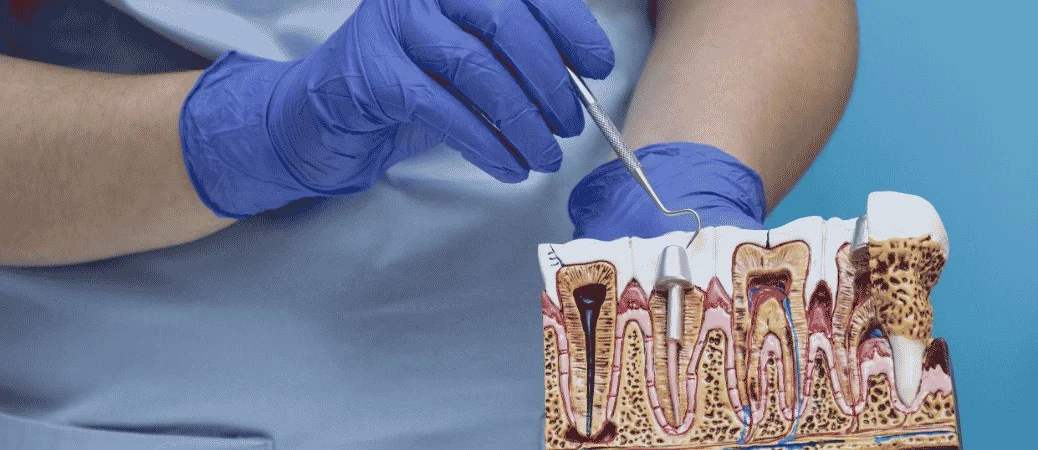
If you’ve had gum disease in the past, you might be wondering if you can still get dental implants. The good news is that you can often still qualify, but your treatment plan needs to look a little different.
A history of periodontal disease raises your risk of implant problems, but the right pre-implant care can help protect your investment and keep your implant healthy for years.
Gum disease weakens the bone and tissue that support your teeth, and that same damage can affect how well an implant heals and stays in place.
In fact, research shows that a history of periodontitis increases implant failure risk by a significant margin compared to patients with no gum disease history.
That doesn’t mean implants are off the table for you, it just means your dentist needs a clear picture of your gum health before moving forward.
This article walks you through why your risk looks different, what steps you can take before surgery to improve your odds, and how to protect your implant once it’s placed.
You’ll also learn how to spot early warning signs of trouble, so small issues don’t turn into bigger ones. By the end, you’ll have a clear, friendly roadmap for getting implants safely, even with a history of gum disease.
Key Takeaways
- A past history of gum disease can change how your dentist plans and monitors your implant treatment.
- Treating any active gum problems before surgery and healing properly afterward can lower your chances of implant complications.
- Sticking to daily care and regular dental visits after your implant helps catch small issues early before they become bigger problems.
Table of Content
- Why a History of Periodontitis Raises Implant Risk
- The Pre-Implant Periodontal Protocol
- Planning Surgery and Protecting Early Healing
- Daily Care and Professional Maintenance After Implants
- Recognizing and Treating Peri-Implant Problems Early
- Frequently Asked Questions
Why a History of Periodontitis Raises Implant Risk
If you have had gum disease before, your mouth carries some patterns that can affect how your implant heals and lasts. Past infection, bone changes, and certain health conditions all play a part in this.
From Periodontal Disease to Peri-Implant Disease
Periodontitis and peri-implant diseases share a lot in common. Both start with bacteria building up around your teeth or implants, which then triggers your body’s defense response.
If you had periodontitis before, the same types of harmful bacteria may still be present in your mouth.
This means you have a higher chance of developing peri-implant mucositis or peri-implantitis around your new implant.
Peri-implant mucositis affects only the soft tissue around your implant. Peri-implantitis is more serious.
It causes bone loss around the implant, which can eventually lead to implant failure if not treated early.
How Inflammation and Bone Loss Affect Osseointegration
Osseointegration is the process where your jawbone fuses with the implant surface. This creates a strong, stable base for your new tooth.
If you have ongoing inflammation from past gum disease, this process can be harder to achieve.
Your immune system may already be in a heightened state, and this can affect how well bone cells attach to the implant surface.
Bone loss is a key concern here too. Studies show that people with a history of periodontitis face greater marginal bone loss around implants compared to those without gum disease history.
This happens because increased osteoclast activity (cells that break down bone) can be more active in people with a periodontal history.
This makes it harder for your jawbone to properly support the implant long-term.
Risk Factors That Change Candidacy and Prognosis
Several factors beyond your periodontitis history can affect your implant success. Here are the main ones to know about:
- Smoking: A dental implant risk factor study shows that smoking can reduce blood flow to your gums and slow healing, raising infection risk.
- Diabetes: Especially uncontrolled diabetes, which impairs your immune system’s ability to fight infection
- Osteoporosis: Can affect bone density and healing capacity in your jaw
- Aggressive periodontitis: A more severe form of gum disease that may signal a stronger inflammatory response in your body
If you have one or more of these factors along with a periodontitis history, your dentist may need to adjust your treatment plan.
This could mean extra monitoring, different implant materials, or a longer healing period before your final restoration is placed.
The good news is that implant survival rates remain high overall, even for patients with periodontal history, when proper precautions are taken.
The Pre-Implant Periodontal Protocol
If you have had gum disease before, your dentist will not just place an implant and hope for the best.
Instead, you will go through a step by step plan that checks your gum health, treats any leftover infection, rebuilds lost bone if needed, and helps you manage habits that could put your implant at risk.
Comprehensive Periodontal and Implant Assessment
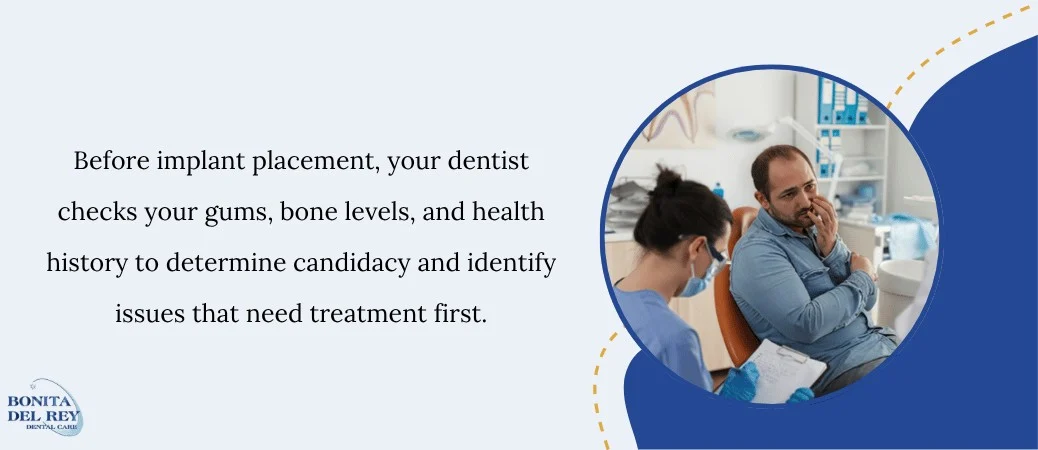
Before you get an implant, your dentist will check your mouth closely. This includes looking at your gum tissue, checking for pockets around your teeth, and taking x-rays to see your bone levels.
They will also ask about your health history. Things like diabetes, smoking, and past periodontal disease can all affect how well your body heals.
This step helps your dental team figure out if you are a good candidate right now, or if you need treatment first. A full checkup here can save you problems later.
It is much easier to fix issues before implant placement than after.
Treating Active Infection Before Implant Placement
If you still have signs of gum disease, your dentist needs to treat it before moving forward. This usually starts with a deep cleaning, also called scaling and root planing.
This removes plaque and tartar from under your gum line.
In some cases, your dentist may also use mechanical debridement or antibiotics to help clear up infection. This lowers the amount of harmful bacteria in your mouth.
You may need a few weeks or even months of treatment. Many guidelines suggest waiting until your gums are stable, sometimes for at least six months, before placing an implant.
This gives your gum tissue time to heal and lowers your implant failure risk of problems later.
Rebuilding Bone and Soft-Tissue Support
Gum disease often causes bone loss around your teeth. If you do not have enough bone to support an implant, your dentist may suggest bone grafting.
This procedure adds bone material to weak areas so your jaw can hold the implant securely. In some cases, your dentist may also use guided tissue regeneration.
This method helps grow back both bone and soft tissue in the area.
If your gum tissue is thin or uneven, extra soft tissue grafting might also help. These steps take time, but they give your implant a stronger, healthier base to rest on.
Stabilizing Health and Lifestyle Risks
Your daily habits and overall health play a big role in implant success. Smoking is one of the biggest risks, since it slows healing and raises your chance of peri-implant disease.
If you smoke, your dentist will likely recommend smoking cessation before treatment.
Uncontrolled diabetes can also slow healing and increase infection risk. Getting your blood sugar under control helps your body respond better to treatment.
Other conditions, like osteoporosis, may also need to be managed with your doctor’s help.
On top of medical care, good oral hygiene is key. Brushing, flossing, and regular dental visits help you keep healthy gums and support your implant for the long run.
Planning Surgery and Protecting Early Healing
Getting the timing right and watching your mouth closely in the first few weeks can make a big difference in how well your implant heals.
A few smart habits during this window can lower your chance of problems down the road.
Choosing the Right Timing for Surgery
Your dentist won’t just look at a calendar date to decide when you’re ready for implant placement. They’ll check your gum tissue, review recent X-rays, and confirm your jawbone has healed enough to support an implant.
If you needed bone grafting before surgery, this step matters even more. Healing time after grafting can range from a few months to almost a year, depending on how much bone needed to rebuild.
Rushing this step raises your risk of implant failure. Your dentist will only move forward once your gums are stable and your bone scans show enough strength to hold the implant securely.
Achieving Stable Implant Integration
Once your implant is placed, it needs to fuse with your jawbone through a process called osseointegration. This is what gives dental implants their strength and stability.
The implant surface plays a role here too. Many implants have a slightly rough texture designed to help bone cells attach and grow around it faster.
You can support this process by:
- Following a soft food diet as instructed
- Avoiding smoking, which slows healing
- Keeping the surgical area clean without disturbing it
- Attending every follow-up appointment
Good integration usually takes a few months. Skipping steps or ignoring instructions during this time can lower your implant success rates and increase the chance the implant won’t hold.
Watching for Early Signs of Infection
Your gum tissue and soft tissue around the implant need extra attention right after surgery. Some swelling is normal, but you should watch for signs that things aren’t healing the way they should.
Contact your dentist if you notice:
| Symptom | Possible Concern |
| Ongoing redness or swelling | Inflammation or early infection |
| Pus or bad taste near the site | Bacterial infection |
| Increased pain after a few days | Infection risk or poor healing |
| Implant feels loose | Failed integration |
Your dentist may prescribe antibiotics if they see early signs of infection. Catching problems early gives you the best shot at saving the implant and avoiding more serious issues, like peri-implantitis later on.
Daily Care and Professional Maintenance After Implants
Once your implant heals, keeping it healthy comes down to two things: what you do at home every day and what your dentist does during regular visits.
Good habits help protect your gums, keep plaque from turning into tartar, and lower your risk of peri-implant mucositis, which can lead to bigger problems if it’s not caught early.
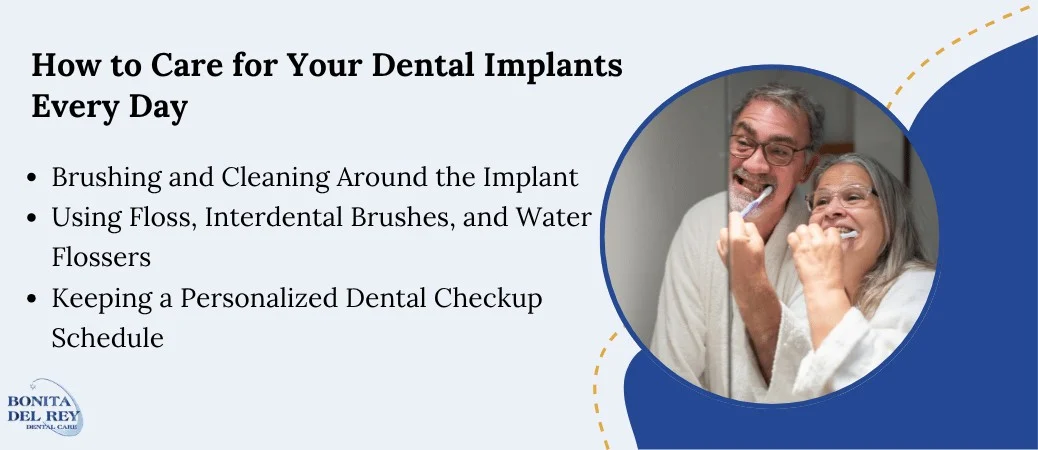
Brushing and Cleaning Around the Implant
Brush your implant just like you brush your natural teeth, twice a day. Following these tips to protect tooth enamel can also support your daily oral care.
Use a soft-bristle brush and take your time around the base of the crown, where plaque likes to build up.
If you have a history of gum disease, you may need to be extra careful, since poor oral hygiene is one of the biggest risk factors for implant problems.
Electric toothbrushes can help reach tricky spots, especially the back molars. Don’t skip your gum line. This area holds most of the bacteria that cause inflammation.
Ask your dentist to check your brushing technique at your next visit. Small changes in angle or pressure can make a big difference in implant maintenance.
Using Floss, Interdental Brushes, and Water Flossers
Brushing alone won’t remove everything. You also need to clean between your implant and the neighboring teeth every day.
Floss works well, but be gentle so you don’t damage the gum tissue around the implant. An interdental brush can be even better for this job, since it’s shaped to slide between teeth and clean spots a toothbrush can’t reach.
A water flosser is another good option, especially if you have limited hand movement or find regular floss hard to use. It can also help you reach areas around bridges or full-arch restorations.
Some dentists recommend adding a chlorhexidine rinse for a short period if you’re dealing with early gum irritation, since it can help calm inflammation around the implant, similar to how it’s used for gum disease prevention in natural teeth.
Keeping a Personalized Dental Checkup Schedule
Home care matters, but professional cleanings are just as important. Most people need a checkup every six months, but if you’ve had gum disease before, your dentist may want to see you every three to four months instead.
During these visits at Bonita Del Rey Dental Care, Dr. Espinosa checks for early signs of trouble, like bleeding, swelling, or small changes in the bone around your implant.
Catching these signs early protects your implant survival rates and keeps small issues from turning into bigger ones.
Your dentist will also use special tools designed for implants, so your cleanings don’t scratch the surface of the implant post.
Sticking to your personal schedule, even when your mouth feels fine, is one of the easiest ways to protect your investment and keep your gums looking and feeling their best.
Recognizing and Treating Peri-Implant Problems Early
Catching problems around your implant early can mean the difference between a simple cleaning and a more involved procedure.
Knowing the signs, the right first steps, and when to seek advanced care helps protect your implant for the long run.
Peri-Implant Mucositis Versus Peri-Implantitis
Peri-implant mucositis is inflammation limited to the soft gum tissue around your implant. It shows up as redness, swelling, or bleeding when you brush, similar to gum disease around a natural tooth.
Peri-implantitis is more serious. It involves ongoing inflammation plus loss of the bone that holds your implant in place.
Plaque buildup usually triggers both conditions, but if plaque sits too long, bacteria spread deeper and start breaking down bone.
Non-Surgical Treatment for Early Disease
If you catch peri-implant mucositis early, non-surgical care often works well. Your dentist may use mechanical debridement to remove plaque and tartar from the implant surface.
This is sometimes called deep cleaning or is similar to scaling and root planing used on natural teeth.
Chlorhexidine rinses can help control bacteria while your gums heal. In some cases, your dentist may add antibiotics if the infection looks more widespread.
Many patients see improvement in symptoms within a few weeks of consistent care and better home hygiene.
When Surgery, Regeneration, or Implant Removal Is Needed
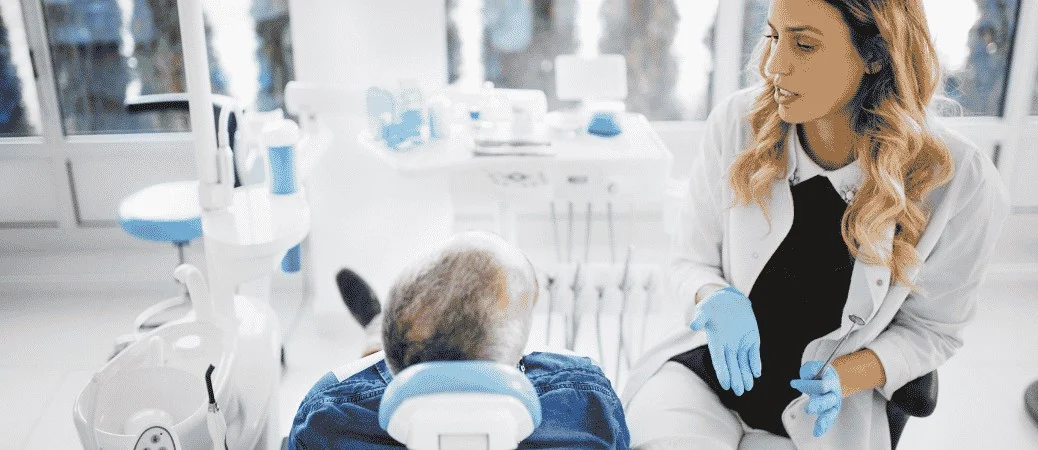
Once bone loss sets in, non-surgical care alone usually isn’t enough. Your dental implant specialist periodontist may recommend surgery to access and clean the implant surface directly.
This can involve guided tissue regeneration or bone grafting to help rebuild lost support around the implant.
In advanced cases, surgical treatment is often required to stop further bone loss. If the implant has lost too much support, implant removal may be the safest option to protect your jawbone.
Left untreated, peri-implantitis is a leading cause of implant failure. Working closely with a periodontist gives you the best chance of saving your implant or planning the next steps if it can’t be saved.
Frequently Asked Questions
A history of gum disease raises real questions about implant safety, timing, and long-term success. Here are straight answers to the questions patients ask most often.
Can I get dental implants if I have a history of gum disease?
Yes, in most cases you can still get dental implants. A past diagnosis of gum disease does not automatically rule you out.
What matters most is whether your gum disease is under control now.
Research shows that patients with treated periodontitis have a higher hazard ratio for implant loss compared to people who never had gum disease, but this risk is manageable for most people.
Your dentist will look at your current gum health, not just your history. If your gums are stable and healthy now, your outlook for implant success is good.
What steps are needed to treat gum disease before getting dental implants?
Before you can move forward with implants, your dentist needs to confirm there is no active infection. This usually means a full periodontal exam to check pocket depths, gum bleeding, and bone levels around your teeth.
If you have active gum disease, you will need periodontal therapy first. This can include deep cleanings, called scaling and root planing, to remove bacteria below the gumline.
Your dentist will also want your gum disease to stay stable for a period of time before moving forward.
Smoking cessation is often part of this plan too, since smoking lowers the success rate of both gum treatment and implants.
How does periodontal disease affect the risk of dental implant failure?
Gum disease history increases your risk of complications with implants, but the size of that risk depends on how severe your condition was.
A large review found that patients with a history of periodontitis had a 1.75 times higher risk of implant loss and a 3.24 times higher risk of peri-implantitis compared to people with healthy gums.
The type of gum disease matters too. Studies on aggressive periodontitis found a fourfold increase in implant failure rates compared to healthy patients.
Bone loss around implants also tends to be higher in patients with a gum disease history. This is why your dentist checks bone levels closely, both before placing implants and during follow-up visits.
Can I receive implants if I have receding gums or jawbone loss?
Receding gums and bone loss don’t automatically stop you from getting implants, but they do change your treatment plan.
Your dentist will need to check how much bone is left to support the implant.
If bone loss is significant, you may need a bone graft before implant placement. This adds material to rebuild a strong base for the implant to attach to.
Gum recession may also need to be addressed through gum grafting in some cases. This helps protect the implant and gives it healthy tissue to bond with.
How long should gum disease be under control before implant surgery?
Most dentists want to see your periodontal disease under control for at least three to six months before placing an implant. This gives enough time to confirm that treatment worked and your gums are staying healthy.
During this waiting period, your dentist will track your progress with regular checkups. They’ll check for signs like reduced pocket depth, less bleeding, and stable bone levels.
If your gum disease is more severe, your dentist may want a longer stable period before moving forward. This lowers your risk of complications later on.
Will dental implants prevent gum disease from coming back?
No, dental implants do not prevent gum disease from returning. Implants are not immune to inflammation, and the tissue around them can develop a condition called peri-implantitis, which acts a lot like gum disease.
Keeping up with daily brushing and flossing is still necessary after you get implants. Regular dental visits also help catch any early signs of inflammation before they become bigger problems.
If your original gum disease returns, it can affect the health of your natural teeth and put your implant at risk too.
Staying consistent with your oral care routine is the best way to protect your investment long term.